
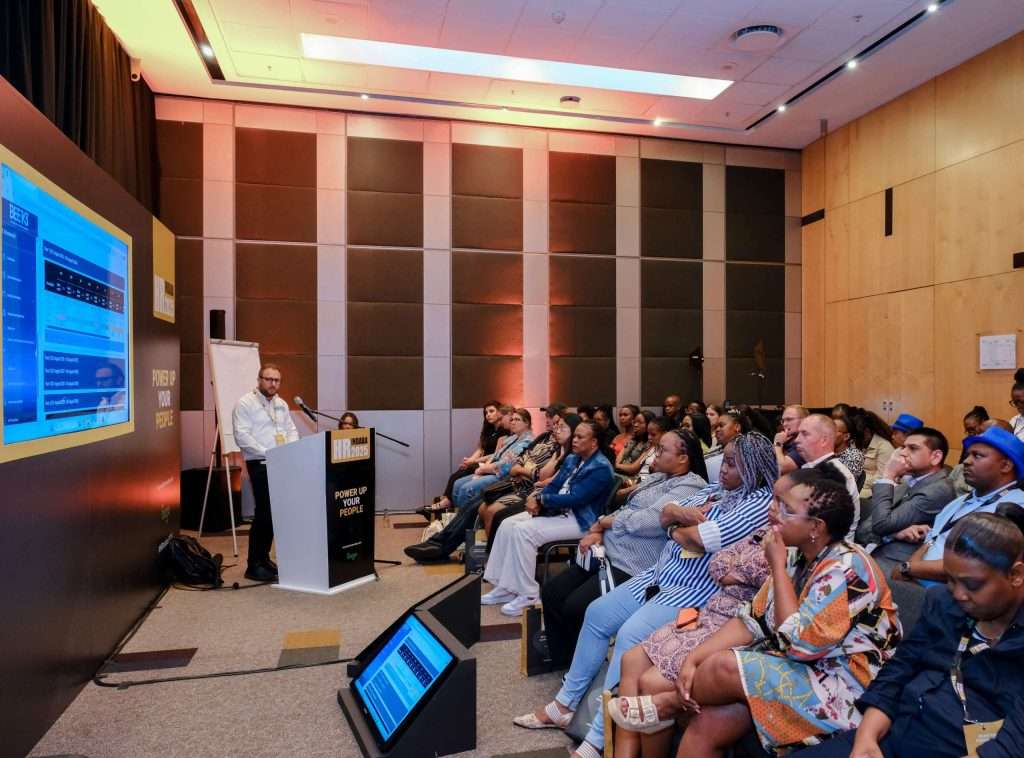
As South African corporates embrace new employment equity amendments, compliance company BEE123 encouraged more compliance amid its optimism that HR practitioners can meet new government targets. BEE123’s Saul Symanowitz and Adele Francis were addressing the 2025 HR Indaba.
HR professionals were treated to much food for thought on the employment equity (EE) front as discussions at the 2025 HR Indaba reached fever pitch.
BEE123, a company that provides solutions for managing Broad-Based Black Economic Empowerment (B-BBEE) and EE compliance, brought the conversation for managing the new policies full circle during a session themed Navigating the new EE Amendments: A compliance roadmap.
Saul, BEE123 director for strategic innovation, said the 2025 EE Amendments Act – formally the Employment Equity Amendment Act – implemented on 1 September 2025, introduced changes such as the exclusion of non-designated employers with fewer than 50 employees from submitting EE reports.
“When we’re talking EE and these amendments, context is important. The regulations are not new at all, they’ve been in place since 1998,” says Saul. “The figures bear out that there’s been far less movement than intended. The new amendments came into effect as of 1 January 2025 and the final regulations were published in April.”
Addressing the attending HR professionals, he conceded, however, that the complexities of the amendments made it virtually impossible for companies to comply.
Among the biggest changes were sectoral targets, mandatory five-year benchmarks for 18 different economic sectors that require designated employers to increase the representation of designated groups in their workforce.
“These targets aim to accelerate transformation by ensuring equitable representation across occupational levels, including top, senior, and middle management. Previously businesses had the discretion to set their own targets. Now, only the minister has sole discretion to set targets,“ said Saul. “Where businesses still have discretion is the intermediary years for setting their targets. But no hockey stick curves are permissible, and progression must be gradual.”
Stay up-to-date
Adele, product manager, employment equity and advisory specialist, spoke about the practicality of the new amendments.
Noting its impact, she said it hadn’t seen that much since its implementation. Despite this, Adele cautioned companies to ensure that they are always up-to-date with the changes as these were prevalent. “Ensure that you align to these key pieces of legislation,” she said.
She also suggested that employers, leveraging the power of technology, must analyse their workforce profile gaps, and provide important information about where the workforce lies.
“We’re 27 years into the legislation itself, and we haven’t reached the imperatives of inclusivity that were outlined when we became a democratic country. So, the message is that we need to be more intentional. We need to focus on the mandate that South Africa is a space where we need to be more inclusive with people from designated groups – black, coloured and Indian, as well as women and people living with disabilities.”
Adele said she believed the targets, which in addition to establishing mandatory five-year sectoral numerical targets for designated employers, included simplifying compliance for small businesses and strengthening overall compliance through measures such as issuing EE compliance certificates for state contracts, were achievable.
“I think with the minister’s implementation of this, he’s created a clearer message. So people understand, ‘I have to be more inclusive’. And I believe that because of the targets in place and the certificates of compliance. I mean, when you look at tax, everybody needs to be compliant, or Sars is going to come down on you,” she added.
“If you’re not compliant, you’re not the good guy. So, now I have to push to get these targets. I think from your small organisations, right through to your big multinationals, parastatals, they’re going to have to. They’re going to have to try to comply.”