
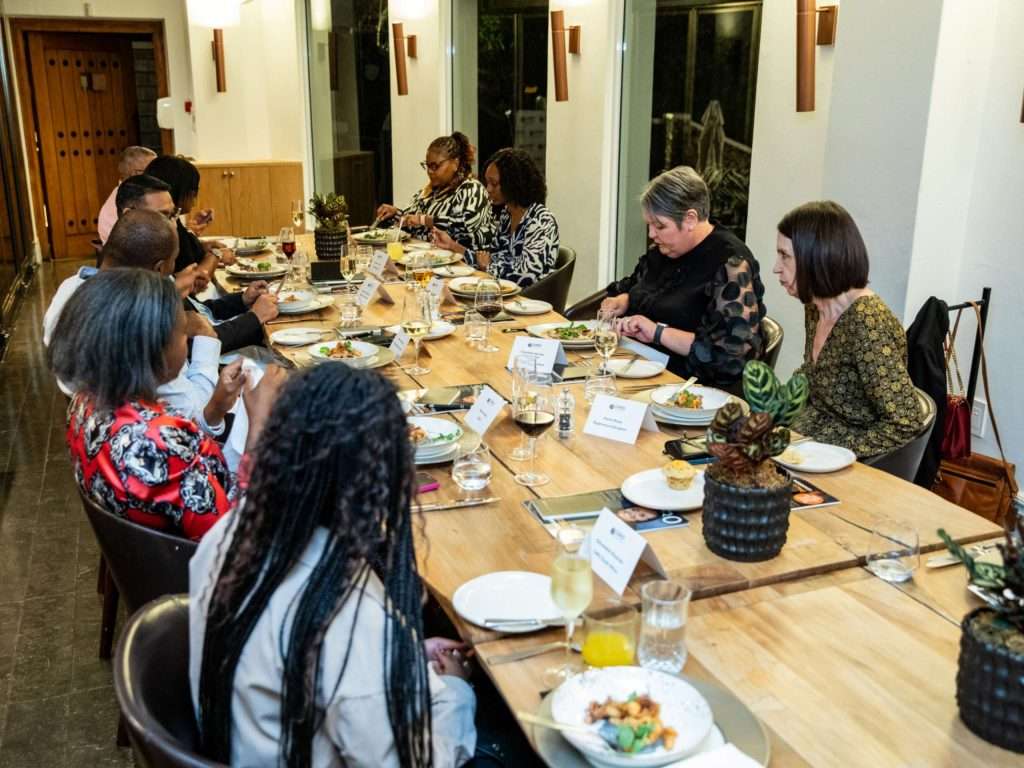
Set in an intimate and elegant setting in Westcliff, the CHRO Dinner held in partnership with Regenesys Education explored how academia and business can collaborate to prepare the next generation of HR professionals.
The evening began with engaging icebreaker cards, each featuring a unique question for the attendees. For one attendee, their card asked them to share a skill they had been using the most lately, sparking an evening or lively conversation right from the start.
“My family asks me what I do because I’m always in court or advising someone, and it makes them wonder if I even work in HR at all,” responded the attendee. “I do everything because I’m a business leader first and that includes understanding the numbers. That’s what HR is now. We are advisers, coaches, strategic thinkers and sometimes negotiators or even mediators in court. The old perception that HR is just about people and policies is long gone. Today, we sit at the centre of business decisions.”
That fundamental change, as articulated, became the unofficial starter course of the evening, as heads nodding reflected a shared acknowledgement that for the people who spend their lives defining workplace identity, their own identity is still widely misunderstood.
As napkins were draped across laps, the conversation of the night on rethinking academia took its seat at the table, highlighting that while the workplace had evolved, education had not.
A recurring theme of the evening was the disconnect between academic curricula and workplace realities.
“What we do as HR is business,” an attendee stated. “Every single decision we make has a business implication. We are business leaders who just happen to use people tools to advance strategies, but what you still hear being taught in classrooms today doesn’t reflect that reality.”
No flexibility
“Students are learning an outdated version of HR, one that makes them believe it’s purely administrative, focused on compliance and policy. When they arrive in the workplace, they are shocked by how much more is required of them. That gap is not just frustrating but it’s dangerous for the profession.”
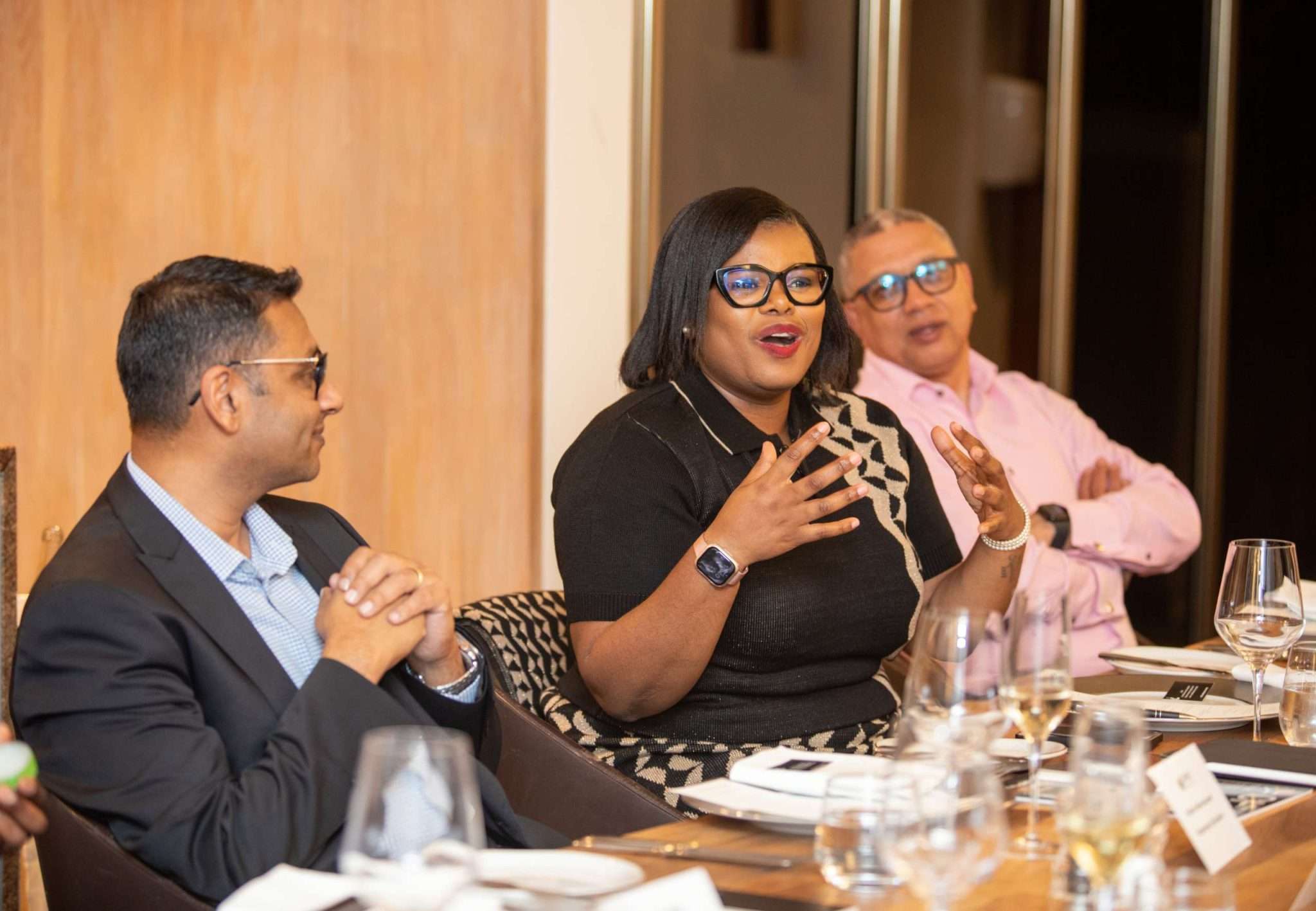
The clinking of cutlery had barely started, but the boldness of the conversation saw another attendee jumping in to highlight how structural barriers were also part of the problem.
“In South Africa, policy is not flexible. For example, it takes two years to register a new qualification. However, in two years, entire industries are disrupted by technology. By the time a qualification is approved and implemented, it’s already outdated. Business is moving fast, while academia and government are moving at a pace that doesn’t match. And the people who lose out are the graduates who leave university thinking they’re prepared, only to realise they’re already behind.”
Murmurs of agreement circled the room, creating a sobering reminder of the cost of delay. The question of skills versus qualifications then surfaced, and one attendee reflected on their own experience of challenging the status quo.
“A year ago, I did a podcast where I argued that we need to move away from qualifications and focus on skills, especially in South Africa, where unemployment is such a huge issue. That podcast went viral, which showed me how many people are thinking the same thing. But afterwards, I had to stop and ask myself if we are really ready to say that people don’t need a degree at all, only the right skills.”
In response, another attendee noted, “AI is about to replace much of transactional HR. If we don’t build advisory and analytical skills now, it won’t be academia that becomes irrelevant – it will be us.”
An uncomfortable truth
“I don’t even ask for HR qualifications anymore,” admitted another attendee. “My team is full of engineers and statisticians because I also need problem-solvers. We’re not hiring people for degrees anymore; we’re hiring for capability and potential. We need people who can think critically, analyse data, and create value.”
Despite this, many HR leaders admitted to an uncomfortable truth of fear that still governs hiring decisions.
“We know the cost of a bad hire. So even when we want to change, that qualification box feels like protection,” one attendee said. “But the pace of change won’t wait for our fears.”
Another attendees observed that this shift was happening whether organisations felt fully prepared or not, and that the consequences were already visible in the newest generation of employees.
“What we’re seeing in the new generation is that many of them arrive brilliant on paper, but unprepared for the realities of work. They were A-students all their lives, but when they come into the workplace, it’s not about intelligence, but about navigating complexity, pressure and ambiguity. Because they were never taught those skills, it shows up as mental health challenges and breakdowns. That’s not because they lack ability; it’s because we’ve failed to prepare them. Traditional academia doesn’t touch this. High schools don’t teach it. And then we expect them to arrive in corporate life confident, ready to engage authority, ready to lead conversations. No wonder so many struggle,” reflected one attendee.
The attendee continued, reflecting on the implications for organisations. “The reality is that if we don’t actively build these skills within the workplace, we are setting up young talent for failure because it’s not just about onboarding or mentorship but also creating environments that teach resilience, critical thinking under pressure and the ability to challenge ideas respectfully. Those are life skills as much as career skills and we can’t assume people pick them up naturally.”
Disconnect between theory and practice
The table then turned to examples of how skills-based learning could reshape careers. One attendee shared how a team member, initially unfamiliar with data analysis, became instrumental in identifying cost-saving opportunities by learning specific technical skills rather than obtaining a formal qualification.
This made another attendee voice concern that too many graduates were leaving universities unprepared for even the basics.
“Today’s HR graduates can’t do anything practical. They know organisational design inside out, but they can’t run a disciplinary hearing, can’t negotiate with unions, and can’t handle a case that lands on their desk, and those are things they’ll face on day one in the workplace. We need to drive skill-based learning that focuses on practical, bespoke enablement in specific capability areas. Otherwise, we’re setting them up for failure.”
“Traditional education fails here,” stated another attendee in agreement. “Students aren’t taught how to engage in meetings, present ideas, or navigate complex organisational dynamics. If we don’t teach them this, we fail them. Confidence is everything. If you kill someone’s confidence early, rebuilding it is extremely difficult.”
Building on this, the conversation then expanded into how companies need to rethink talent altogether.
“We need to tap into the growing recognition of neurodivergent talent. These individuals often end up thriving in tech companies, in startups, in spaces that value their unique skills, and then traditional corporates find themselves buying services from them for millions of rands. That tells you everything. You can either nurture that talent within your organisation, or pay for it later from the outside.”
Somewhere between the starters and dessert, the talk turned to what business really needed from academia. No one suggested abandoning universities, but a shift in the partnership.
“We need academia not to sell us another course, but to help us solve real problems. That’s the difference between a product and a partnership. If a university can help me find a way to save even one percent on my payroll, then that’s a conversation worth having. That’s what partnership should look like, not another qualification on paper, but measurable impact in practice.”
“AI and digital transformation are here. They are not waiting for us to catch up. The world will not pause until South Africa’s education system is ready. If we don’t prepare now, we will be left behind. And the cost of that will be felt not just by HR, but by every single business in this country,” echoed another voice around the table.
The discussion naturally returned to organisational responsibility and the opportunity to shape the next generation of leaders. “We have a real opportunity here,” an attendee stated “If we can teach young people how to engage authority, speak confidently in meetings and navigate ambiguity, we’re not just preparing employees but shaping leaders. This is bigger than any single company. It’s about creating a movement that aligns business, academia and society to equip people for the future.”
Finally, attendees concluded on a note that tied back to the purpose of the dinner, stating, “That’s why evenings like this matter. We connect, we share, we learn from each other and we set a roadmap for the next generation and for our nation. If we fail to do this, we’ll keep having the same conversations with different people. We need action, mentorship, training, reskilling and we need it now. That’s our responsibility as leaders, as educators and as citizens.”
Click here to see visuals from the evening and get a glimpse of the elegant setting, engaging conversations, and memorable moments from the dinner.
Those in attendance were:
Chantel Van Der Weisthuizen, managing executive,
Gcobisa Ntshona, chief people officer, African Bank
Hope Lukoto, CHRO, BCX
Inette Swart, VP: people, AB InBev
Karen Roux, m
Kgaogelo Letsebe, community manager, CHRO South Africa
Nishen Munnisunker, CEO corporate education: global, Regenesys Education
Nosipho Kunene, HR director: Sub-Saharan Africa, Kimberly-Clark
Sphumelele Khumalo, senior writer, CHRO South Africa
Tswelo Kodisang, CHRO, Firstrand Bank Limited
Zogan Opperman, HR director, Tsebo Holdings