
In every South African boardroom, AI now sits somewhere between excitement and unease. The tools are already in the hands of your executives and high-potential talent. What is not always present is the leadership maturity, ethics and decision-making discipline to use those tools well.
This is no longer about future skills. It is about whether your organisation will have a credible leadership bench in three to five years.
Recent global reports show that AI, data and digital literacy are among the fastest-growing skill sets in demand, while human capabilities such as critical thinking, resilience and collaboration are becoming even more valuable. At the same time, roles most exposed to AI are also the ones where skill requirements are changing the fastest. In simple terms, the jobs you rely on most today are sitting on the steepest learning curve.
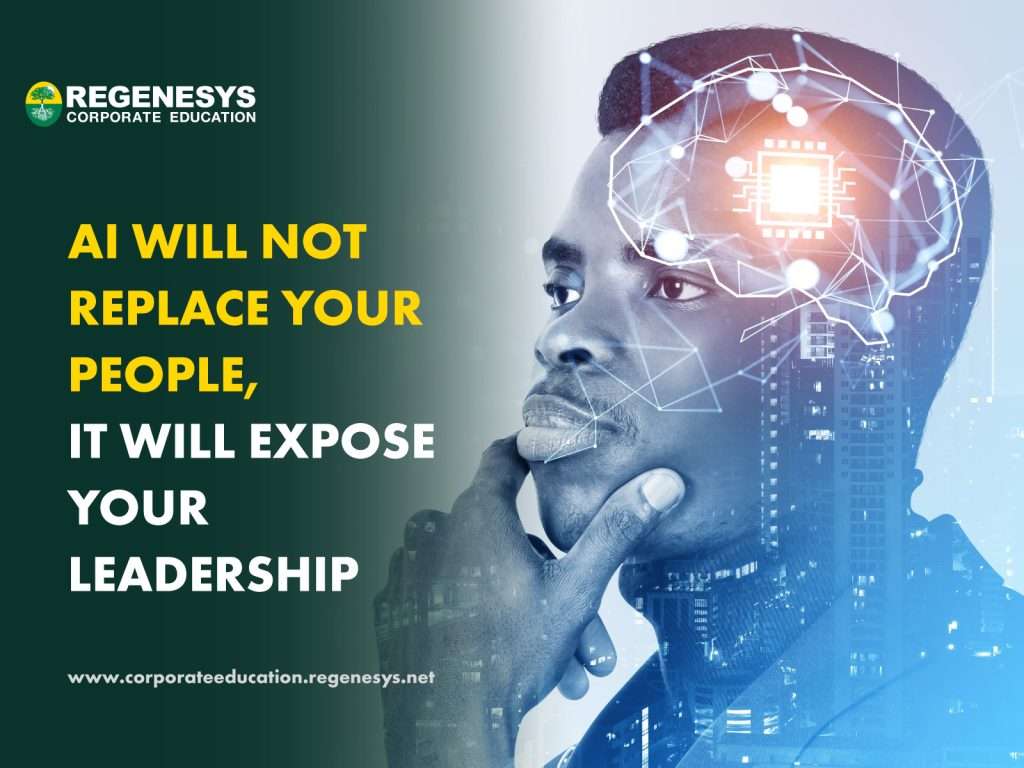
For CHROs, the question is no longer “How do we bring AI into the organisation?” It is “How do we build leaders who can turn AI into value without breaking trust, culture or compliance?” That is a very different mandate. AI, in other words, is less a technology revolution than a leadership audit.
Three uncomfortable truths CHROs cannot ignore
Thought leadership starts with honest diagnosis. Three realities are already reshaping the work of CHROs.
1. AI will compress the middle and spotlight the top
AI is swallowing many entry-level and repetitive white-collar tasks. The result is a barbell-shaped workforce: small groups of highly skilled specialists and decision-makers at one end, automated workflows at the other, and a shrinking “apprenticeship” zone in the middle. If you do not rethink how specialists and first-line leaders are developed, you risk a leadership pipeline with fewer opportunities to learn through lower-risk work. The danger is not only redundancy. It is a future executive committee that arrives in the top jobs without ever having wrestled with complex judgement calls until it is too late.
This is exactly why development pathways such as Regenesys Corporate Education’s open programmes are becoming strategically important. The leadership ladder spans the specialist to new managers programme and middle management advancement programme, through to senior leadership excellence and the flagship executive leadership international programme. Each step is designed to convert technical excellence into people leadership, strategic thinking and ethical judgement.
2. Skills are changing faster than your learning architecture
The skills required to perform effectively are shifting faster than most learning portfolios can keep up with. Employees are experimenting with AI tools on their own; executives are under pressure to show quick productivity wins; yet many organisations still treat AI and data literacy as side projects rather than core capabilities.
This creates a shadow AI problem. Teams adopt tools without common language, governance or shared mental models. Risk, HR and operations do not always share the same view of what good practice looks like. Culture strains, even when the technology appears to be delivering short-term efficiencies. Responding to this requires more than a few AI awareness workshops. It calls for an integrated learning architecture that blends digital fluency, decision-making and ethics.
Programmes such as demystifying finance help non-financial managers read the numbers behind AI proposals and interrogate algorithmically-generated forecasts. Project management fundamentals builds the discipline to move AI initiatives from slides to delivery, with proper scoping, governance and change management.
3. AI will amplify your culture, for better or worse
South African HR leaders are already clear on one point: AI must be implemented in ways that protect fairness, transparency and dignity. If your organisation struggles with accountability, inclusion or psychological safety, AI will not fix those fractures. It will scale them. Algorithms trained on biased data will mirror those biases. Dashboards nobody feels safe to challenge will harden poor decisions. Automated performance analytics without context will undermine trust, not build it.
This is why ethics and ESG thinking cannot sit in a different room to AI strategy. They must be designed together. The Regenesys ESG and sustainability strategy programme gives leaders frameworks to balance profitability with social and environmental responsibility, and to bring ESG into capital decisions and AI-enabled processes. When paired with leadership journeys such as conscious leadership, coaching and mentoring and business negotiation, it helps leaders hold performance and principle in the same conversation.
What AI-ready leadership actually looks like
It is easy to say leaders must be future fit. It is harder to describe what that means in practice. Four capability clusters are emerging as non-negotiable.
1. Leaders who can think with machines
Executives do not need to code, but they do need to understand how AI changes their value chain. They must be able to spot high-leverage use cases, interrogate AI outputs and connect technology decisions to strategy, risk and people.
Immersion is often more powerful than theory. The executive leadership international programme takes senior leaders into India and Singapore, markets where digital innovation and AI adoption are reshaping industries at speed. The aim is not technology tourism. It is developing the pattern recognition and questioning needed to bring global insight back into African realities.
2. Leaders who can navigate complexity with numbers
AI raises the stakes on financial and data literacy. Leaders must understand cash flows, capital allocation and the economics of automation well enough to challenge assumptions and avoid costly overreach. When programmes like demystifying finance and project management fundamentals are combined with AI use cases, AI initiatives become more disciplined. Leaders can tell the difference between a genuine productivity gain and a shiny but fragile experiment.
3. Leaders who treat ethics and inclusion as design questions
AI throws hard questions onto the table. Who is accountable when an algorithm disadvantages a candidate or a customer? How do you weigh efficiency against job quality or representation? What happens when model decisions intersect with climate targets, community expectations or regulation?
The answer cannot be a compliance checklist that appears at the end of a project. It has to be a design principle. Regenesys programmes such as Bridging Generations, Behavioural Science for workplace dynamics and customer-centric innovation for business advancement help leaders understand human behaviour, generational expectations and customer psychology. For women leaders who are often at the forefront of people-centric transformation, Boldly Hers and the C-suite women leadership programme create spaces to build influence and resilience in boardroom conversations about AI, work and equity.
4. Leaders who can hold the human centre
AI can automate processes, but it cannot build trust, coach performance or create belonging. The leaders who keep organisations healthy through disruption will be those with strong emotional intelligence, communication skills and coaching capability. This is where the broader leadership and communication open programme suite comes in. From specialist to new managers and middle management advancement to senior leadership excellence and conscious leadership, Regenesys is deliberately building an open-programme spine that strengthens the human side of digital transformation.
A practical playbook for CHROs planning 2026
Turning this into action does not require a complete overhaul. It does require intentional choices. Start by redrawing your leadership profiles around AI realities. Take a critical role in the family and redefine what “good” looks like when AI and data are part of the work. Focus on judgement, ethics, systems thinking and collaboration, not only technical familiarity. Then audit your current leadership development portfolio. Map it against the capability clusters above. Where are you over-invested in technical skills with no ethics or culture scaffolding? Where are you still teaching generic leadership models with no AI context?
Use open programmes strategically to build an AI-infused leadership pipeline. Nominate executives into executive leadership international, anchor senior leaders in senior leadership excellence, and feed specialists into specialists to new managers and middle management advancement. Add targeted layers in demystifying finance, ESG and sustainability and project management fundamentals, as well as the workplace dynamics programmes that support inclusion and culture.
Finally, set explicit AI learning metrics. Track how many leaders can articulate your AI principles, name priority use cases and explain how those link to risk, ESG and people outcomes. Pair this with measures of psychological safety and employee sentiment about AI. AI is often described as a technology revolution. In reality, it is a leadership audit in disguise. It asks whether your organisation can take an honest stock of its culture, invest in people at the same pace as it invests in tools and hold ethics and performance together.
CHROs are uniquely placed to influence which way that story goes. By curating an AI-ready leadership pipeline, using open programmes and executive journeys such as those offered by Regenesys Corporate Education, you are not simply keeping up with the technology curve. You are shaping the calibre of leaders who will inherit your organisation in the age of intelligence.