
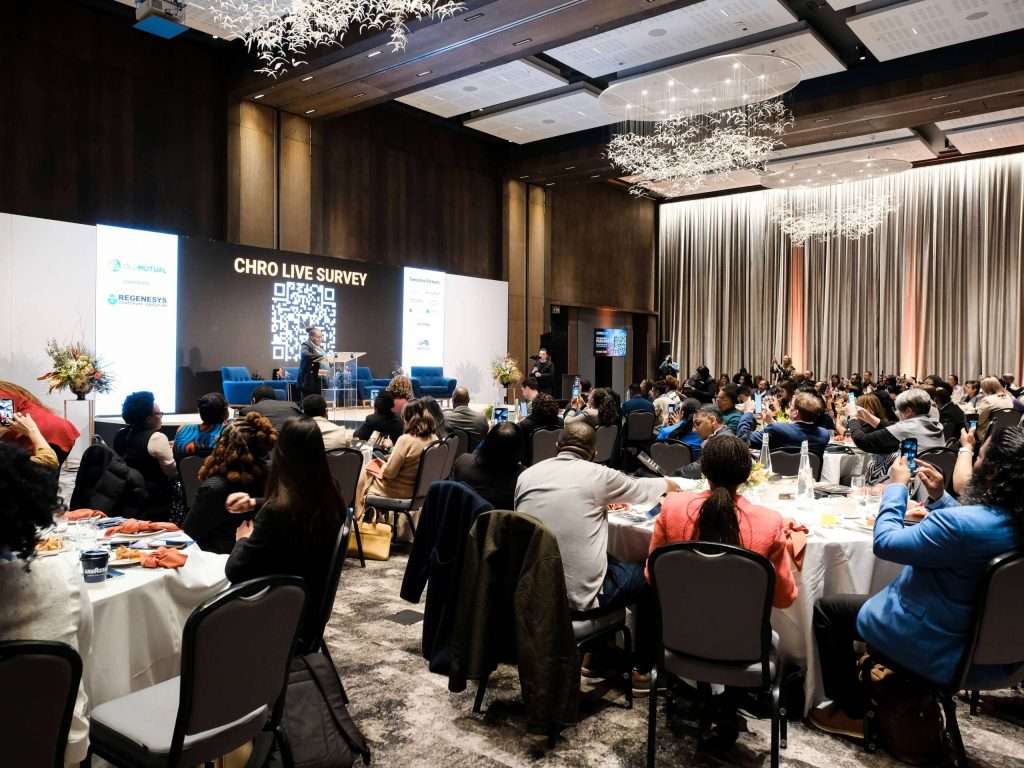
A mentimeter survey at the recent CHRO Day in Johannesburg became a space for Mzansi’s top HR leaders to reflect on what is really happening inside their organisations.
The questions focused on leadership decisions, trade-offs, AI, trust, performance pressure and the promises organisations make but don’t always keep. Here’s what top HR chiefs had to say:
Q: What is the one leadership decision you know needs to be made in your organisation?
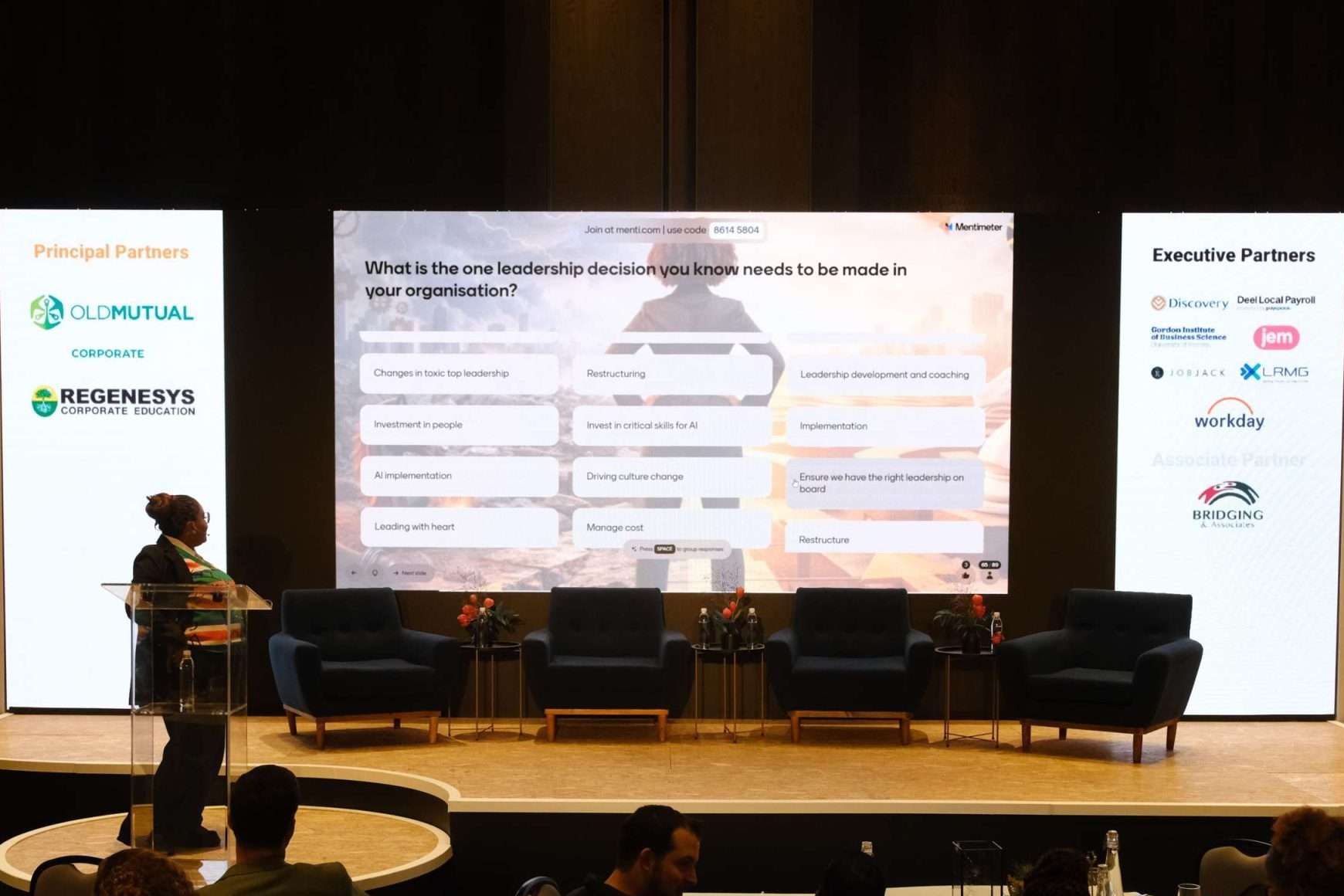
HR leaders pointed to a mix of structural and leadership challenges that many organisations appear to be delaying. Common responses included restructuring the business, clarifying operating models, improving accountability, driving digital transformation and transitioning organisations through AI. Others focused on people-related decisions such as ensuring the right leaders are in place, hiring for fit, improving consequence management and driving culture change.
“As automation and AI take over repetitive tasks, organisations may need fewer developers. But instead of retrenching people, the focus should be on upskilling employees and moving them into areas where their business knowledge and technical expertise can continue adding value,” said Goodness Stankovic, head of people for Discovery Central Services at Discovery.
Q: What is the most pertinent leadership trade-off you're facing right now?
The responses revealed leaders trying to balance competing pressures across almost every part of the business. Empathy versus performance emerged as one of the strongest themes, alongside culture versus financial gain, growth versus burnout, retention versus costs and performance versus capacity. Several HR leaders highlighted the tension between scaling businesses while protecting employee wellbeing. Others pointed to the challenge of balancing AI and technology adoption with maintaining human connection and culture.
“As we leverage the benefits of AI, we must ensure we remain focused on the impact on people, and how people are treated through that experience. There are ongoing debates about whether AI can truly understand or replicate human values, but the responsibility still sits with us to ensure it is used ethically and with care,” stated Dr Sane Ngidi, director of people at Imagine Worldwide.
Q: Which leadership capability will become more valuable because of AI?
Adaptability emerged as the clear standout capability, receiving nearly half of all responses selected by 49 percent. Judgement followed at 24 percent, while decision-making under pressure accounted for 16 percent. Empathy received eight percent of responses and communication the lowest at four percent.
Avanthi Maharaj, head of HR - Africa at Google stated, “As we continue building products, services and tools for Africa, we need to create things that are relevant for us on the continent because what works in the US may not necessarily work for Africans on the ground.”
Q: What gives you the most optimism about the future of leadership?
Purpose-driven organisations emerged as the strongest source of optimism, selected by 34 percent of respondents. More human leadership followed at 21 percent, while technology and innovation accounted for 15 percent. Emerging talent received nine percent and greater adaptability two percent.
As Nolo Thobejane, chief people, culture and purpose officer at YUM! put it, “We often already know what needs to happen because data and insight are available, and I know the right direction. The challenge is influencing organisations to see that what we do now and in the next one or two years is critical for long-term sustainability. There is real power in this moment if we move beyond short-term thinking and focus on shifting organisations from where they are to where they need to be next, with the right tools, systems and mindset.”
Q: Does your CEO trust you to make tough leadership calls?
Just over half of respondents (51 percent) said their CEO fully trusts them to make difficult leadership decisions. A further 35 percent selected a somewhat sense of being trusted, while three percent selected not at all.
The responses reflected the growing strategic role of HR at executive level, but also highlighted that many HR leaders still feel they need to continuously prove their influence and credibility when difficult business decisions are involved.
“The business language is very important, and you build it by having the right relationships in the business and understanding how the numbers work. As an executive, when you walk out of that door and you know there was something you should have said but did not say, then whatever result comes from that decision, it is also on you, because you did not raise your voice,” said Norah Sehunoe, the executive head of human capital at Santam Insurance.
Q: Rank the following in order of what leaders are under the most pressure to deliver right now
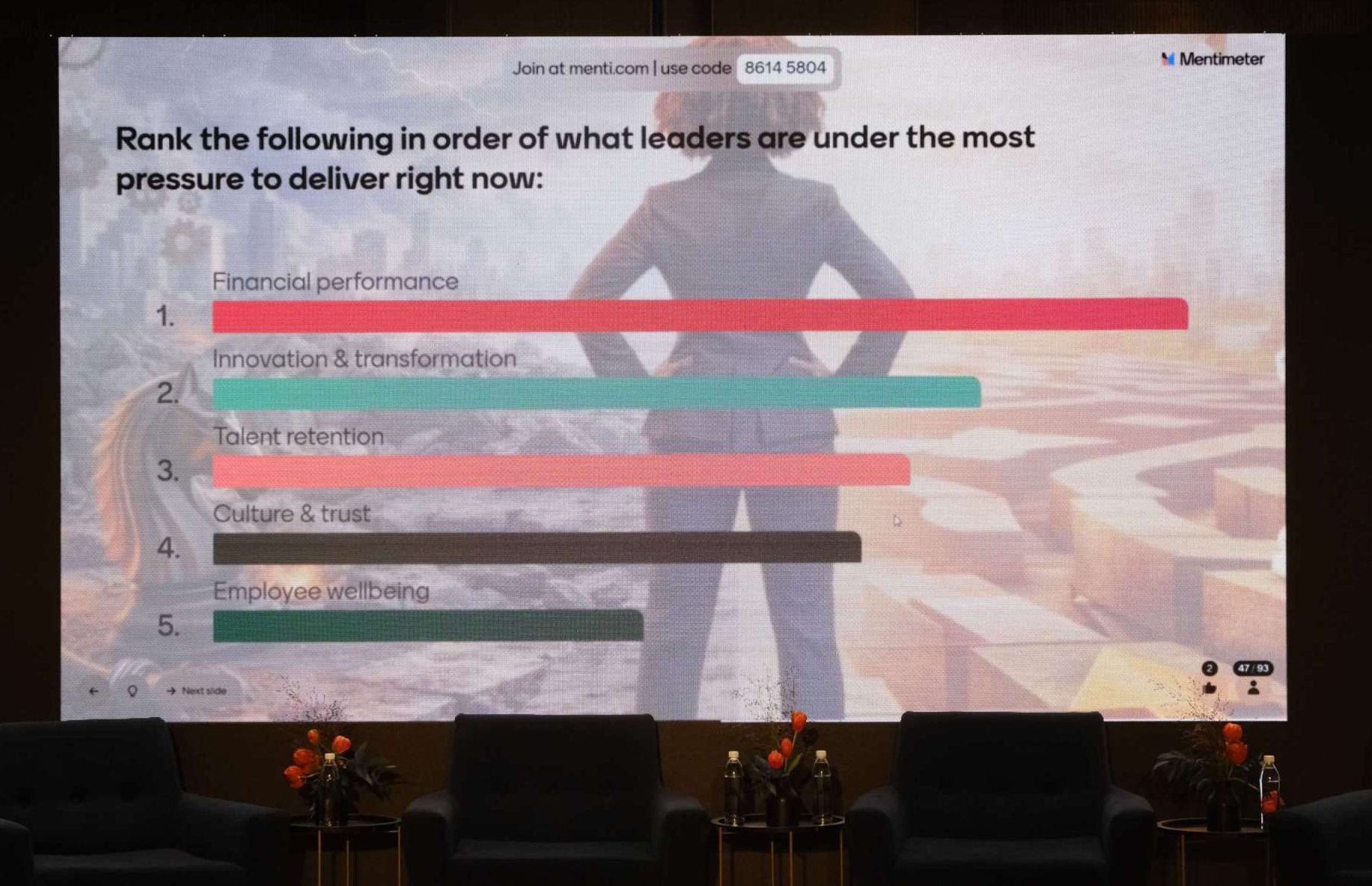
Financial performance emerged as the biggest pressure facing leaders right now, followed by innovation and transformation. Culture and trust ranked next, ahead of talent retention and employee wellbeing.
“Unless you are able to speak the language of finance and the language of impact, you will continue to struggle to convince others not to cut that budget,” stated Dr Nceba Ndzwayiba, group HR director at Netcare.
Q: What is the one promise we make as leaders that we don’t keep?
Work-life balance overwhelmingly dominated the responses to this question, appearing far more often than any other answer.
Employee wellbeing, people-first leadership, support under pressure and genuine care also emerged repeatedly. Leaders pointed to promises around empathy, growth, transparency, confidentiality and flexibility that employees often do not experience consistently in practice.
“As leaders, there has to be a point where we are not just operating as individuals, but having conversations about how leadership decisions affect the entire system, because things can become very toxic very quickly,” said Nomfundo Vilakazi, people & culture director at Dis-Chem. “So in an environment where budgets are constrained, but performance expectations are high, you need to make it work, and that starts with organisational architecture. It starts with how you design roles and how you structure the system.”
Q: What will define great leadership in 2026?
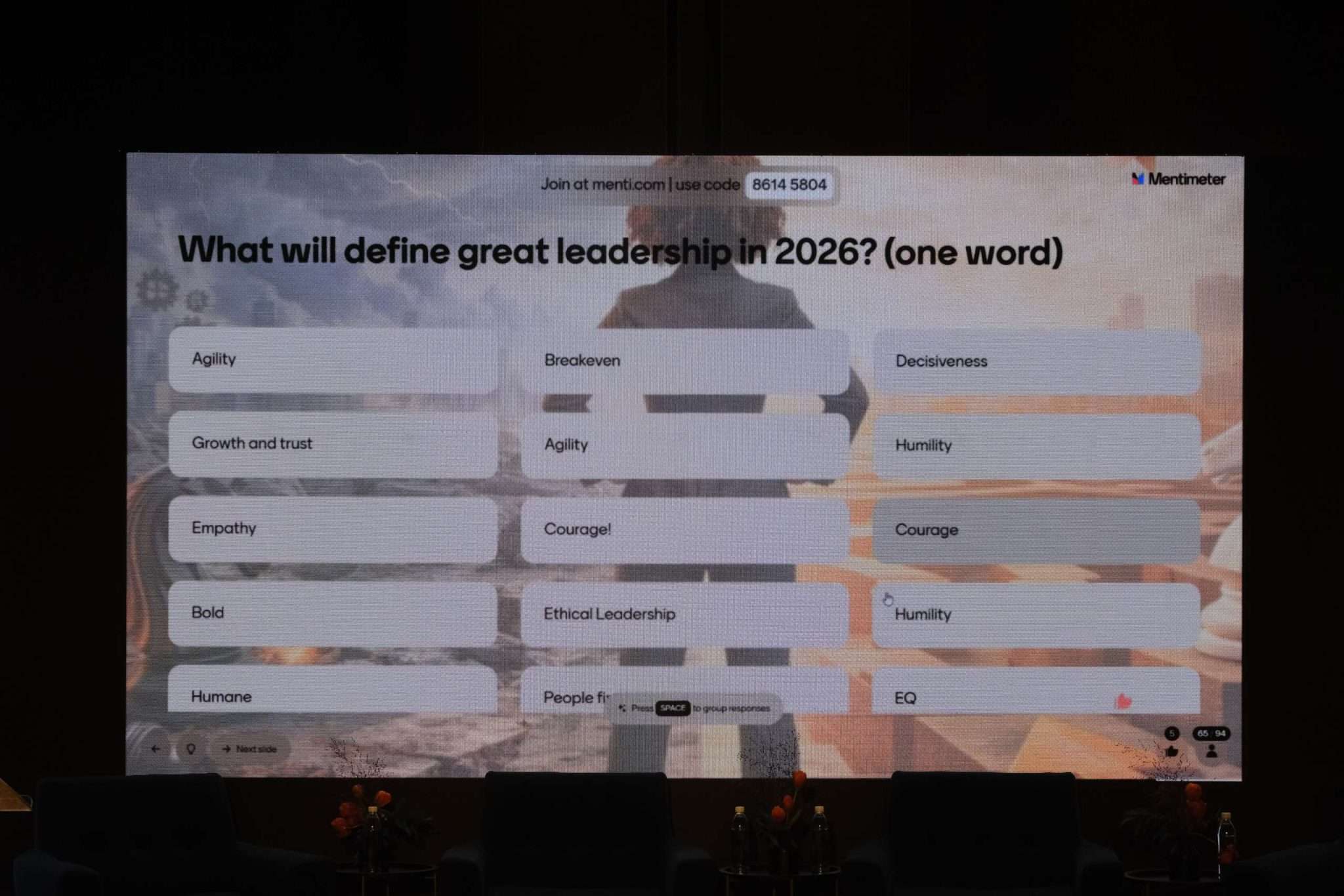
Adaptability, courage and human-centred leadership emerged as the strongest recurring themes in the final question.
Leaders repeatedly referred to integrity, authenticity, empathy, agility, humility, trust and leading with heart. Bravery also appeared consistently throughout the responses, alongside calls for more decisive leadership and courageous conversations.
“Organisations need strong architecture that HR has put together and developed. What I believe is that empathy and psychological safety, together with structures and organisational architecture, are what’s required,” said Colin Smith, HR executive at Northam Platinum.