
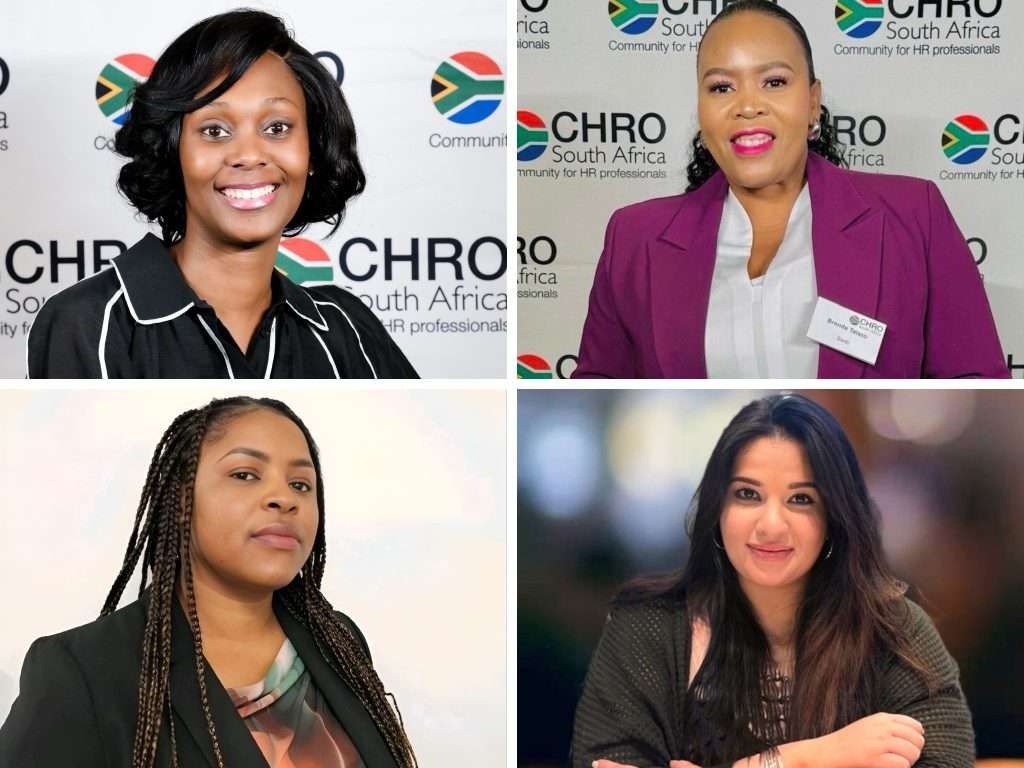
This National Women’s Day, we’re not just celebrating women leaders but listening to them, as HR leaders Nosipho Kunene, HR director at Kimberly-Clark; Brenda Talazo, VP of HR and business enablement at Saab South Africa; Venesa Lubisi, head of HR at Giesecke+Devrient ZA; and Opila Moodley, executive HR director HR Africa at Estée Lauder Companies, reflect on the evolving role of women in leadership and the unique strengths they bring.
For Nosipho Kunene, HR director at Kimberly-Clark, women’s leadership strength lies in their ability to simplify the complex and balance multiple responsibilities across work and life.
“Because women usually carry so many different responsibilities in and out of work, they can quickly declutter to get to understand what's most important and then drive that. They bring the innate nurturing empathy, the ability to read and see the non-visual cues and then be able to bring the empathy and nurture, to even executing the toughest situation or decisions.”
According to her, organisations have had to ramp up on care as the macro environment gets tougher. “The ability to do that can make a significant difference in your talent strategy and your workplace culture.”
“People want to work where they are seen, heard and developed and ultimately valued – that is what inspires followership in a leader. How you show that is through the soft skills, therefore, it's no longer a nice-to-have but a cultural competitive advantage.”
She continues to describe her leadership philosophy of self as driving for excellence in whatever piece of work she puts out. “This is due to, in my early journey, being told that because I was too nice and too soft, and would never become a head of HR. But leadership has many different forms. As long as you lean into your authentic self, deliver a high calibre of work and continue self-developing, you can be anything you set out to be.”
Belonging beyond the title
Although there have been many strides that have been made in workplaces to put women in executive roles, Nosipho highlights that getting them into the role without making them feel like they truly belong still needs to be worked on.
“Belonging is more than just being given a role, so if we can fully immerse, expose, mentor, grow and build women to not just be functional execs but be end-to-end business leaders, then it will take this agenda to the next level. Women should not be afraid to be unapologetically themselves and to also lift as they rise.”
Brenda Talazo, VP of HR & business enablement at Saab South Africa, brings the conversation back to women leaders being the very blueprint of leadership.
“Drawing on qualities like adaptability, collaboration and unwavering integrity, I believe women are forging a new path that values agility, inclusion and effectiveness. Through my experience in executive roles, I’ve learnt that empathy is a core leadership capability, one that builds trust, enhances communication and drives performance, especially in high-pressure environments.”
Also drawing on her own experience, she sees these so-called soft skills that women carry as anything but soft, but as core leadership capabilities.
“Like many women, I’ve had to navigate spaces where I wasn’t always heard the first time, or where my leadership style didn’t fit the traditional mould. That taught me early on that influence doesn’t have to come from volume or authority, it can come from clarity, consistency and integrity. So I’ve learnt to view empathy not as a soft skill but as a strategic asset. It helps me build trust, foster collaboration, and make better decisions.”
Breaking barriers
While progress has been made, she sees women still facing barriers at the executive level, like lack of sponsorship, performance bias and outdated leadership models that don’t reflect modern life.
“CHROs and senior leaders can break these down by building intentional sponsorship programmes, using clear criteria for advancement, and normalising flexible career paths. It’s also critical to recognise that not all women face the same challenges, so equity efforts need to go beyond one-size-fits-all programmes. They must be intersectional, data-informed and grounded on lived experience to create truly inclusive environments.”
When speaking about the way women lead, Venesa Lubisi, head of HR at Giesecke+Devrient ZA explains it as a unique combination of relational intelligence and business acumen.
“We excel in balancing empathy with results-driven decisions, leading with a sense of collective progress. Women have a natural nurturing ability that often manifests as mentorship, sponsorship and consistently elevating others. In today’s rapidly changing business landscape, this dual ability to lead with both heart and strategic clarity is essential for driving growth, sustainability and keeping the door open for continuous innovation.”
Raised in a rural village and having built her career in male-dominated industries, she says that is the very experience that has shaped her leadership philosophy of courage, authenticity and impact.
“I’ve learnt that leadership is about consistency in character and remaining grounded in my values. I focus on creating inclusive spaces where people are seen for their excellence, not their stereotypes, and where we lead for transformation rather than visibility, and keeping the door open for others to step into leadership roles.”
Venesa believes that true progress is measured not by how many women are in the room, but by whether their voices are shaping the room. “Representation without influence is not enough. The real work is creating a culture where women can lead authentically, without conforming.”
“For me, leadership is about ensuring that women aren’t just present but empowered to shape the future of our organisations and always keeping the door open for others to follow.”
Empathy in action
Opila Moodley, executive HR director HR Africa at Estée Lauder Companies sees that traits that women carry are not just traits of effective female leaders but also the traits of the future of leadership and the strength women bring to leadership.
“We’re leading in environments that demand cross-functional collaboration, adaptability and rapid decision-making. And while technical expertise matters, what truly distinguishes great leaders today is their ability to connect, communicate and create clarity in the grey. Empathy isn't about being soft. It’s about being strong enough to understand, adjust and still deliver results. That’s the kind of leadership organisations need now.”
She confirms that barriers for women at the executive level aren’t always visible, but they’re still very real.
“Women continue to face an invisible performance tax, where they must consistently outperform to be viewed as equally capable. Flexibility is too often penalised, especially for mothers, while men are praised for similar choices. And despite strong pipelines, women are still underrepresented in decision-making roles with real commercial accountability.”
To dismantle this, she advises CHROs and executive leaders to go beyond performative gestures by:
- Making sponsorship intentional – not just mentoring, but real advocacy in succession discussions.
- Promotion and performance processes need to be bias-audited, with clear criteria and transparent decisions.
- Flexible work must be normalised at senior levels not treated as a special accommodation.
- P&L roles and critical stretch assignments must be actively offered to women – not assumed to be not the right time.
“We don’t need to fix women. We need to fix the systems that hold them back. We need to evolve the narrative from ‘women leaders’ to great leaders who happen to be women. This isn’t about semantics, but it’s a fundamental shift in power, perception and how we define leadership in today’s world.”
“It’s time we stop asking whether women are ready for leadership. We should be asking whether leadership is ready for women.”