
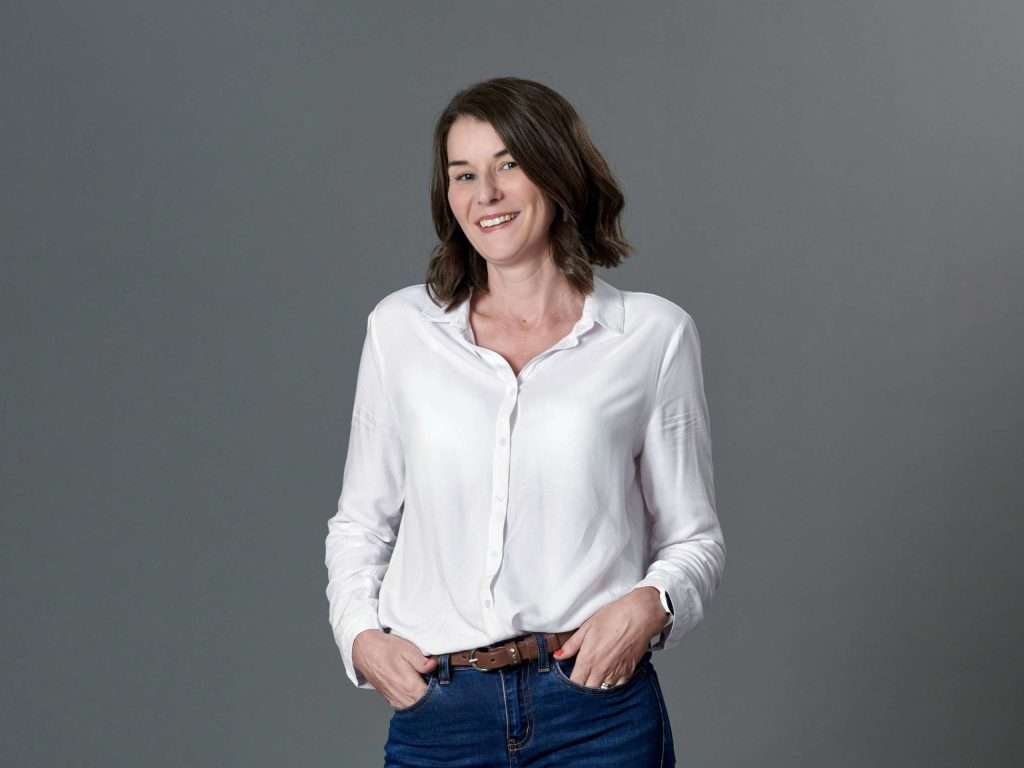
Helen Bredenkamp has always known a thing or two about performance because, long before becoming group head of people and culture at The Unlimited, she was immersed in performing arts.
Speaking to CHRO South Africa, Helen reflects on how her stage ambitions eventually evolved into a career in people leadership. The theatre may have been left behind, but her interest in people, performance and what happens when the two come together is still very much part of the plot.
Q: What’s something about you that your colleagues might be surprised to learn?
Most people at work probably wouldn’t know how big a part performing arts used to play in my life.
I absolutely love Shakespeare and, at one point, genuinely wanted to be part of the Royal Shakespeare Company. When I was studying and living in London, I was constantly at the theatre, usually wherever I could find a free or very cheap ticket!
I also love singing. I spent years in choirs and was fortunate enough to perform at the Royal Albert Hall, which is still a pretty special memory.
So although my working life looks very different now, I still love all things theatre, music and production. Put me in a beautiful theatre with a great production and I am very happy.
Q: Can you take us back to the start of your HR journey? What initially drew you to the people profession?
I didn't actually set out to work in HR. I studied English and performing arts and then trained as an English teacher. From teaching I moved into corporate training and development, then coaching and leadership development, before eventually moving into HR.
Looking back, I think the common thread throughout my career has actually been problem solving.
Whether I was teaching and helping young people learn to think for themselves, facilitating workshops, coaching leaders, or now working at an executive level on people, processes and systems, I have always loved understanding what isn’t working and finding a better way forward.
Alongside that, I’ve always been fascinated by people and how differently we are all wired. Over time, I have realised that what really motivates me is creating environments of growth and change in people and in organisations. HR and leadership became a natural place for me to do that on a much bigger scale.
Q: How did your previous roles and experiences prepare you for your current position as group head of people and culture at The Unlimited?
My previous roles prepared me for this one in ways I probably wouldn’t have appreciated at the time.
Coaching and counselling taught me the most about people. They taught me to ask good questions, listen properly and resist the temptation to jump too quickly to a response.
It is very easy to make assumptions about a person or situation, and all of us bring biases into our decision-making. Learning to put those aside, stay curious and really understand what is going on almost always leads to a better outcome.
Working as an executive coach also gave me exposure to the realities of business. I was sitting alongside leaders as they worked through difficult decisions, people challenges, growth, performance and change. I learnt a huge amount about organisations by seeing those challenges from the inside.
Teaching and facilitation gave me something slightly different: the ability to turn theory into action. A lesson or workshop can look brilliant on paper and still fail completely if it doesn’t work for the people in the room. You have to understand how people think and learn, communicate in a way that brings them with you, and adapt quickly when something isn’t landing.
That is very relevant to the work I do now. Whether we are designing a leadership programme, an HR process or a new system, I am always asking: Will this actually work for the people who have to use it?
When I moved into HR, the biggest challenge was simply learning HR from the ground up, but I do think my unconventional route has become an advantage.
Working across different organisations, consulting, teaching and coaching exposed me to very different people, leadership styles and ways of working. It taught me to operate independently, think on my feet and solve problems creatively.
I’m not sure I would approach problems in quite the same way if I had followed a more linear HR career.
Q: For those unfamiliar, what does The Unlimited do, and how does your role fit into the business objectives?
The Unlimited is a South African financial services business, but there is much more to it than the products we sell.
We provide health, motor, legal and death cover to more than three million people, but we have also created employment opportunities for thousands of South Africans and helped hundreds of people build their own businesses.
It is a fast-paced, entrepreneurial business with a very strong culture. We expect a lot from our people, we move quickly and we are constantly looking for ways to grow and do things better.
My role is to make sure the people side of the business is able to support that.
For me, HR shouldn't sit alongside the business as a separate function doing “people things”. We need to understand what the business is trying to achieve and then ask what needs to be true of our people, leaders, systems and culture for us to achieve it.
The focus is on whether we have the right people and capabilities, whether we are developing leaders who can bring out the best in their people, whether employees understand what is expected of them and how their work contributes to the broader business, whether our processes and systems enable performance rather than hinder it, and whether we are addressing the people risks that could prevent the business from delivering.
Ultimately, my role is about creating the conditions for people and the business to perform and grow. That means protecting what is important about our culture, while also being willing to change the things that no longer serve us as the business evolves.
Q: What have been some of the biggest challenges you have encountered throughout your career, and what did they teach you about leading people?
One of the biggest personal challenges has probably been being willing to step into roles before I felt completely ready for them.
My career has not followed a particularly linear route. I have moved from teaching into training, coaching, leadership development and then into leading HR. When I became head of HR, there were areas of the function where I had a lot to learn very quickly. That taught me that leadership cannot depend on being the person in the room who knows the most.
You need to be able to ask good questions, find the right expertise, listen, learn quickly and then be prepared to make a decision.
The other thing I have learned is that caring about people and expecting high performance are not opposite ideas. I think we sometimes make leadership unnecessarily complicated. People need to understand what is expected of them. They need the tools, support and freedom to go and deliver it. And when something isn't working, we need to address it.
Avoiding difficult conversations doesn't help somebody. Usually it just allows the problem to become bigger. For me, good leadership has both humanity and accountability. You need both.
Q: Are there any initiatives you have introduced at The Unlimited that you are particularly proud of? What impact have they had?
I’m probably most proud of the work where we have taken something that was complicated, inconsistent or too dependent on individuals and made it simpler, clearer and more sustainable.
One example is recruitment. When I took over the function, our time-to-hire was around 20 weeks. We redesigned the process, clarified accountability, made better use of technology and reduced that to around five weeks.
That mattered commercially, but it also changed the experience for candidates and hiring managers. A process that takes too long creates frustration, slows the business down and can cost you good people.
More recently, a big focus has been redesigning, automating and integrating the employee lifecycle and the systems behind it.
We are connecting recruitment, onboarding, HR, payroll and offboarding much more effectively, with clearer approvals, better data and less manual work. It is still a journey, but the aim is simple: people should not have to fight the process in order to do their job, and HR should not spend its time moving information around manually when technology can do that better.
Across those pieces of work, the principle is quite similar. I like solving the things that create friction.
If we can make it easier for people to understand what is expected of them, easier for the business to move quickly and easier for people to do good work, then people and culture are adding real value.
Q: How is technology, including AI, changing your approach to HR and the employee experience at The Unlimited?
A lot. One of my biggest areas of focus at the moment is removing unnecessary manual work from HR.
Like many businesses, we have historically had different systems and processes covering recruitment, HR, payroll, IT access and the various things that happen when somebody joins, moves, or leaves. We are now joining much more of that together.
The aim is quite simple: information should move once, approvals should happen in the right place, there should be clear accountability, and people shouldn't spend hours copying the same information between systems.
That is where technology can genuinely improve employee experience.
AI is opening another set of possibilities. We are already using AI tools that are making HR and people information easier to access and helping people work through questions more quickly. But I don't think the interesting question is whether AI can replace parts of HR.
The more interesting question is: what should technology do, and what still needs a human being? AI can process enormous amounts of information, spot patterns, summarise, automate and give people access to knowledge incredibly quickly, but leadership still requires judgement. It still requires context, curiosity, empathy, courage and sometimes sitting opposite somebody and having a difficult conversation.
So I don't see AI and the human side of work as competing. If we use technology well, it should remove some of the work that doesn't require a human being and give us more capacity for the work that does.
Q: When you are not focused on HR and the demands of your role, what do you enjoy doing to unwind?
My family is a huge part of how I take time out and unwind. Like a fairly typical South African mum, Saturdays are often spent on the side of a sports field cheering on my kids.
Good friendships are food for the soul for me – and if time with friends also involves actual food, even better!
It’s also really important to me to look after both my mind and my body. Over the years, I’ve increasingly realised what a gift good health is, and that it’s something worth proactively looking after. Walking, strength training and swimming all give me space to reset. I also love being outdoors – wide open spaces and a good view are particularly good for the soul.
And one of my major, completely un-guilty pleasures is coffee and rusks in bed with a good book. When I make time for that, I know I’m really resting.