
With thousands of HR professionals in attendance at the 2025 HR Indaba, conversations about the future of work were impossible to ignore.
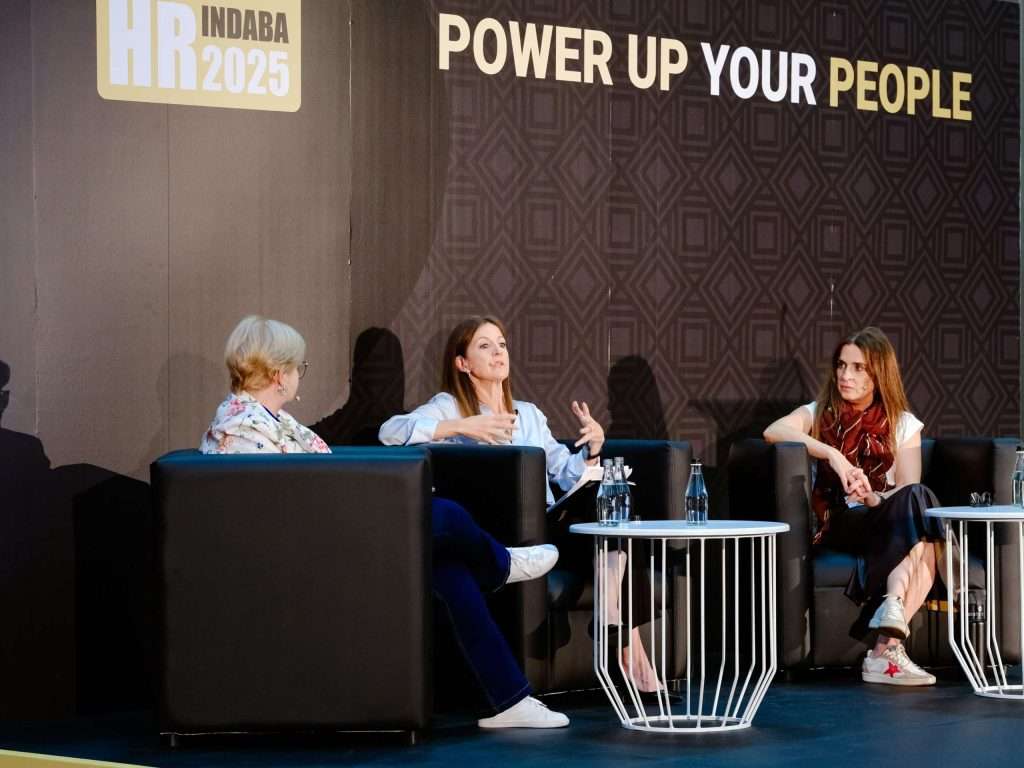
Nicola Tager, head of wellbeing and employee value proposition at Investec, and Jane Waters, founding partner of 52.com, took the stage for a session titled Future-ready HR: Lead with technology, inspire with talent, to explore how HR can lead tech transformation while keeping culture and people at the centre of every change.
According to Nicola, head of wellbeing and employee value proposition at Investec, HR holds a critical responsibility in shaping how work and roles are structured, even as AI creates new opportunities.
“Microsoft stats show that 81 percent of people are using AI in their organisations, whether they know it or not. The problem is that we’re not redesigning organisations, workflows, structures, or strategies but we’re letting automation come in and change roles, instead of designing roles intentionally,” she stated.
“Like an architect designing a home, we need to ask how to redesign the organisation to be most effective and perform at its best, knowing that AI will automate certain functions or even handle them entirely. We must become the designers of the organisation from its structure and roles to the overall system rather than letting AI dictate people’s tasks from the bottom up.”
Nicola also acknowledged the emotional dimensions of change, highlighting the human reactions that AI adoption can provoke.
“Experimentation is healthy. People need to explore AI, but there is often resistance, fear, anxiety and uncertainty. But at the same time, we need to get involved now to help redesign the organisation proactively, rather than letting AI shape our work passively. We also can’t forget that people will have emotional reactions, especially to something unknown like AI which can create fear of job loss or a new way of working.”
Don’t mimic someone else
She also urged organisations to maintain their unique identity when creating talent strategies and EVPs amidst the automation changes.
“Many organisations make the mistake of copying others, assuming that because another company is adapting well to AI, they should do the same. It is essential to stay true to your core culture and use it as a guide to navigate change. An EVP should be designed to reflect the people you want to attract and retain, not to mimic someone else.”
Jane built on Nicola’s points, highlighting how HR must engage strategically with leadership teams through these times of change.
“HR has really transformed. In most businesses, it’s seen as a strategic business partner, and we use that terminology a lot as HR professionals, but I’m not sure we always translate it exactly into practice. We often focus on our day-to-day tasks, asking how we can quickly put them into chat or automate them. However, as a leadership team, HR should be driving a deeper conversation. We should focus on understanding what we are trying to achieve, identifying what can be automated to free up valuable time and determining what can still be accomplished with the skills we currently have.”
She then circled back to culture and employee engagement, framing HR as the compass guiding leaders to connect authentically with their teams during times of change.
“We should be constantly attentive to what we want to be as organisations and why we want people to join us. As HR practitioners, we should be facilitating the leaders around us so that they engage their people every day so that they want to come in and do their best work.”
“It’s all about being super attentive to what’s going on in the world of work, listening to people, not trying to be your next-door neighbour, but gathering, filtering and working with your culture to understand how you can take it to the next level of development.”