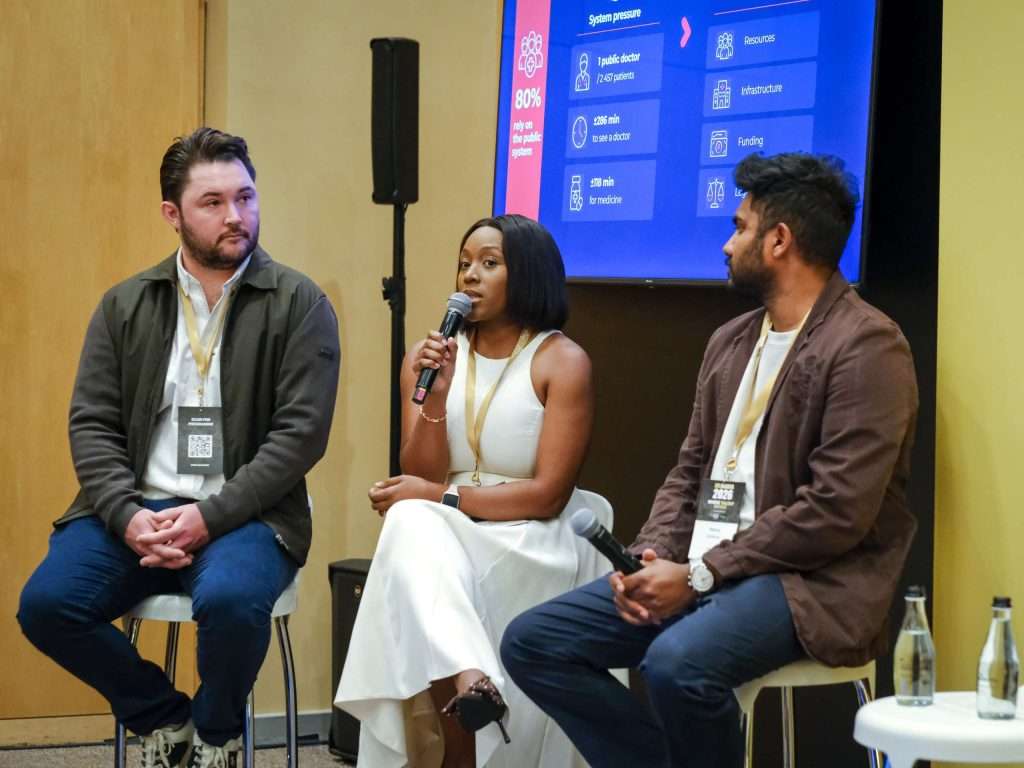
Panellists from healthcare provider and financial services company Kaelo unpacked how organisations can adapt employee benefits to address employees’ changing physical, mental and financial wellbeing needs at the 2026 HR Indaba.
During a session titled The employee has changed. Have their benefits?, panellists James Eckersley, director at Kaelo; Praval Sooklal, group risk director at Kaelo, Dr Ziyanda Mncwango, a medical doctor at Kaelo and Sian MacGregor, sales director at Kaelo, explored these changing needs.
The panel discussed how employers can rethink employee benefits under three key pillars: physical, mental, and financial wellbeing, and whether current employee benefits are relevant to employee needs.
Sian highlighted that when employers do not provide healthcare benefits, employees are forced to rely on public health services. “Around 15.5 percent of South Africans have medical aid; the rest have to rely on our constrained public health system.”
Ziyanda said lack of resources and facilities, and long wait times in primary healthcare affect employees’ ability to access treatment and medication. This results in employees needing to take more time off work to stand in long queues to access medical services. “As healthcare is evolving, health insurance is playing an important role in assisting the overburdened public health sector.”
In terms of healthcare trends employers should monitor, Praval noted that South Africa is shifting from high infectious disease mortality to an increase in non-communicable disease mortality. “We are seeing more deaths from diseases such as hypertension and diabetes, which are preventable conditions through lifestyle management and early diagnosis and medication. Due to limited access to primary care, many people do not get diagnosed and receive medication for these conditions.”
Prioritising mental wellbeing
Mental health has become a key topic for organisations globally. Praval stressed that employers need to move away from the box-ticking task of employee assistance programmes that do not provide employees with the relevant support they need.
Praval added that employee health benefits also need to prioritise utilisation, and provide employees with benefits they need and will use.
“If you are developing a healthcare package for employees, you need to understand where your employees need help. If an employee works in a factory, you must consider injury-on-duty and accidental care. You need to design benefits for what employees will use. Employers must also understand three main points: access, quality and affordability. It is up to the employer, provider and broker to work together to create a healthcare universe that makes sense and does not create over-utilisation but gives people the right level of care when they need it.”
One of the key drivers of mental health challenges among employees is poor financial health. The panellists highlighted that traditional employee benefits are designed around key areas in an employee’s life such as debt, retirement and serious illness. However, they do not factor in employees’ complex daily needs such as the increased cost of living.
“The reasons why people find themselves in debt include the mistiming between income and expenses, unexpected emergencies and pervasive cost-push inflation. The latter includes increases in electricity, fuel, utilities, and other goods and services. Employees often have multiple dependents, which increases the cost-push inflation and reduces employees’ purchasing power. This results in employees taking out loans through loan sharks.”
James said while salaries may provide stability for employees, they do not guarantee resilience. “Resilience is the ability to endure emergencies and unforeseen expenses. By only increasing salaries, we have also seen the debt-to-income ratio increase. Financial resilience is built through financial education and financial literacy, which includes starting an emergency fund and creating an active budget in which employees understand their disposable income, especially in an inflationary environment.”