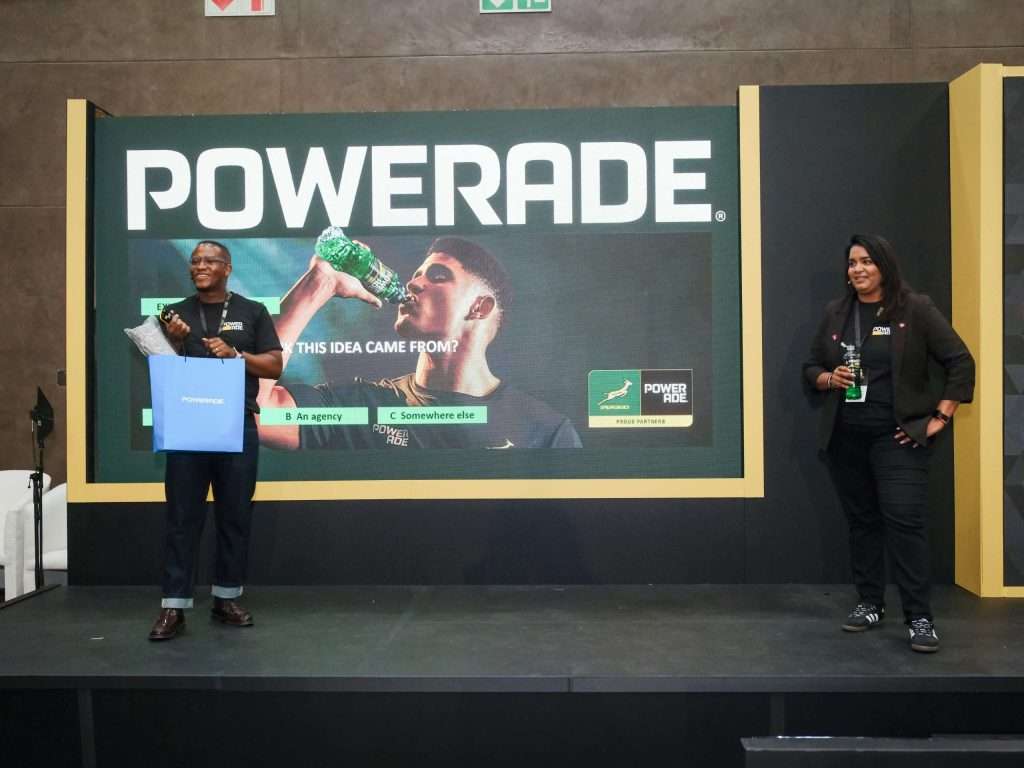
2026 HR Indaba attendees heard how Coca-Cola’s culture helped spark a Powerade Springbok campaign, more than doubling volume sales targets – yet coming from the most unlikely of places.
In an engaging session entitled When culture drives business growth: How a high-performance culture unlocked unexpected brand innovation, Charlotte Gurhoo, director of people and culture at Coca-Cola South Africa franchise operations, and Thando Mahlo, people and culture director at Coca-Cola Africa, shared what happens when culture, performance, and innovation align.
Charlotte kicked off the session by contextualising Coca-Cola. She highlighted that the global beverage giant has been in South Africa for 98 years, supports over 1 million livelihoods, and contributes millions to Africa’s economic value chain.
With this backdrop, the value of culture can’t be over-emphasised, because it can be a driver of growth. Fellow presenter Thando elaborated, “We always talk about culture as intangible while at the same time we have to find the money for it in the HR budget. Yet studies show we can increase an organisation’s profitability through culture.”
Making culture count
Thando added that CHROs tend to only measure culture once a year, instead of linking it to business performance. “Total returns to shareholders can be tripled for the healthiest organisations versus the least healthy. Importantly, we must be able to show the business value of culture.”
To illustrate this, Thando and Charlotte took attendees through how Coca-Cola drove business value through culture, via a highly impactful Powerade Springbok rugby advertising campaign. They shared that the concept didn’t come from marketing or production – it came from a director in financial planning analysis.
Thando said: “This wasn’t an accident; it was because of the culture we’ve created. We already had high engagement and inclusion and belonging, and we had [intentionally] created an environment where people can freely share ideas. So, we asked ourselves, ‘What is the culture we can create to drive revenue and volume in stores, how do we move from good to great, and how do we create a culture that embraces driving that strategy?”
Laying out a culture strategy, with ‘culture catalysts’
Thando explained that his HR team started with the strategy, presenting a three-year culture plan for the organisation. They also enrolled influencers – but not in the usual sense.
“We carefully chose leaders who had the greatest influence in the organisation, based on people following them, and not necessarily people that report to them. We chose 60 influencers and called them ‘culture catalysts’. We then spent two days in Johannesburg co-creating: defining obstacles, rules, and rituals to take this culture forward.”
According to Thando, the concept of “we will” was introduced. These were not static values to be stuck on a wall but actionable principles, enabled through several levers. For example, the idea of “we will choose courage” (I have an idea – it’s outside my role but hear me out, someone will back me up). And “we will challenge barriers” (what if we tried it this way?).
‘Build a culture where everyone can thrive’
Charlotte then shared how the Springbok campaign idea came about – from an associate in the finance department.
“He asked, ‘What if?’ He played around on CokeGTP and came up with a Springbok-inspired Powerade product. That’s all he needed – to be courageous and learn.”
Charlotte went on to say that after the new product’s launch, volume sales targets more than doubled. “There was a dramatic increase in units sold, as well as a strong media performance, with internal and external influencers. The lessons for HR leaders were clear: don’t copy but amplify. We have to look inward, because there are gems sitting right in front of us, and they can only come to light if the culture permits it.”
She challenged the HR leaders present to find one person in their organisation who always goes above and beyond. It could be something small, like someone who takes it upon themselves to water the office pot plants. “You don’t need a budget for that. All you need is a conducive environment, because ideas can come from anywhere. Build a culture where everyone can thrive,” she concluded.