Top HR leaders at the 2026 HR Indaba unpacked why a CPO presence in the boardroom is now a non-negotiable requirement, due to new and binding changes to the Companies Amendment Act.
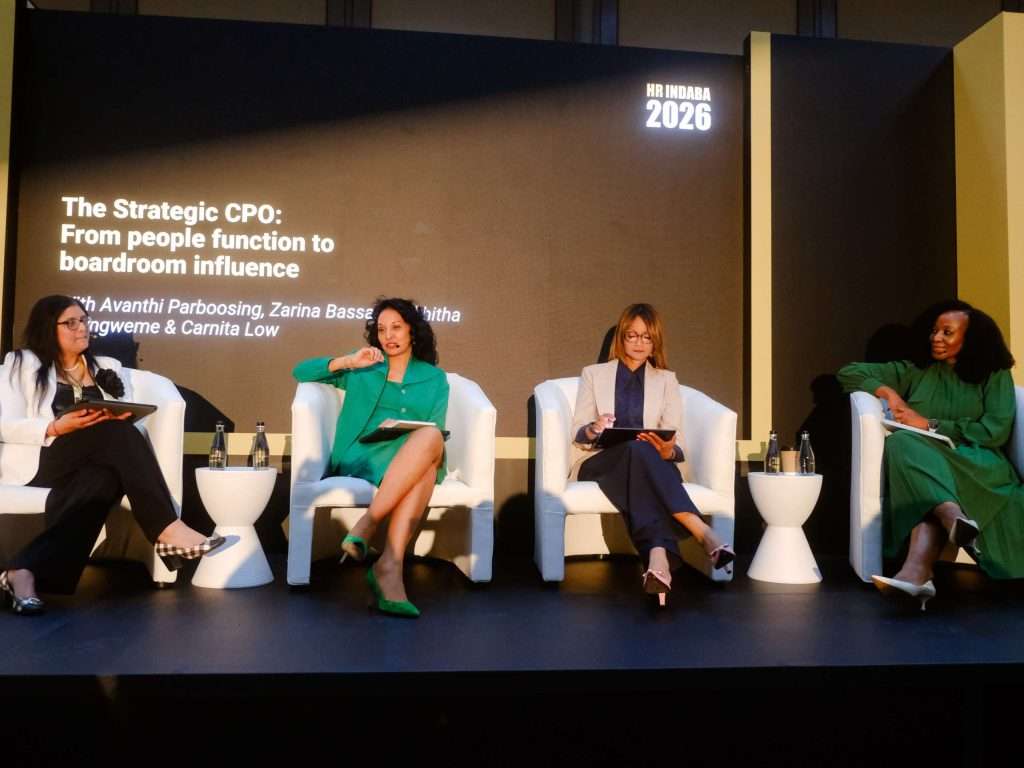
Recent changes to the Companies Amendment Act 16 of 2024 became a dominant talking point at a panel discussion titled The Strategic CPO: From people function to boardroom influence.
Panellists including Carnita Low, group company secretary and executive: legal and compliance at FirstRand; Zarina Bassa, non-executive director; Avanthi Parboosing, CPO at Life HealthCare and Zimkhitha Saungweme, group CPO at Discovery, delved into how CHROs are affected.
Avanthi and Zimkhitha opened the session by highlighting how the chief people officer is increasingly expected to operate far beyond the traditional HR mandate.
They also unpacked what high level stakeholders, including CEOs and board members expect from the modern CPO and what they need to do to earn and sustain their place at the executive and board table.
Zarina, non-executive director at several top companies such as Investec and Gold Fields first walked attendees through new and binding amendments to the Companies Amendment Act and its knock-on impact on the chief people officer role.
The amendments, which include increased shareholder oversight of executive and board pay for public and state-owned companies, means that a CPO presence in the boardroom is now a non-negotiable requirement.
Explaining the narrative
These include a binding vote requiring a 50 percent plus one majority on executive remuneration and a shareholder legal veto over the company’s remuneration policy voted on every three years.
“You, as the chief HR officer, have to then immediately start a process of interacting with shareholders, working on your end to ensure that the next year’s vote passes. If the next year’s vote doesn’t pass, effectively your entire remuneration committee (remcom) is then barred from being on the remcom for a period of two years. That is a huge issue for a board,” explained Zarina.
Under the new amendments HR must also disclose the mandatory pay gap between the top five percent and bottom five percent of earners, as well as the median salary structure.
“This effectively means that you are going to have to be very clear that the information you’re relying on is accurate, auditable and the definition of employee is accurate,” she added.
She also touched on the importance of companies preparing a clear explanatory narrative with its communications teams prior to public release, as institutional shareholders now use AI models to analyse integrated reports before casting their votes.
“Once the report is public, the company may have little chance to explain gaps or context before shareholders, media, or unions react,” Zarina said.
Prescriptive governance and the CPO
Carnita unpacked the CPO role from the employee and organisational perspective. Culture, remuneration philosophy, market pressures and reliable data about the organisation’s people risks fall in the purview of the CHRO who needs to explain what the data means for the business and its stakeholders.
“To ensure that you don’t get stuck between the CEO and the remcom, you need to be very clear on the temperature in your organisation,” said Carnita.
“If you cannot articulate to your CEO or your board what the tensions are in your structures, you will fail on the data. So the data will be your starting point of what is happening, what you see around you and how you then combine the two and assimilate that into articulations of what that means for your organisation,” Carnita added.
During an interactive session with audience members one CHRO asked the panel how to break the mindset of older generation leaders who sometimes undermine HR presence in the boardroom.
Zimkhitha advised that CHROs first build a relationship with their CEO which is based on trust and day-to-day support. “Don’t catch them unaware in a remuneration or a board meeting. Have a pre-briefing session with them, take them through everything and they need to know that you are there to support and enable, but you are independent,” Zimkhitha emphasised.
Another audience member touched on support for HR professionals themselves who often act as shock absorbers for the organisation.
Avanthi acknowledged this mental toll. “We take a lot of emotional baggage that happens from eight to five or seven to four in a business environment and we absorb it. We process it. We hand out advice and, often, at the expense of our own emotional stability and our own mental health.”
She went on to emphasise the importance of having a safe space at work where HR can vent. “I have a life coach on hand who acts as my shock absorber for everything that I have to do internally in the organisation. I also have a lovely team. I want CPOs to understand that whilst you take care of the mental, emotional and financial health of the entire organisation, pay back that to yourself,” she concluded.