
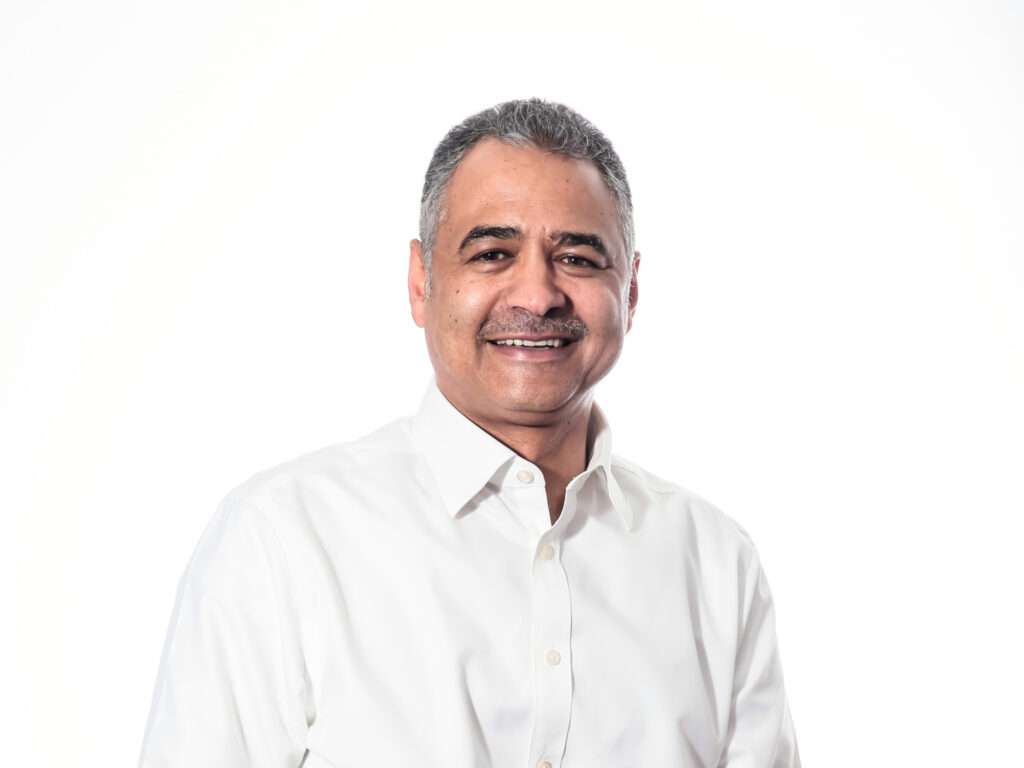
Navigating AI responsibly for growth, efficiency, and social impact can address the skills gaps and foster transformative learning experiences, writes Dr Chris Jardine, Group CEO of Tsebo Holdings.
How we embrace AI responsibly in businesses is arguably one of the hottest topics in boardrooms everywhere.
This discussion, however, won’t be complete without a perspective on how we can navigate the skills challenges by using AI (or any number of relevant technologies) to help us crack this very tough nut.
This is a time of breathtaking technological advancement while at the same time, we are dealing with quite staggering skills gaps. This intersection of high-tech and low skills presents both challenges and opportunities, particularly in how we manage the complexities of the skills crunch that threatens to stifle our growth as businesses and as a country.
The skills gap in our businesses is evident – accountants lack communication skills, HR managers lack conflict management abilities, and medical professionals struggle with emerging technologies. AI tools offer potential solutions to these challenges.
We must balance using technology to boost efficiency and profitability while addressing economic and social issues. These thoughts on AI are our perspective, a work in progress. In our low-margin industry, AI isn't a luxury but a necessity for enhancing operations, albeit with modest investments.
Impacting every job
Embarking on our AI journey a few years back, we delved into strategy, ideas, and aspirations, pondering the myriad ways to harness this technology. Waiting patiently for AI technologies to become commercially viable and aligned with our financial constraints was imperative.
Initially, our applications through Thorburn, our security division, utilised AI-enabled cameras and algorithms for smart monitoring. These applications expanded into retail and manufacturing, enhancing safety and efficiency. Recently, we incorporated accessible AI chatbots like ChatGPT and Copilot, while establishing ethical guidelines. We foresee AI impacting every job, prompting changes in task execution and associated costs, potentially leading to significant structural shifts in work and industries.
Our focus is on technology that lightens the workload and facilitates informed, quicker, insight-driven decisions. We strive to prepare our workforce for a world where AI proficiency is vital. Emphasising individual accountability, we require every user to obtain a "licence to operate". signifying comprehension of our AI policy, adherence to usage guidelines, participation in training, and commitment to a community of practice. Consequently, AI finds application across diverse areas of our business.
Our HR department employs AI for job descriptions, policy generation, and candidate shortlisting, exploring unbiased bots for succession planning and sentiment analysis for feedback. Future endeavours include using AI for strategic decision-making in monitoring brand reputation, while our compliance and internal audit teams leverage technology to streamline processes. Each user remains responsible for fact-checking and content delivery.
Cultural shift
Our next challenge is fostering a cultural shift by nurturing AI evangelists within our organisation, aligning with our change management philosophy. To ease any apprehension about new tech, we'll showcase its widespread adoption elsewhere, fostering a sense of camaraderie.
Simultaneously, we're accelerating the upgrade of our data infrastructure, transitioning to a dynamic data lake. This repository will handle diverse data formats, employing machine learning algorithms for actionable insights, revolutionising customer engagement, service management, talent acquisition, and marketing. By automating routine tasks and providing advanced analytical tools, we aim to elevate productivity and enable strategic focus, enhancing talent attraction and retention. Advanced analytics will pinpoint skills gaps, informing targeted training initiatives, ensuring our team remains at the industry forefront.
In essence, integrating AI and advanced analytics is about reshaping our workforce, closing the skills gap through innovation and strategic talent management. Your role as CHROs is pivotal in ensuring ethical and effective technology utilisation. For instance, AI-driven personalised learning, augmented by immersive tech, promises transformative learning experiences tailored to individual needs. This approach, exemplified by Sal Khan's vision for AI education, represents a dynamic leap in learning and development innovation.
AI has huge and rich promise for all aspects of our businesses. So, I think the very hard question for all of us is how do we embrace the transformative potential of these technologies for our workforce, our industries and our country as a whole? And that’s because I think that fundamentally, we don’t only need to get our heads around navigating the skills gap challenges in the Age of AI, we also have to get our hearts around the challenge.