
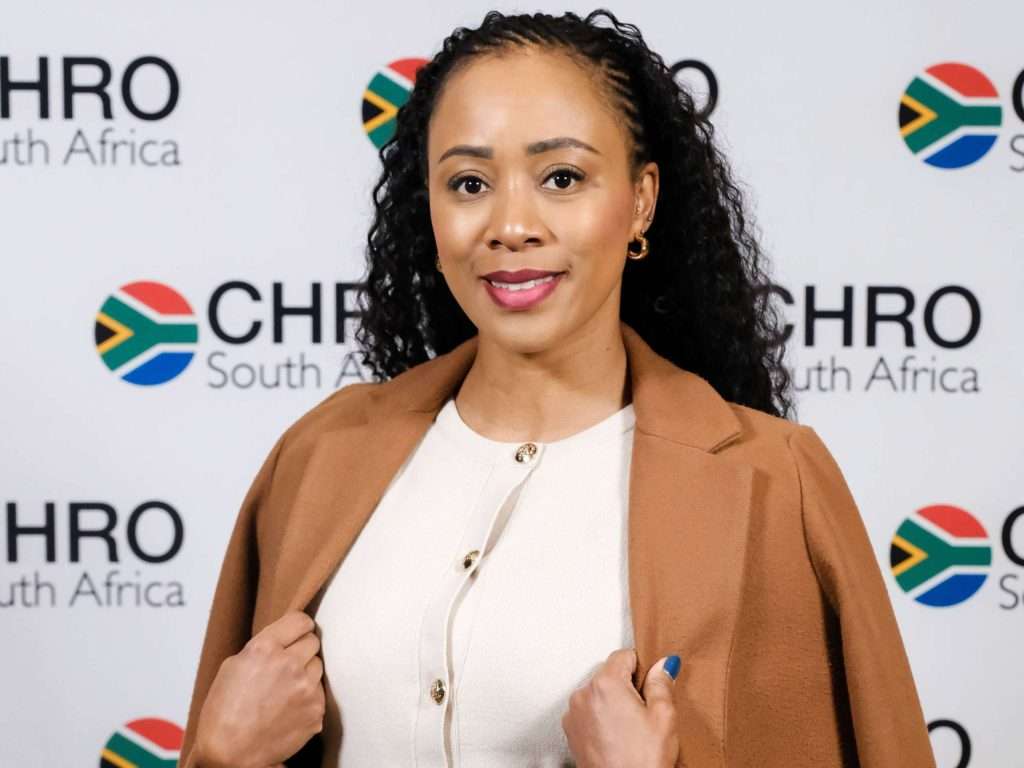
Like any good runner, Penny Adams knows recovery is part of the race. After a two-year out-of-office break spent clocking up 10km runs, she has returned refreshed and refocused as human capital executive at Primedia Out of Home.
Penny believes the break from corporate wasn’t time out of the HR race, but the exact training and preparation she needed to go the extra mile for her next one.
“I decided to take a sabbatical because I had leadership burnout,” she says “It's a real thing. I think we’ve been tiptoeing around it and simply saying corporate can be gruelling, but we don’t acknowledge it. Corporate fatigue and burnout are real, especially as leaders in high-pressure environments.”
Rather than rushing into another executive position, Penny returned to something that had sparked her curiosity years earlier.
“I wanted to explore my industrial psychology background and see what I could do with it. I'd studied up to master’s level, completed my internship and written my board exam, so I wanted to use it. At the same time, I was thinking about the long term. One day I will retire, so I need to think about what that chapter looks like too.”
Back with purpose
Returning to corporate had to therefore be more than an attractive title, but the right challenge, and she found it at Primedia Out of Home.
“Our CEO wants to transform the business from a traditional out-of-home media business into a digitally enabled insights-led business for clients. When you think about technological advancement and digitisation, it makes complete sense. I’ve supported technology businesses in previous roles, so that challenge really spoke to me. After coming from a large multinational, this also made sense for where I was in my career. It’s a smaller organisation in terms of size, but it is a complex business, especially when you consider our African operations.”
“Additionally, there has been a lot of change that has impacted the organisational culture. My responsibility is to rebuild a culture that's going to enable us to move forward to enable us to reach the ambitions we’ve set out in our company strategy.”
Her short-term focus is getting the fundamentals right. “My team is quite lean at the moment and they're still developing in their human capital careers, which actually presents a wonderful opportunity to grow capability. We first need to build those foundational elements. From there we move into operational excellence.”
In order to enable the business to drive a high-performance culture, she believes her own team needs to operate like a world-class symphony.
Playing to strengths
“My leadership philosophy is that I want to be a leader who enables my team, the business we support and the leaders I work alongside. I take a coaching approach because I’m genuinely interested in understanding people’s strengths. I’m interested in understanding what people are naturally good at and what they genuinely enjoy because those aren’t always the same thing. Someone can excel at something without enjoying it, while other things give them energy. My behavioural science background taught me to understand people in the world of work, so I spend time understanding both.”
“If somebody is exceptional at talent management but administration isn’t their strongest area, I don’t want them spending all their time on administration. Of course there are responsibilities everybody has, but I’d rather have that person investing their energy where they create the most value, while someone else complements that strength. Building teams is about understanding people properly. It’s recognising that everybody develops differently and nobody is ready at exactly the same time.”
Listening to Penny explain leadership, it’s difficult to separate the executive from the industrial psychologist. In many ways, the two have always gone hand in hand, even if HR wasn't part of her original career plan.
“I arrived at Wits convinced I was going to become a speech therapist. I only knew about the profession because we’d had a career day at school, but I loved languages. I’ve always enjoyed communicating with people, whether that’s through written or spoken language, so speech therapy really appealed to me.”
“After some time, I realised it was interesting, but it wasn’t me. Back then we didn’t have social media or easy access to information about different careers, so your choices were limited by what you knew or had been exposed to. Psychology was the subject that really stayed with me because I genuinely enjoyed it. I was also studying linguistics, so I decided those would become my majors.”
Building a career
It wasn’t until third year that industrial psychology entered the picture. “I remember thinking this is fascinating. I could understand human behaviour in the workplace, but I could also build a career where I was applying what I’d studied. That was important to me because I never wanted to study one thing and then build a career in something completely unrelated.”
Purpose has been the common thread running through Penny’s career. Even the unexpected detours eventually led her back to where she knew she belonged.
“If I set a goal, there’s a reason why I’ve set that goal. Even if life happens or I get sidetracked, I always return to the route that’s going to take me there. I think that’s partly because I’m the eldest child. There’s a level of responsibility that comes with being the firstborn, especially in an African family. It’s also strongly linked to my personality. Every assessment I’ve ever done has consistently told me the same thing – leadership always comes out as a strong domain.”
On the right track
That same determination carries over into her life outside work, where running has become a regular part of her routine, although she laughs off any suggestion of taking on an ultramarathon. “Forty-two kilometres is a bit much for me. I enjoy running 10km because it’s really about health and wellness. It’s something I genuinely enjoy.”
The same mindset that keeps her lacing up her running shoes has guided her professional journey. For Penny, progress has always been about consistency, curiosity and taking on the next challenge when the time is right.
“I had explored different specialist areas within human capital because I’m naturally curious. Eventually I reached a point where I wanted to move back into a broader leadership role and really work on my leadership presence and leadership brand.”
Curiosity and learning continues to shape her life today because when she’s not working, running or spending time with her teenage daughter, she usually reaches for a book or is found recommending one to her mentees.
“I read fiction because it’s an escape, but I also spend a lot of time reading business articles. I like understanding what leadership means today. I’m interested in how AI can enable human capital and how organisations are responding to change. I like staying close to what’s happening and topical.”
“I am also a guest lecturer at the University of Johannesburg, facilitating a coaching course with master’s students, something that is one of the most rewarding parts of my current schedule. They’re incredibly curious and highly engaged. I really enjoy those conversations because they challenge the way you think as well.”