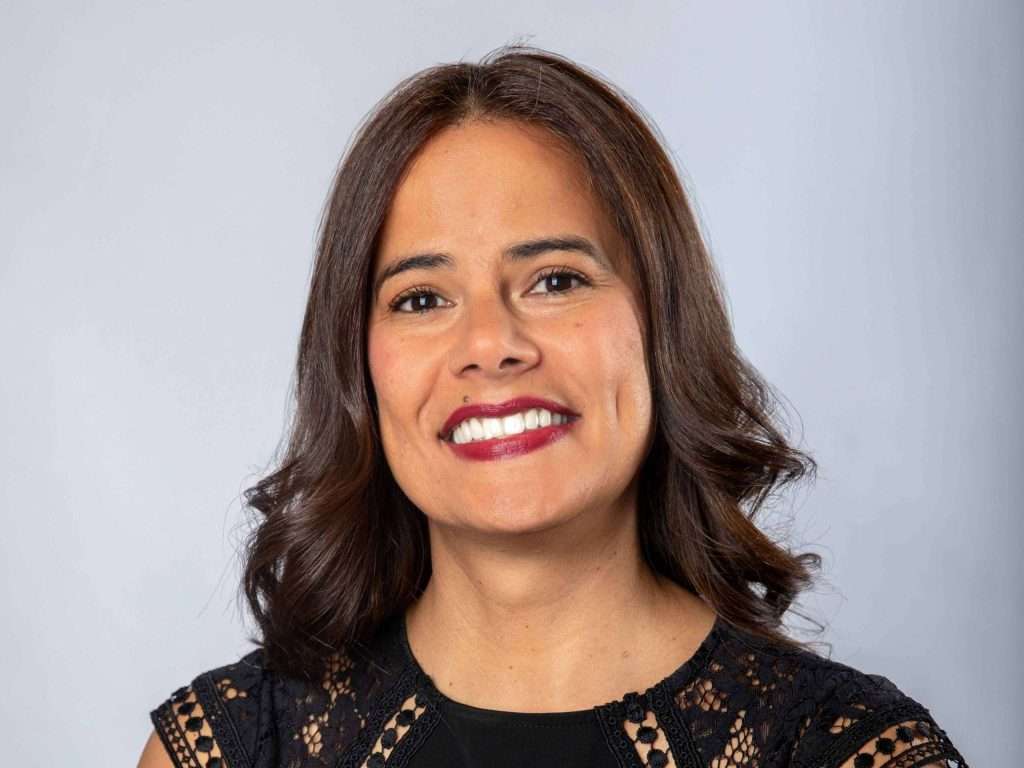
Sandi Richardson’s 13 years at RCS have taught her that organisational heritage should have a handover plan. For the chief people officer, that means sharing hard-earned knowledge, creating opportunities to grow and knowing what is worth carrying forward.
This Heritage Month, Sandi reflects on the kind of heritage that cannot be put behind glass or captured in a photograph, but lives on when knowledge is shared. She believes keeping that knowledge alive could start with something as simple as teaching someone else what you know.
Q: When you think about your own HR career, what have you inherited from the leaders and mentors before you, and what do you feel is now yours to pass on?
I have been blessed with mentors and sponsors from both HR and business who believed in my ability before I believed in it myself. An HR business partner in London backed me to be her maternity cover, which was the first time somebody handed me a role I would not have put myself forward for. Later, the regional Head of HR for BNP Paribas trusted me to be her deputy. They gave me exposure early, put me in rooms I did not always feel ready for and let me try things outside my comfort zone, knowing there was a safety net if I needed it. That is the biggest thing I inherited: confidence is often borrowed from somebody else before it becomes your own.
I also inherited the belief that HR has to understand the business, not only the people in it. My commercial curiosity was fed mostly by business leaders rather than HR ones. These business leaders, all expected me to understand how the business makes its money, and I am better at my job for it.
If I had to name one person it would be Regan Adams, our CEO. He takes a real interest in people and in mentoring them, and he has always balanced protecting me with pushing me to be better. That combination is rarer than it sounds, and it is the thing I have tried hardest to copy.
What is mine to pass on is exactly that. I have been at RCS for thirteen years and some of my proudest moments have been watching people who started in our contact centre move into finance, HR, IT and leadership roles. My job now is to make sure the next generation of HR professionals get the same yes that I got, and that they understand how the business works as well as they understand how to look after its people. Protecting people and pushing them are not opposites. The mentors who shaped me did both.
Q: How do you preserve the best parts of an organisation’s heritage without allowing “the way we’ve always done things” to become an excuse for resisting change?
I separate what we stand for from how we do things. Purpose and values should be stable. Processes, structures and habits should always be open to challenge.
Three years before our brand relaunch, we took the RCS executive team back to first principles: why do we exist, who do we serve and to what end? That gave us a core purpose and values that most of our people can quote without prompting. Because that foundation was settled, we have been able to change a great deal around it, including our product offering and how we engage our customers, without people feeling the business has lost its identity.
When I hear “this is how we’ve always done it”, I ask what the practice was originally meant to protect. Often the intent is still right and only the method has aged. Saying that openly helps people let go of the method without feeling their experience is being dismissed.
We also work through the impact of change on every affected role before it lands. A lot of resistance is uncertainty in disguise.
Q: If an organisation has been around for decades, its people carry a kind of living history. How should CHROs decide what organisational knowledge and culture is worth preserving for the next generation?
I would use three tests:
- Does it help us serve our customers well?
- Does it reflect our values?
- Would the business take years to rebuild it if this person walked out tomorrow?
The knowledge that passes those tests is rarely in a policy manual. It is the judgement of an experienced agent who knows how to speak to a customer having a difficult month, or the understanding of why a process was designed the way it was.
At RCS we have leaders who started on the contact centre floor or in our retail partner stores. That customer understanding travels with them into finance, risk, marketing, IT and HR. That is heritage worth protecting.
What is not worth preserving is anything that exists only because nobody has questioned it.
Culture is carried by people, not documents. So, the CHRO’s real job is to build the pathways that keep experienced people close to newer ones: internal mobility, mentoring, stretch assignments and exposure to senior leaders. If knowledge lives in one head, it is a risk. If it lives in a team, it becomes part of the organisation’s memory.
Q: What have you found actually gets people to share what they know rather than simply keeping that knowledge within their own role?
Four things, in my experience.
The first is recognition. If knowledge is what makes you indispensable, you will guard it. If passing it on is what gets you noticed and promoted, you will share freely. Leaders have to reward the person who builds capability in others, not only the person who holds it.
The second is security. People hold on to knowledge to protect themselves. When they trust that the organisation will stand by them, that instinct fades. We saw this through Covid, when we came through without retrenching a single employee.
The third is ownership. Our employees tell us that what grew them most was a manager who handed them meaningful work and trusted them with it. That only happens when the more experienced person is willing to let go and letting go is itself a way of sharing.
The fourth is making it easy to ask. Knowledge moves when somebody asks for it. Most people are surprised by how willing colleagues are to help once they are invited to.
Q: What is something you have learned from a colleague at RCS that was never part of a formal training programme but has stayed with you?
Nobody can train you in how to treat people. You learn it by watching and by experiencing it and I continue to learn it every day from our CEO, Regan Adams.
What I have learned is that you treat every person with care, grace and respect, regardless of who they are or what they do. You can be kind and firm at the same time. The two are not in conflict. At work, the pressures and demands of a role can easily make you forget that you are always dealing with a whole person. Remembering that has changed me permanently, and it is how I try to lead.
We have things we want to achieve and goals we want to pursue, but never at the expense of a human being. For me, that is the lesson that matters most.
Q: If you could encourage every CHRO to do one thing to preserve knowledge within their organisation, what would it be?
Ask your most experienced people to teach one thing to one person within the next 30 days.
Every organisation has people whose knowledge would be very hard to replace: the long-serving colleague who knows why a system works the way it does, or the team leader everyone goes to when a situation gets difficult. Identify a handful of them and pair each one with someone earlier in their career. Give it time in the diary, not only goodwill.
Then ask the learner to capture what they have learned, in whatever format suits them: a short video, a voice note or a one-page guide. Knowledge that lives in one person’s head is always one resignation away from being lost.
It sounds small, and that is the point. Across South Africa, skills survive because someone takes the time to teach them, and organisations are no different. Talent in this country is everywhere. Opportunity is not. As CHROs, we can make sure the knowledge inside our organisations becomes someone else’s opportunity.