
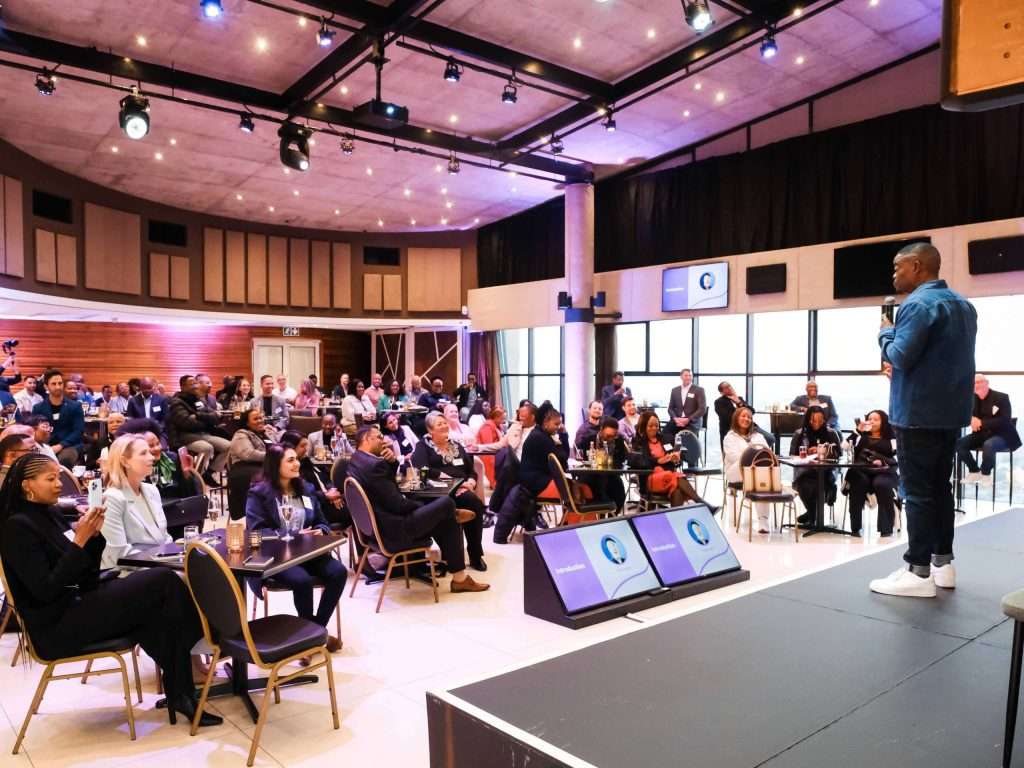
For one evening only, trusted HR partners were given four minutes to stand in front of almost 100 of South Africa's top HR leaders and share an idea they believed could help solve a workplace challenge. Speak for longer than four minutes, and risk hearing the dreaded buzzer.
Held on 29 July at The Venue Green Park in Sandton, comedian Trevor Gumbi kept the evening moving with his trademark humour by balancing laughs with light-hearted reminders that the clock was always ticking. The only thing louder than the laughter in the room was indeed the timer.
The first session set the tone, and to their credit, nobody got buzzed out.

Tick, tock
The first speaker, Blessing Utete, commercial executive head at Old Mutual Corporate, wasted no time reminding the room of one of HR's biggest challenges. “45 Percent of working South Africans are financially stressed. We know that 40 percent are gambling to cover their debts every month, while 31 percent are leaving their jobs to make ends meet.”
From there, the focus turned to AI with Jannie Malan, principal solutions consultant at Workday, arguing that many organisations are rushing to add chatbots without solving the real work HR teams need done.
Heine Bellingan, co-founder and CEO of JOBJACK, shifted the conversation to recruitment, saying organisations build stronger teams when they make better decisions before people even join the business. “You gain visibility into who is trustworthy, who is emotionally resilient and who has a strong capacity to learn. That's how you build stronger teams and stronger future managers,” he said.
The discussion then moved to learning and development. Michelle Ponnen, stakeholder relationship manager at Wits Plus took the stage to highlight why organisations that invest in building skills strengthen leadership are able to improve performance and create a culture of continuous learning.
Herman Le Grange, director for global solutions at Lyra ended the first session with a reminder that not every workplace challenge is visible. “Think of a valued employee who gives their all every day,” he said. “Behind that brave face, they may be carrying financial strain, family responsibilities and silent stress that no one at work ever sees.”
Solutions beat time
With the timer temporarily paused for a chance to catch up over coffee and continue the conversations sparked by the first round, everyone settled back in for session two.
Jacqui Swart, marketing manager at Discovery Corporate & Employee Benefits, opened the second session by explaining how debt is becoming one of the biggest issues employers are seeing. “Debt is something we've been looking at very closely because we're seeing the impact everywhere. We feel it in our HR teams, we see it on the frontline and we hear it from our clients. Debt has become a major challenge.”
Addressing the audience on the importance of payroll, Felix Godlo, enterprise account executive at Deel Local Payroll, powered by PaySpace, reminded HR leaders that payroll has become part of the employee experience, not just an administrative task.
Gail Lumby, senior client partner at Korn Ferry, took the stage to say, “For decades, organisations have been designed around jobs. The future will be designed around skills, capabilities and people.”
Meanwhile, William Small-Smith, chief commercial officer at Paymenow, returned to the issue of financial wellbeing. “The reality is that 71 percent of South Africans are financially overextended, while only 18 percent have access to formal bank credit. That financial stress doesn't stay at home. It follows employees to work, costing businesses billions in lost productivity every year.” he said.
Ludwick Marishane, chief partnerships officer and Johannesburg director at Excel@Uni, rounded off the session by highlighting the hidden cost of administering bursaries.

Time well pitched
Refuelled by food, drinks and plenty of networking, the timer was reset one last time. With plates cleared, glasses topped up and conversations still buzzing around the room, the final group of speakers stepped up to make their four minutes count.
Chris Hellmann, commercial Director at Jem, spoke about the value and importance of reaching frontline workers, stating, “Your frontline workers probably don't have a laptop, an email address or a desk, yet they're the people serving your customers and keeping your business running.”
Riyan Silochan, chief group solutions officer at LRMG, said leadership development needs to show measurable results, not just good intentions. “Simply saying someone had a coach isn't enough. We need to know whether it made a measurable difference,” he shared.
Circling back to education, Nishen Munnisunker, CEO corporate education at Regenesys, reminded the audience that organisations that keep learning are the ones most likely to stay competitive.
The final presentation came from Paolo Urzi, partnership manager at Factorial, who spoke about using reliable people data to make better decisions and improve the employee experience.

Throughout the evening, the topics changed but the challenges sounded familiar. Financial wellbeing, AI, hiring, learning, frontline employees and better data are all keeping HR leaders busy.
The Pitch Parade may have broken CHRO South Africa's usual format, but it achieved something valuable. In four-minute bursts, HR leaders were exposed to fresh thinking, practical ideas and emerging trends, before returning to what they do best: continuing the conversations with peers long after the timer stopped.
There may not have been a single buzzer all evening, but there was plenty of buzz. The stopwatch had done its job. The networking did the rest.