
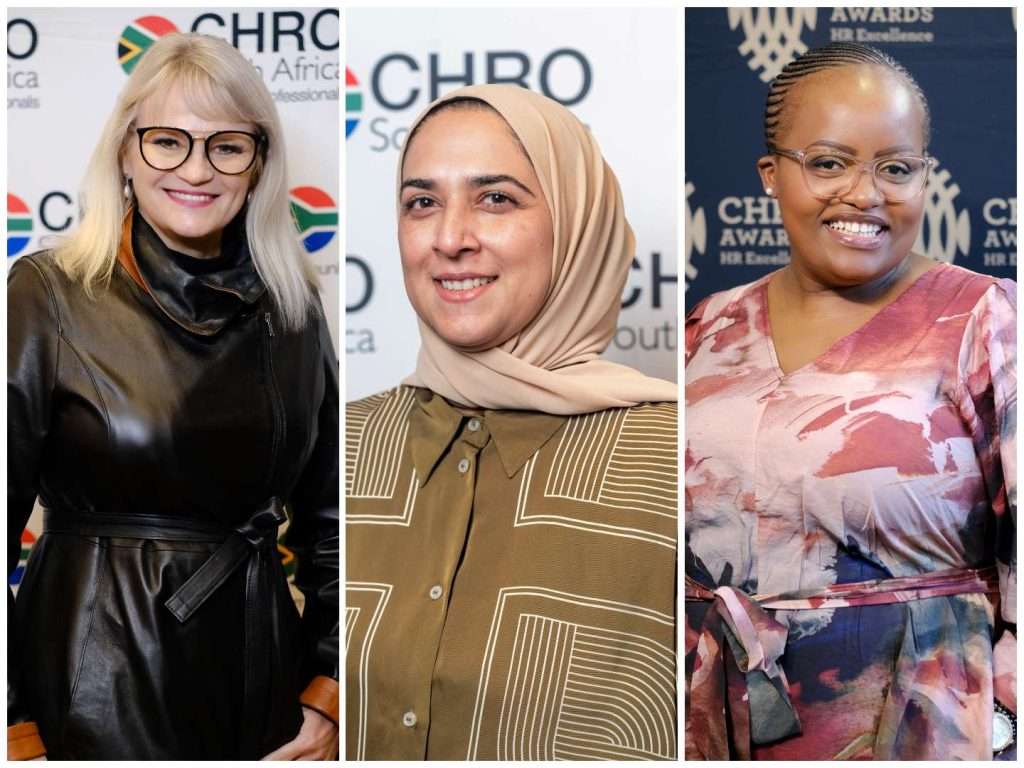
What does the workplace women deserve look like? This Women’s Day, we put that question to HR leaders Elanie Kruger, CHRO at Tsebo Solutions Group; Shehnaaz Kajee, head of HR at HBZ Bank; and Sinqobile Khuluse, CPO at Sandock Austral Shipyards, who have a front-row seat to shaping the employee experience.
According to Elanie Kruger, CHRO at Tsebo Solutions Group, the answer does not lie in lowering the bar or creating preferential treatment, but in creating an environment where the bar is fair, opportunity is accessible and women can succeed without having to compromise who they are.
“The workplace women deserve is simply a great workplace,” she says. “It is one where women do not have to choose between success and authenticity. They are respected for their expertise, heard for their ideas and recognised for the value they create. It is built on fairness, opportunity and mutual respect. Women should have equal access to career opportunities, meaningful development, sponsorship, leadership roles and equitable reward. They should be able to contribute confidently, challenge ideas constructively and compete on a level playing field where capability and performance matter most.”
Trust the talent
For Elanie, one of the most important changes would be to rethink the traditional markers of career potential, particularly the assumption that the people most visible in the workplace are necessarily the people making the greatest impact.
“I would redesign career progression by moving beyond traditional notions of visibility and presence as indicators of potential. Too many organisations still reward those who are seen rather than those who consistently create value. The future of work should focus on outcomes, impact and capability, supported by flexible ways of working that recognise the realities of people's lives. This is particularly important for women, who still often carry a greater share of caregiving responsibilities while pursuing ambitious careers. Flexible work should enable people to perform at their best while maintaining clear accountability for outcomes.”
“I also believe organisations need to invest more intentionally in sponsorship, not just mentorship. Women rarely lack capability; what is often missing is advocacy. Leaders should actively create opportunities, provide meaningful exposure and ensure talented people are recognised for the impact they deliver.”
She also looks ahead to the assumptions that should have no place in the careers of the next generation of women leaders
“I hope future generations never experience the expectation that women must work harder than their peers to prove they are equally capable, or that they must adapt their leadership style to fit a preconceived notion of what leadership should look like.”
“I also hope they never encounter environments where flexibility is perceived as a lack of commitment or where motherhood is viewed as a career limitation rather than one aspect of a person's life. The best workplaces judge people by the quality of their contribution, integrity and results – not by assumptions about gender or outdated expectations of what leadership should look like.”
Her time to lead
She notes how leaving those outdated expectations behind requires leaders to take responsibility for the environments they create and the opportunities they make available.
“As leaders, our responsibility is to create workplaces where opportunity is fair, expectations are clear and contribution is recognised consistently.”
“I do not believe women should succeed because they are women. They should succeed because they are capable, deliver results and create value. Our role is to ensure they have the same opportunity to demonstrate that capability as anyone else.”
Shehnaaz Kajee, head of HR at HBZ Bank, similarly sees the workplace women deserve as a place where women's value is visible not only in the work they do, but also in the opportunities they are given to lead and grow.
“The workplace women deserve is a place where women are respected, supported and appreciated. Respected as equals and this will be evident where there is a fair representation of women in management and leadership roles. Supported with flexible work solutions and benefits. Appreciated through initiatives such as women's day which celebrates the strength and resilience of women and their contribution to their families, to business, to society and the country as a whole.”
And when life refuses to fit neatly into office hours, Shehnaaz believes the workplace should be capable of adapting without making women feel as though they are asking for an exception.
“What I would redesign in workplaces to support women better without a doubt would be to offer more flexibility to women, and it should not be a one-size-fits all. Rather an approach that offers flexibility to cater for their individual needs and unique responsibilities. This means that managers will need to engage with individuals to see what would work well for them and to take the time to know and understand their personal circumstances”
“If an individual delivers results, the ‘how it's done, where it's done and when it's done’ shouldn't matter and unless the person breaks your trust, trust them to manage their work responsibly. Who knows, you may find that with this approach, the person may feel more motivated to deliver as they feel seen, understood, and trusted.”
A fairer future
She points out underrepresentation in senior leadership roles and gender pay-gaps as a workplace tradition she hopes future generations of women leaders never experience.
“In addition to workplace traditions, I would include that women leaders and women with goals of being in leadership, should never experience the feeling of self-doubt - even if they're the only lady at the table. They must believe in their abilities and their potential to add significant value and make a positive difference to business.”
According to Sinqobile Khuluse, CPO at Sandock Austral Shipyards, the workplace women deserve is not one that asks less of women, but one that expects more while recognising the realities of the lives they lead.
“Women want to solve complex problems, take on difficult challenges and lead. But we also wear many hats, carrying responsibilities that extend well beyond the workplace, much of it within the care economy. The workplace of the future needs to be challenging enough to stretch women and accommodating enough to enable them to thrive. If we fail to create those conditions, we risk losing highly skilled women from the workforce when they are forced to make choices between competing priorities,” she explains.
“The tone is always set from the top, if the management or executive team of an organisation believes in a woman’s capability the support is evident, we need more male sponsors to buy into the development of women as a priority of the business, the conversation around women empowerment should not only be championed by other women.”
A workplace tradition she hopes future generations of women leaders experience is one that continues to challenge women, trusts women with complex problems, and gives women the opportunity to lead.
“We are not asking for less, we are asking for the right conditions to prevail so that we can thrive. Women often wear many hats and carry responsibilities beyond the workplace, particularly through the care economy. The workplace women deserve recognises that reality, and creates an environment that is more accommodating, inclusive, and inviting, without compromising ambition or performance.”
“Ultimately, I believe this is about more than supporting women, it is about retaining capability. When women are forced to choose between competing priorities, we risk losing valuable skills, experience and leadership from the workforce. The workplace women deserve is one where we can bring our full capability to the table, while still being able to navigate the many roles we hold outside of it.”