
CHROs have moved past the era where saying this is the way we’ve always done things is the only rule of thumb. Today, the workplace has become a place where someone who remembers the first fax machine collaborates in real-time with an intern who uses AI to automate their morning emails.
For the first time in history, organisations are navigating workplaces made up of four, and in some cases five generations working side by side.
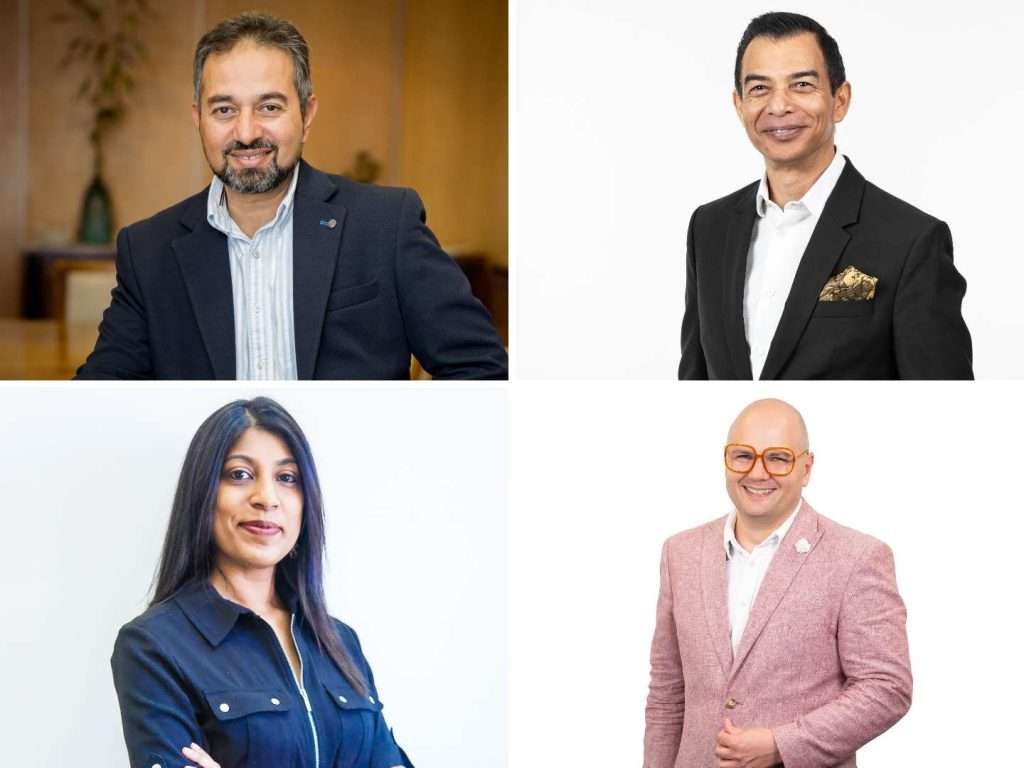
While this has often been described as complex, even difficult, HR leaders experiencing this such as Sana-Ullah Bray, group executive for human capital at Sanlam Group; Enid Lizamore, CHRO at Heineken; and MTN Group CHRO Paul Norman, are realising that a multi-generational workforce is essentially a strategic advantage and living library of diverse cognitive approaches.
Sana-Ullah Bray believes the secret to managing this complexity isn’t found in a textbook on Gen Z trends, but in fundamental human decency.
“Managing a multi‑generational team is about understanding that people are at different life and career stages, and responding appropriately. Leaders need to listen well, communicate clearly and be able to espouse their style. That might mean providing more structure and feedback for someone early in their career, while offering autonomy and trust to someone more experienced. Importantly, leaders also need the confidence to have honest conversations about expectations, performance and development, regardless of age,” he says.
“The biggest mistake is treating generations as fixed categories. People often assume age automatically determines values, work ethic or ambition. In reality, what we see much more strongly are differences driven by context, things like economic conditions, access to opportunity, life stage, or the type of work someone does. Another common generalisation is assuming that generational tension is inevitable. In my experience, most friction at work comes from unclear expectations or poor leadership, not from age differences.”
Creating space for different views
For Sana-Ullah, the strategy moving forward is one of simplicity and fairness, as he cautions against the urge to over-complicate HR policies to satisfy every demographic.
“We regularly examine our practices through an inclusion lens. Leaders have a responsibility to actively create space for different perspectives to be heard, and then take all ages on the culture journey. We focus on building leadership capability, not age‑specific training. Managers are supported to lead with credibility, clarity and respect, regardless of whether their team members are older or younger,” he explains.
“At Sanlam our people are at the centre of our business and human capital strategy. If your systems are clear, fair and flexible, they will work for people at different stages of life and their career. Over‑engineering solutions for specific generations can unintentionally create division or complexity. When organisations create the conditions for learning, mutual respect and contribution, experience and fresh perspective complement one another purposefully.”
This sentiment of looking past the ages is echoed by Enid Lizamore. She views the current multi-generational make-up not as a hurdle to be cleared, but as a strategic goldmine, provided leaders can stop reducing their employees to birth years.
“One of the most common mistakes leaders make when discussing generational diversity is oversimplification. People are reduced to labels such as Baby Boomer, Gen X, Millennial or Gen Z, and a predictable set of characteristics is assigned to each group. While generational context can be useful, it becomes limiting when it replaces curiosity, understanding and acceptance,” she says.
Earning credibility
“I was reminded of this in a leadership session a few months ago, when a manager confidently said our younger employees just don’t want to commit. A few minutes later, a much younger team member described juggling full-time work, further studies, and supporting family members, all while trying to build a career in an uncertain economy. What had been framed as a generational issue was, in reality, a human one.”
According to Enid, reporting lines no longer mirror age or tenure, authority does not always follow experience and experience does not always guarantee influence.
“Many managers today find themselves leading people who are significantly older or much younger than they are. For first-time leaders in particular, this can feel uncomfortable. I have had managers quietly admit they were unsure how to lead someone with more years of experience than themselves, or how to earn credibility with younger team members who challenged traditional hierarchies.”
She acknowledges that organisations have a responsibility to normalise this reality and equip managers accordingly. “Support should start with capability building, not compliance training. Managers need practical guidance on how to build credibility, have meaningful conversations and lead with confidence regardless of age. If I had to offer one piece of advice to CHROs, it would be to design for humans, not generations.”
According to Paul Norman, generational shifts are perhaps the most consistent and natural social markers in human history. While understanding these shifts is a good start point, for him it still does not define the individual.
Damaging narratives
“I have come to understand that context, life-stages and experiences of individuals matter, over social attributes. Interestingly, our approach to workplace culture and strategy has also transformed over time, much like generational shifts. For the longest time, building standardised one-size-fits all processes and policies for consistency and fairness was paramount. While it had its benefits, it overlooked and often ignored the context of the individual,” he notes.
“This realisation led to the advent of persona-based processes and policies. It recognises and aims to cater to the needs of similar groups of people. While an important step forward, it relies heavily on broad-based personalities and preferences.”
He warns that assumptions such as thinking younger employees are automatically tech-savvy but easily distracted, or that older employees are stable but resistant to change, may sound harmless, but can creep into policies, promotion decisions and culture in ways that damage trust.
“The reality is that preferences are more individual than generational. Labelling people by their generational affiliation leads to narratives that find their way into workplace policies, strategies and decisions on company culture. The lesson to be learnt is that while it’s useful to understand the context of each generation, workplace strategies must be designed around the individual,” he elaborates.
“We often consider multi-generational teams as a culture-problem to manage, but an alternative way of thinking about this is that it is a human condition. At its core, humans are diverse, social and fundamentally conditioned to move in groups, often reflecting similar attributes. This affiliation creates a sense of belonging, safety and being part of something that is bigger than us. Generational affiliation is one of many attributes that binds people with similar social ecosystems, experiences, exposure and outlook. To know what makes multi-generational teams thrive, is to understand context, underlying influences, boundaries of respect and grounds of commonality that bring people together.”
Shifting dynamics
He’s also clear that managers need support because leading someone older or much younger can feel uncomfortable. He explains that’s why MTN developed its Four Hats of Leadership framework where managers are encouraged to show up as a chief empathy officer, chief life coach, chief problem-solver and chief conflict-resolver.
“For us at MTN, ‘Hospitality-Grade HR’ is driving our ambition.to create an ecosystem where every person is seen, recognised and served in their context. Practically speaking, this means, we truly need to know our people, their context, their drivers, motivations and purpose. Policies, processes, structures, frameworks and jobs turn into meaningful experiences where every generation is served equitably,” he says.
“We need to be bold, learn and seek inspiration from the world around us. As HR leaders, we need to reframe HR from a process function to a product function that serves each individual. This is at the very heart of designing for multi-generational workforces.”
Providing an in-depth perspective on these shifting dynamics, Dr Dieter Veldsman warns that HR leaders often oversimplify by treating age as the primary driver of how people think, behave and engage at work.
“Generational labels are blunt instruments. In practice, factors such as life stage, cultural and socio-economic background, career experiences and personal value systems often have a far greater influence on what employees value and expect from work. For HR leaders, the fundamental shift is moving from asking which generation someone belongs to to understanding what has shaped their perspective and work experience,” he says.
Building a stronger understanding
“A common mistake is trying to design for everyone at once, which usually means designing for no one in particular. Broad, generic solutions dilute impact and create unclear employee experiences. A more effective approach is to develop clear workforce personas that reflect who actually makes up the organisation, and to design intentionally around those personas. This also requires clarity about who you are as an employer. You cannot be everything to everyone, and being explicit about the type of organisation you are and the experience you can genuinely deliver builds far more credibility and trust.”
Rather than focusing solely on the next generation, Dieter advises CHROs to build a stronger understanding of who is already represented in their workforce and how that representation is changing over time.
“Shifting demographics and labour market dynamics make this insight critical. The same employer principles should apply across the organisation, but they should be experienced in different ways by different groups. When organisations stay anchored in a clear employer identity and use it thoughtfully across diverse personas, they can evolve without creating unnecessary tension or exclusion,” he noted.
“Invest in employee listening and move beyond surveys towards genuine co-design. This means creating ongoing mechanisms for employees to shape how work is designed and experienced. When organisations listen consistently and involve employees in solutions, generational intelligence becomes part of everyday people practice rather than a standalone initiative.”