
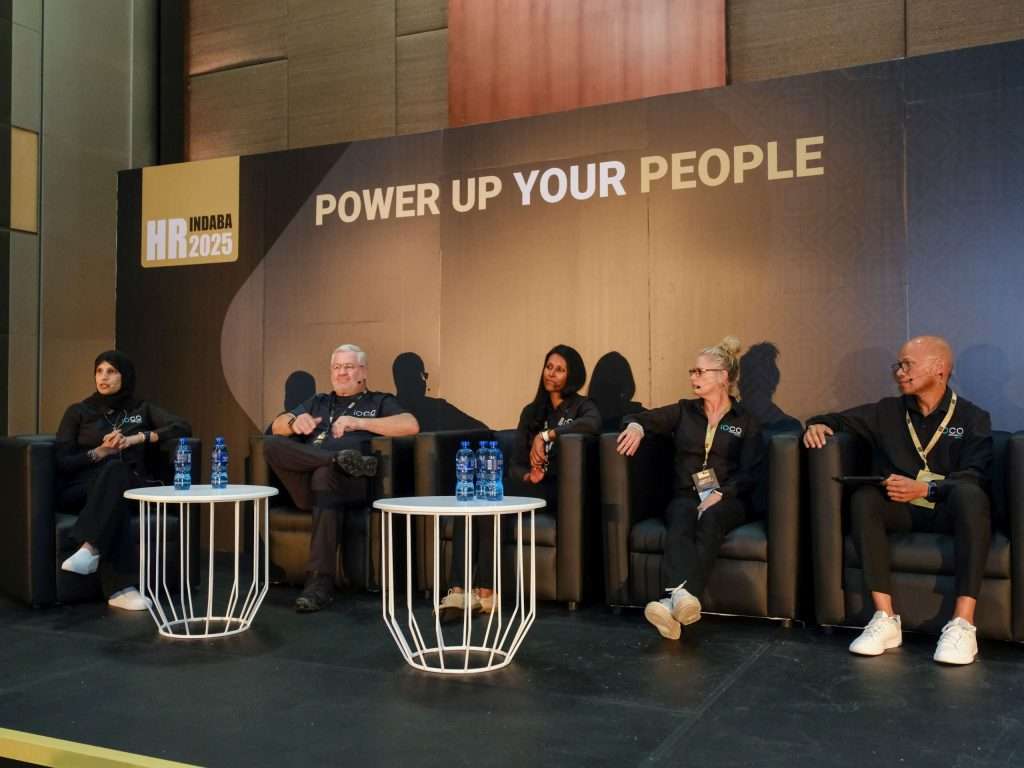
Preparing for a workplace that doesn’t yet exist but is already rewriting the rules of how HR professionals work, strategise, and lead demands new thinking, curiosity, and a willingness to adapt.
That statement was explored in depth by Hein Weyers, cluster executive at OKS; Servaas du Plessis, CEO of XTND; Prabasni Munsami, strategic account executive at Symplexity; and Rosita Otten, legal consultant at Inlexso, during a session titled Preparing for the workplace of 2030 at the recent fully packed 2025 HR Indaba.
Hein Weyers, cluster executive at OKS, framed the workplace of tomorrow as a puzzle where HR teams must work on aligning skills, structure and tech for the next decade. For him, understanding the pressures HR leaders face is the first step towards designing solutions that actually work.
“In our people solutions business, which is geared towards the extended enterprise, we regularly speak with chief people officers and ask what keeps them awake at night. Regulatory requirements such as B-BBEE and employment equity, future skills development and HR technology enablement are major concerns. Funding is another ongoing challenge. Increasingly, chief people officers are asking how they can stay relevant as a people and culture team. The conversation is shifting, it is no longer just about people and culture, but about integrating machines, people and culture.”
Hein broke this down into five areas for organisations navigating the changing world of work which include the way jobs are designed, how learning and development programmes are approached, reskilling and upskilling employees, embedding adaptability into the organisation’s culture, and great leadership.
“If you’re not going to create the opportunity for employees to be curious, to apply the new skills they’ve learnt and to fail quickly enough to succeed, then you won’t have a culture that truly reflects adaptability and agility.”
Making functions more strategic
While a strong strategy remains essential, technology is already reshaping the daily work of HR as Servaas du Plessis, CEO of XTND noted, illustrating how it is even transforming recruitment.
“Traditional behavioural assessments are going away very soon. AI is already in recruitment, and in the future, it will probably replace much of that process. We’ve developed a solution called Authentic that uses behavioural markers in the human voice. We can determine a lot of things including whether a person is truthful about what they have on their CV, qualifications, experience, or even criminal background. Once you onboard a person, you’re onboarding them for a long-term relationship, so you should do more in the beginning before bringing a person into your organisation.”
Prabasni Munsami, strategic account executive at Symplexity, pointed out that HR tech solutions such as this can make the function more strategic. “Employee experience runs across the entire lifecycle, from hire to retire. Streamlined processes, automated workflows, and real-time reporting give HR teams the tools to make smarter, faster and data-driven decisions. The last, and almost like a golden thread, is data. Having access to that data and what you use it for as the human capital team is key.”
Rosita Otten, legal consultant at Inlexso stepped in to emphasise that technology is only as strong as the ethics behind it, cautioning that no algorithm can absolve leaders of responsibility. She reminded HR professionals that while speed and automation are powerful, fairness and compliance must always lead.
“AI shouldn’t be your ultimate decision-maker because the human factor is also important. Bringing together the human factor, AI, and technology requires organisations to consider how they can make themselves risk-averse. AI and technology are wonderful, it can be faster, quicker, and cost-effective. But when you face litigation because you acted too fast or assumed AI made the right decision without considering risk, you have a problem. The reality is that it still uses the human element to input information into the system for a decision to be made. This shows the importance of linking technology with the human element and AI to ensure discrimination is not an issue within your organisation.”