
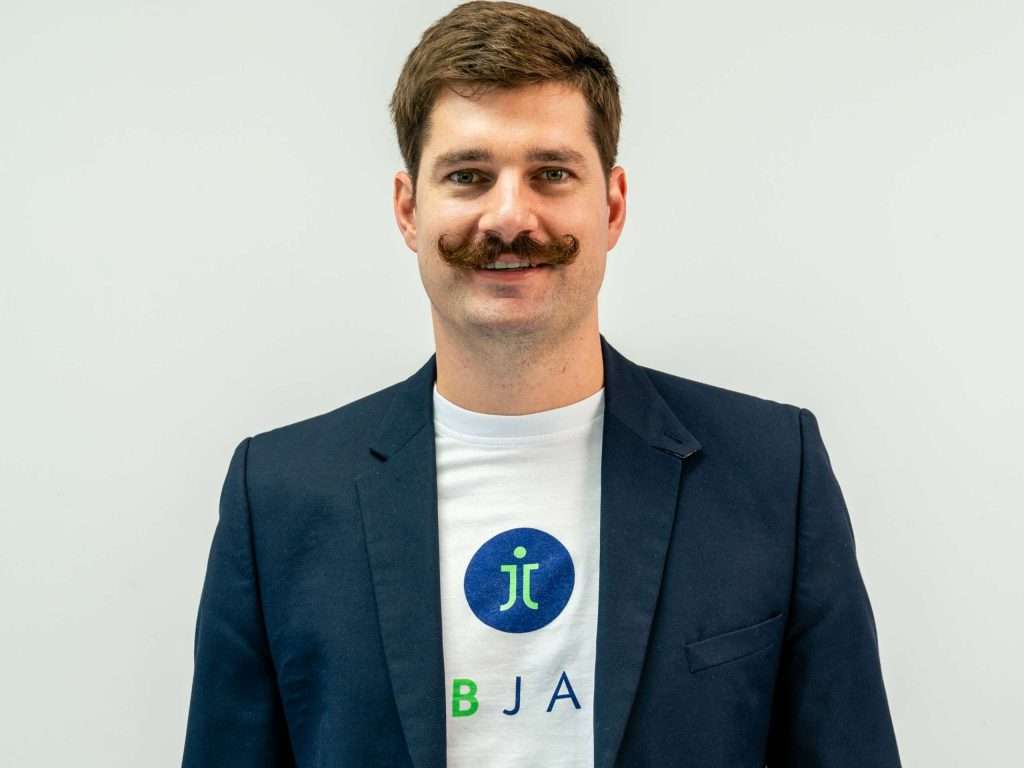
For decades, store-level recruitment in South Africa has largely relied on one familiar process: a pile of CVs, a busy store manager and a decision made under pressure. But according to Heine Bellingan, co-founder of JOBJACK, that approach no longer serves either employers or job seekers.
For many of South Africa's largest employers, the vast majority of their workforce sits on the frontline. It is here, argues Heine, that businesses have perhaps the greatest opportunity to improve performance not simply by hiring faster, but by hiring people who are genuinely suited to the work.
The idea, he says, was born from a simple observation nearly eight years ago.
Paper vs potential
“When we first started the business, we had a meeting with PEP and saw their store-level hiring process. Store managers were literally hiring from a box of paper CVs. At that point we decided this was the problem we wanted to solve because it wasn't working for the business, but it also wasn't working for the job seekers. Research at the time showed the average store-level job seeker was spending almost R1,000 every month on printing, transport and internet costs just looking for work. That's unaffordable and it creates a massive barrier before someone has even had a chance to get a job,” he says.
Removing those barriers became the company's first priority. Applicants could complete applications from home, on their own phone or even a borrowed device, while the platform was deliberately designed to use very little data and be available through zero-rated partnerships.
But improving access was only the beginning. As the platform matured, the team realised that digitising recruitment solved an administrative problem without necessarily solving a hiring one.
“Automation is valuable, but the real value for an employer lies in identifying who is actually likely to succeed in the role. That's when “JobFIT™” became the heart of JOBJACK. Matching someone to a job where they can perform well is good for the employer because you see lower staff turnover, fewer disciplinaries, less absenteeism, more promotability and better productivity. But it's equally important for the individual because when you're in a job where you're succeeding, you enjoy the work more, you receive recognition and you create opportunities to grow instead of remaining stuck in an entry-level position,” Heine explains.
“If a retailer advertises a cashier position, around a thousand people might apply. The CVs look remarkably similar, so how do you know who to focus on? On executive or specialist appointments, organisations spend a great deal of money assessing candidates because hiring the wrong person is expensive. At store-level, that simply hasn't been possible because traditional assessments cost hundreds, sometimes thousands of rand per person,” he adds.
Instead of assessing only shortlisted candidates, every applicant on JOBJACK completes role-specific assessments that contribute to an overall JobFIT™ score.
“The assessments are designed to reveal what you can't see in a CV. We measure things like problem solving, trainability, literacy, numeracy, conscientiousness and integrity, depending on the role. Those assessments are then combined with factors like the job requirements, previous experience where relevant, verification checks and even proximity to the workplace. Someone may desperately want a job, but if transport costs make it unsustainable, that isn't good for the employer or the candidate.”
“The biggest improvements we've consistently measured have come from taking conscientiousness and integrity into account. Those are broad concepts made up of many different indicators, but we've seen direct reductions in absenteeism and disciplinary cases because we're identifying people who are more likely to succeed before they're hired.”
Smarter, fairer hiring
As AI continues reshaping recruitment, concerns around bias remain front of mind for many CHROs. However, Heine believes technology should reduce subjectivity rather than introduce it.
“The biases usually come from the individual making the hiring decision,” he explains. “Our system simply matches the candidate profile to the job profile that HR has defined. It doesn't know the person's background, ethnicity or any of the things that typically influence unconscious bias. Every applicant is screened exactly the same way.”
Importantly, he says, technology should support managers rather than replace their judgement.
“The hiring manager still has full control. JOBJACK is a tool. HR puts the guardrails in place so managers have good information, but they still make the hiring decision. That's important because managers need to take ownership of the people they bring into the business. If someone is hired who falls significantly outside the recommended FIT profile, the system flags it for review, but those situations are relatively uncommon.”
The practical impact has become evident across organisations operating at significant scale. One example that stands out for Heine came when a KFC franchise group opened a new restaurant in Limpopo.
“They had always experienced recruitment in rural areas to be difficult because HR teams would spend weeks collecting applications, running assessments and interviewing candidates. They decided to test JOBJACK instead. They put up posters with QR codes, and within two days they had 50 assessed and ranked candidates who met their requirements. Recruitment that previously took two weeks was completed in two days.”
Other organisations have reported similar outcomes over time.
“PEP has placed more than 10,000 people through the platform, while Smollan has also hired thousands of employees and measured reductions in staff turnover and disciplinaries. What's been encouraging is seeing organisations become more comfortable over time as hiring managers gain confidence in using the system while still retaining ownership of their decisions.”
FIT fuels performance
Despite these examples, Heine believes store-level hiring remains one of the most underappreciated strategic opportunities available to HR leaders.
“For a long time, investing in store-level fit wasn't really possible because there wasn't a practical solution. A box of paper CVs appears free, but hiring the wrong people is incredibly expensive. I think we're reaching a point where hiring frontline employees well is becoming a science, and eventually it will simply become part of how competitive businesses operate.”
He compares the shift to another business technology that gradually became indispensable.
“Fifteen years ago you could run a cash-only business. Today, if you don't have a card machine, you're going to struggle. I think hiring is moving in the same direction. Organisations that consistently put the right people into frontline roles will simply outperform those that don't.”
“It's not an exact science because you're still working with people. The objective isn't perfection; it's improving the averages. If you can reduce turnover from 40 percent to 20 percent, or halve the number of disciplinaries, you've created enormous value by increasing the likelihood that people succeed.”
Ultimately, Heine believes the conversation extends beyond recruitment technology. It is about creating better opportunities for both employers and the millions of South Africans still searching for work.
“Job seekers deserve to access jobs in an affordable way, and they deserve to be guided towards roles where they genuinely have the potential to succeed. If businesses consistently put the right people into the right jobs, those businesses perform better, industries grow and more opportunities are ultimately created. We believe employers have a responsibility to make that possible,” he says.