

CHRO Day 2023 panellists discuss how they’re overcoming challenges unique to state-owned entities.
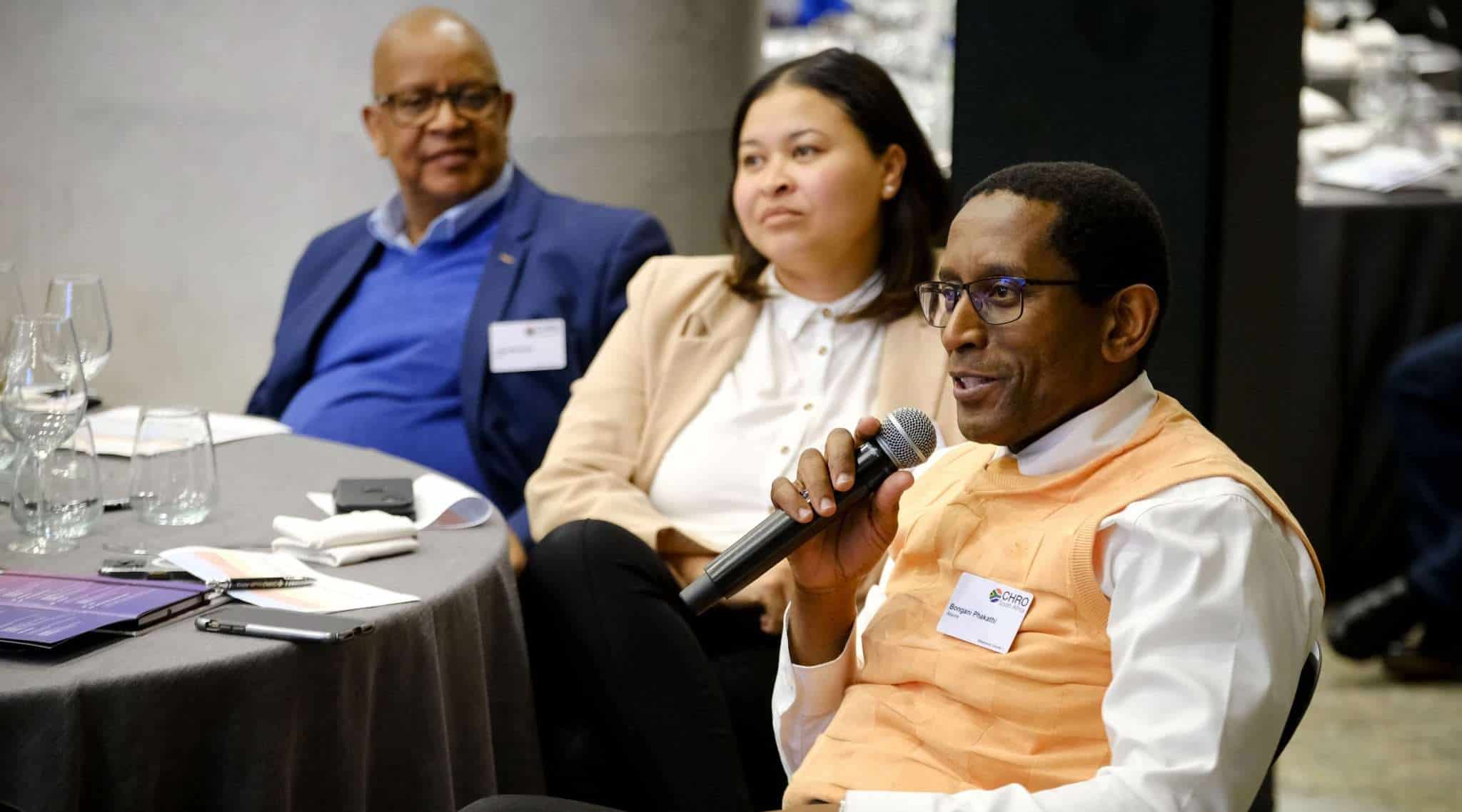
In an enlightening CHRO Day panel discussion entitled ‘Teaching an elephant how to dance’, HR leaders at State-Owned Enterprises (SOEs) shared what it takes to overcome the (seemingly insurmountable) challenges they face, while also creating an HR function that drives organisational impact and makes a difference.
Of course, South African SOEs are no strangers to reputational damage, making the role of HR leaders in state-owned entities pivotal in helping to turn the proverbial ship around.

The elephant in the room and leading with courage
Moderator Sungula Nkabinde, community manager at CHRO South Africa, cut right to the chase by addressing the loadshedding “elephant in the room” – and asking Eskom’s CHRO, Elsie Pule, how she is driving people practices in a low-morale environment.
After quipping that she tends to reject speaking invitations due to being booed off the stage, Elsie said that many Eskom employees refer to themselves as “guardians”, as most can be hired anywhere, yet they choose to stay.
According to Elsie, the average power station manager has 20 years of experience, and the SOE has an attrition rate of four percent. “I even left and went to SARS but came back,” she added. “I want to emphasise that we don’t have our heads in the sand; it’s about employee engagement. Our health and wellness programme is robust, and we haven’t compromised on our talent management and DE&I programmes. In August, we’re launching our first female leadership programme with Duke University, as the level below exco is 40 percent female.”

Thuli Mpshe, an executive coach and independent consultant – and formerly the acting CEO of another embattled SOE, South African Airways (SAA) – also addressed the “elephant”.
Said Thuli: “I couldn’t do something knowing it was wrong; you have to lead with courage and authenticity. In the process, many of my colleagues at SOEs lost themselves: they lost their integrity ,they didn’t get anything out of it, they were used, and now they’re disgraced. It was tough, and I wasn’t sleeping.”
Being part of the change (despite bad PR)
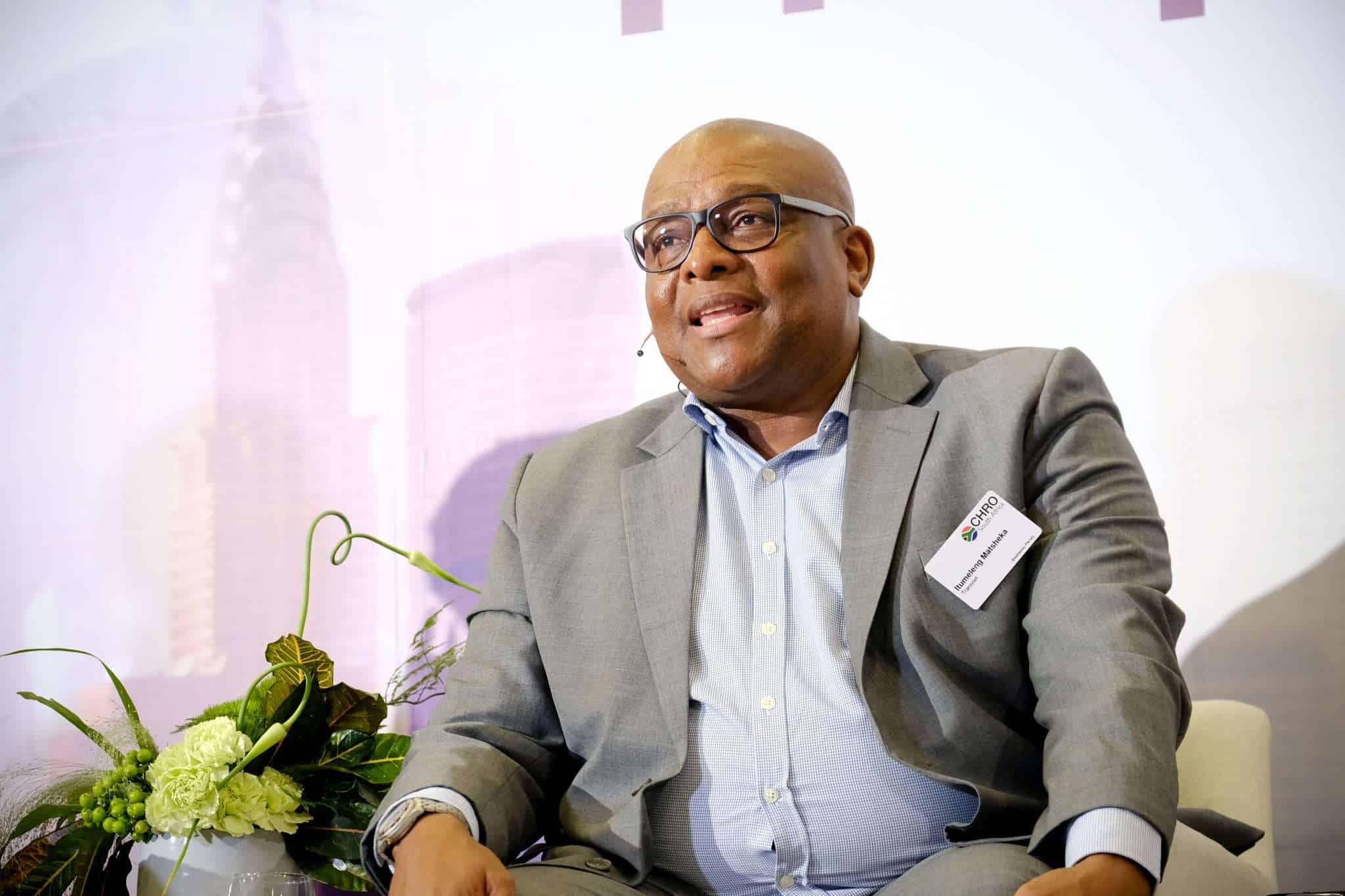
Despite the lack of sleep, Itumeleng Matsheka, chief of people management and learning at Transnet, said that he empathised with Thuli and Elsie, and he emphasised that, even with the almost-continuous negative press, there are still good people in SOEs.
He explained that he was “minding his own business” at a petroleum company when he was approached by Transnet. “But I felt someone has to do the job; if not you, then who?” Itumeleng joined Transnet three years ago with a mandate to start up a training academy over five years. He got stuck in, and a year later, Transnet had an accredited academy that, he says, produces 200 technical artisans per year and is now seen as the preferred training ground for many of South Africa’s engineering students.
He added that Transnet has had to bring in leadership that inspires people, and the state-owned entity now has a brand-new exco. “They work 16 hours a day, seven days a week. HR people carry a lot; the executives don’t ask for help, but they need support,” he remarked.
Echoing these sentiments, Elsie noted that many of Eskom’s employees are driven by wanting to be part of the change, and the SOE should be commended for engineering skills development. “We currently have about 4,500 qualified learners to release into the market. We recently had a recruitment drive for top positions and received over 500 applications. People find us, but we have bad PR. We’re not telling South Africa what we’re really about, like highlighting the higher purpose and emphasising that most people at Eskom really want to make a difference.”
(Although it elicited some chortles, she also pointed out that, globally, many countries are now struggling with power generation and capacity, and international utilities are coming to South Africa to learn about loadshedding).
Thuli added that, at SAA, most lower-level employees are highly committed and work hard. “SAA has a good track record; it was the board and leadership that caused issues with agendas of patronage. [The] Zondo [Commission] made recommendations that SEOs must appoint boards in line with the Companies Act, and I feel this could make a big difference to how SEOs are run.”
Sungula asked the panel what they are personally doing in their functions to change perceptions – “Where’s the good news department?” he inquired.
“The good news doesn’t sell,” responded Elsie. “But we decided to create hope in the organisation with an ‘attitude of gratitude’, using internal media – as we’re wary of social media because our reputation is low. We publish stories in a newsletter and hold roundtables,” she said. “If you look at 40,000 people, not everyone is a thief. It’s about building connections within the company, so employees start trusting each other, there’s transparency, and we communicate when cases of wrongdoing are concluded.”
‘The train will be back on track soon; the ship is about to sail’
Itumeleng added that, despite what we see in the news, he feels things are turning around.
“You have to teach this elephant agility; it’s an intelligent animal and if you have the patience to teach it, it’ll dance,” he said. “Transnet now has one of the best excos I’ve seen in my 30 years in people management, because they want to make a difference. People read about state capture – we’ve lived it. We’ve had to hire almost 100 new finance people alone, because if you don’t have controls, it’s easy to do nefarious things. We have new employees in procurement and ICT, among other areas.
“Today, three years after joining Transnet, I know that the train will be back on track soon, and the ship is about to sail,” he concluded.