
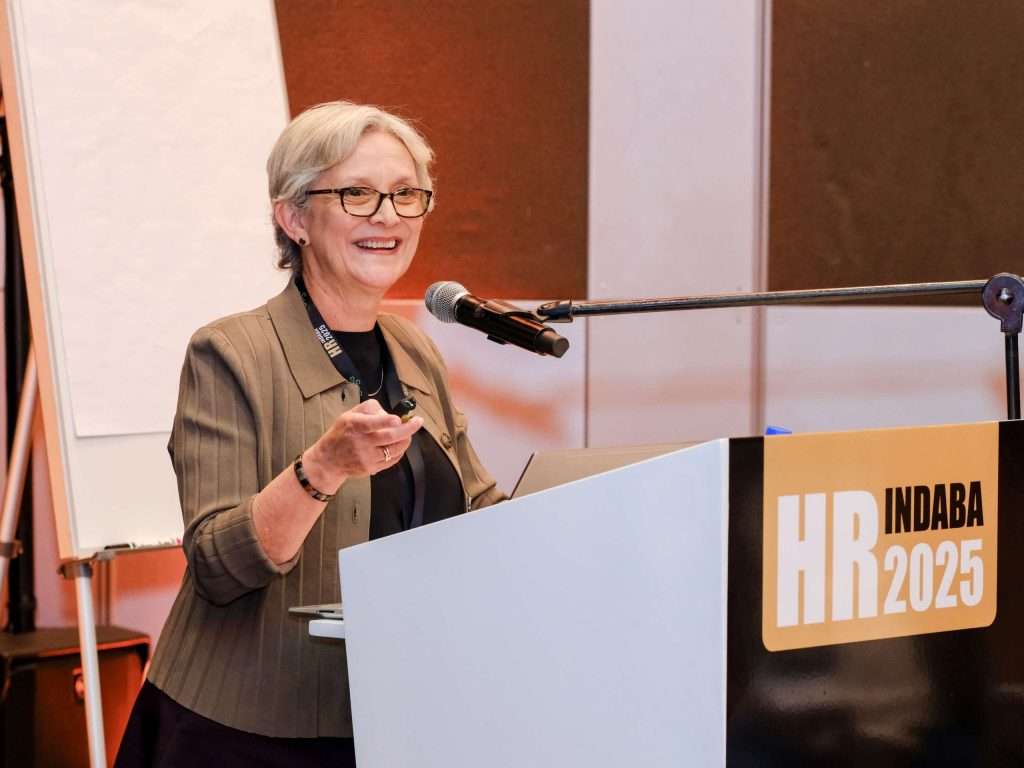
As global migration patterns continue to shape the world of work, HR professionals must prepare for the impact of brain drain on succession planning, said Michele Simpson-Crew, managing partner of academy at Busec Nova, at the 2025 HR Indaba.
Following the Covid-19 pandemic, HR professionals have had to navigate shifting migration patterns caused by economic instability and advances in technology that allow people to work from anywhere in the world.
At the 2025 HR Indaba, Busec Nova addressed the issue of brain drain and the role of returning employees in succession planning. “Brain drain is not a rare feature of the talent ecosystem. It has always been a challenge HR professionals have had to manage. The question is how we address it and how we collaborate with government and other associations,” said Michele Simpson-Crew, managing partner of academy at Busec Nova.
Michele highlighted that the rise of digital nomads has added a new dimension to the challenge, changing traditional brain drain dynamics. Many digital nomads relocate for lifestyle reasons while continuing to work for their existing employers. “While this does not negatively affect the company, it does impact the local economy,” she added.
According to Michele, returning employees can help balance this trend by bringing home valuable global skills, networks and capital. “While this benefits organisations, it also presents new challenges and calls for HR teams to reassess how they manage employee relations,” she explained.
The session encouraged attendees to share their approaches to employee engagement and how these have shaped workplace culture. “There are many factors involved in building an engagement policy. We conduct an employee voices survey and engage ambassadors to gather insights that guide our policies. These are reviewed annually to ensure relevance. This approach has resulted in an employee engagement rate of 87 percent and a DEI score of 96 percent,” one participant explained.
HR professionals are increasingly challenged to engage Generation Z employees who have different expectations from their employers. These include access to advanced technology and a workplace that values cultural diversity. “Respecting cultural differences goes beyond race and culture. It also includes acknowledging the importance of work life balance and accommodating individual preferences for how work is done,” Michele explained.
She concluded that integrated succession planning is the key to addressing these evolving challenges. This approach connects retention and development to strengthen engagement and build leadership pipelines. “If we do not plan for succession, we plan for decline,” she said.