Shedding the workforce is one of the most emotionally taxing experiences for employees and the exco alike. Leading HR executives at the 2026 HR Indaba unpacked how to navigate retrenchments with transparency and empathy while sharing practical strategies for communication, leadership alignment and preserving culture.
Economic pressures are forcing more organisations to turn to Section 189 processes, putting HR leaders at the heart of some of the toughest decisions a business can face.
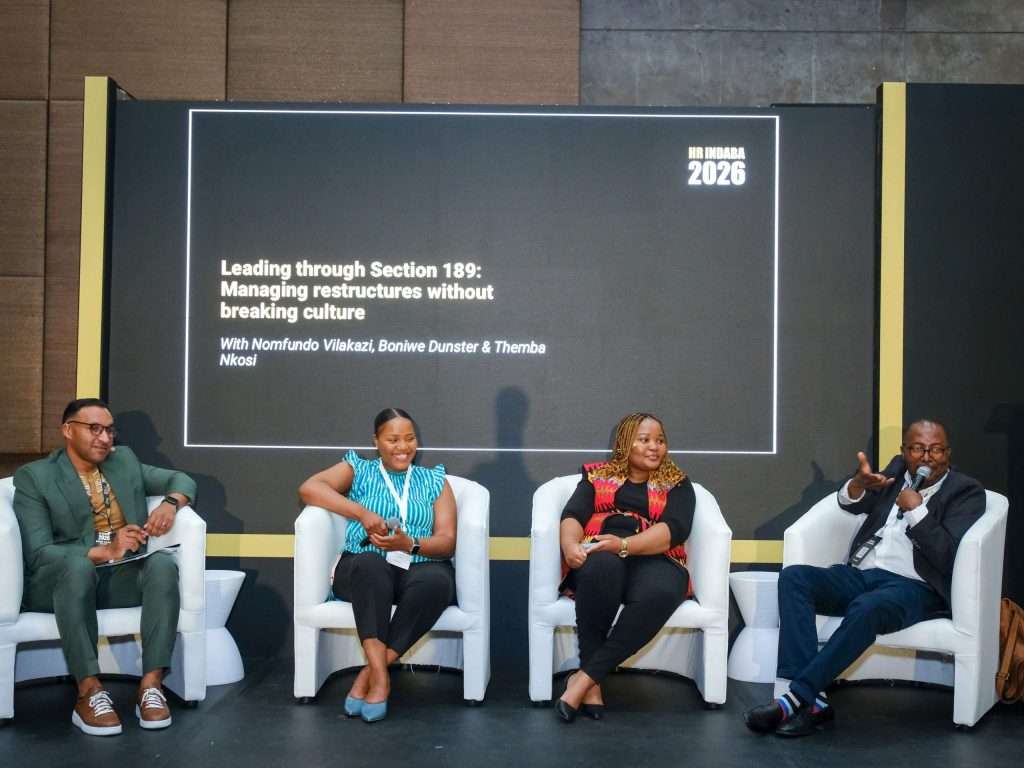
Beyond legal compliance, the real challenge is managing restructures in a way that preserves trust, dignity and organisational culture. In a session titled Leading through Section 189: Managing restructures without breaking culture HR leaders Boniwe Dunster, head of people and culture at KFC Africa; Nomfundo Vilakazi, people and culture director at Dis-Chem and Themba Nkosi, group CPO at Sibanye-Stillwater opened up about their personal experiences with Section 189.
The dominant theme emerging from this panel was how leadership behaviour impacted the retirement process. “For you to talk to a line manager who says ‘it's an HR process’ or ‘it’s a business process’ because they didn’t see themselves as the business, it becomes cold. So leadership behaviours are important: compassion, empathy and transparency in the process. It is what can give dignity at the end of the process,” said Boniwe.
Themba, who told attendees that he’d been part of 10 restructures in 10 years, emphasised that trust and transparency is a vital underlying component of the Section 189 process.
“The second part of it is, how do we empower line managers to talk confidently about the process whilst they are also affected? Because sometimes we forget that they are the people that the employees run to while they(line managers) are also affected,” Themba said.
Chief repeat officer
Nomfundo shared that the Dischem leadership team was undergoing its first restructuring process in 49 years. “It was a shock to the system for our own leadership team, where we first needed to educate them about the process,” she said.
Nomfundo also emphasised the importance of constant and consistent communication so there is no room for loopholes. “The leadership behaviours become so pivotal because they need to lead the change. They need to become the chief report repeat officers that are consistently within the script of what needs to be said with heart and a particular tone.”
Boniwe said that honesty and transparency can sometimes get lost in the Section 189 process. “Honesty is important because if you withhold the facts or the rationale behind the change, it’s difficult for the people to buy into the change. People can say ‘We’ve seen it coming. Because you have been consistently reporting on business performance, you have been sharing the changes that are coming, you have been leading the change in the organisation,’ even before the Section 189 comes,” Boniwe stressed.
One of the biggest reasons to be honest and transparent about Section 189 is to reduce the impact of blind spots. “If you are not truthful, after your process has ended, we see the same roles being advertised, but the people have been let go. So it means your business case was not honest,” Boniwe added.
The aftermath of restructuring
Continuing the honest conversation, Themba emphasised that HR must have a voice in the room and own the company design to avoid leaders using the Section 189 process to manage misconduct and underperformance.
“I’ve seen instances where we get rid of the people that own the capability. The manager hasn’t thought about what happens on day one after this person leaves the role. Then we get into a conversation about ‘Oh we still need Henny, and maybe we need to give Henny a six-month contract’,” he said.
He also offered some insight into how restructuring can create dangerous working environments in the mining industry. He said chopping and changing teams dramatically impacted the informal culture of how each team does their work. “The teams look out for each other so we must never ever understate the importance of that culture and that group that keeps the team together.”
During a Q and A session with the panel, one attendee touched on “survivor guilt” as part of the aftermath of restructuring. Boniwe stressed the importance of providing support for both the outgoing employees and the staff left behind. “We go back and we want the surviving employees to absorb the work. Why are we absorbing the work and not reprioritising the work so that people still have manageable workloads?” Boniwe asked. Sometimes, it means giving employees time off to process and even tap into their support systems at home.
Answering another audience question on how to manage the process when the HR team is also impacted, Themba left the room with this parting shot, “We need to do these things as humanly as possible. I know power gets to our head sometimes because you think you are HR, you feel in charge. But just remember, you are an employee. How you treat your fellow colleague is how the company is going to treat you.”