
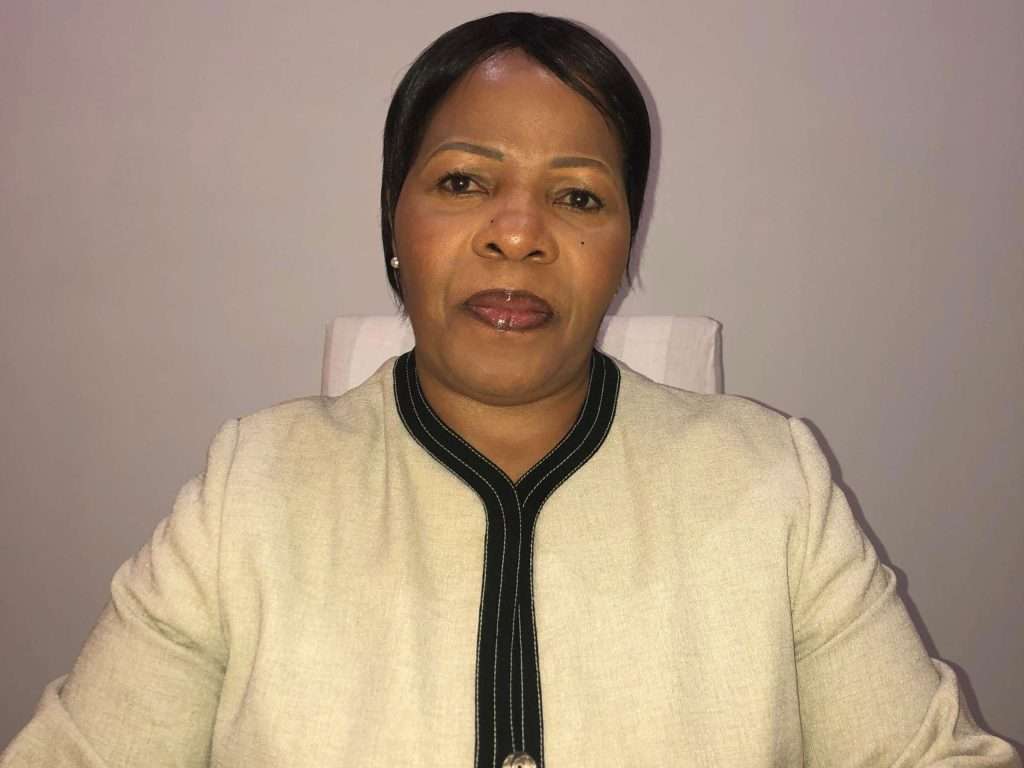
For Bolekwa Maseti, senior HR manager at the South African Qualifications Authority (SAQA), her passion for people dates back to her high school years. It’s a passion that has helped her build a decades-long HR career.
Bolekwa was in high school when she started developing an interest in human behaviour. “Why do people behave the way they do? Why are certain personalities difficult and some personalities easy to deal with?” Her curiosity formed the foundation of the illustrious career that followed.
By the time she reached Matric, Bolekwa knew she wanted to register for a degree in the humanities. At Rhodes, she completed a BSocSc, where HR was one of her majors. “I wanted to pursue this passion for human behaviour – the organisational understanding came later on,” she recalls. “So, it was not by coincidence that I ended up in HR, HR and I fell in love.”
Looking back, Bolekwa says that her role models were always those who worked with people. When they’d speak about how their bosses were lovely people at home but a nightmare at work, it sparked her interest. She wondered how one person could have more than one persona or character. “I discovered that a person is a multi-faceted, multi-dimensional being. Circumstances and situations might shape them, change them or require them to adapt to diverse environments.”
“I wanted to be in a role where I could work with people, journey with them, understand these dynamics, and find space for my own contribution in this human evolution.”
Building a career
After attaining her degree at Rhodes University in 1992, Bolekwa moved back to her hometown of East London, where she began her first job as a junior in HR at Johnson & Johnson. Having worked there as a trainee during vacation whilst studying, she had a pre-existing relationship with the company, as well as an understanding of what HR practitioners did.
“I think that fast-tracked my career. They didn’t take me as an intern but employed me as an HR administrator. A year later, I was an HR consultant.” When Coca Cola, East London advertised a vacancy for an HR manager three years later, Bolekwa’s manager encouraged her to apply, and she got the job.
She later relocated to Johannesburg where, while initially sceptical, she took an HR role in government. “I was shocked at how they appreciated my private sector experience and my suggestions for improvements and innovation.”
While she admits that there are processes one cannot change in government, Bolekwa’s fresh perspective worked to her advantage. Even though she later moved to the Development Bank of South Africa (DBSA), as head of human capital, she later returned to government as an HR Director, where she drew on both her private and public experience, ultimately becoming an HR executive. “I’ve been through the ranks without skipping any steps,” she says, “which is important for one to become a rounded HR practitioner that has gone full circle.”
A broader understanding
Throughout her career, Bolekwa has actively sought to be included in projects outside of the HR space to gain a broader understanding of the businesses at which she’s worked. “When I’m talking to other executives, be they in or outside of HR, I’m able to take off my HR hat and talk business. That’s one thing that will always give us a position in the boardroom as HR practitioners.”
This is also why, when she returned to her studies, she chose to pursue her master’s in business leadership. “I must have a broader view of business because if I were to become a CEO one day, I must understand operations, finance, strategy, economics, projects, international relations and so forth.”
“As I always say, we will be good HR business partners if we understand business. Let’s make it our mission to understand the mandate of the organisation, the operations, the core business, so that as we support line management, we can relate to their targets and how these ought to be achieved.” Bolekwa brings this understanding to her current role as a senior manager for HR at SAQA.
Creating a culture of credibility
Bolekwa says the road will not be linear when it comes to blending the two types of professionals we find today. “We have people who are tech savvy, those that want to purely specialise and those that would opt for the management route. For both these two streams, you need a solid balance of relevant qualifications, training and experience.”
“I cannot emphasise enough the importance of ensuring that we register with accredited institutions, obtain credible, recognised and verifiable qualification. SAQA, working very closely with the Department of Higher Education and Training is instrumental in this.”
“I'm also a firm believer that all of us were born with some talent or natural gift,” Bolekwa says. “So, it's not only a degree or a formal qualification that is going to channel you to be the best at what you do, there are other avenues as well.”
Elaborating, she speaks of SAQA’s philosophy of learning as a lifelong journey. “You do not stop learning. There are many avenues where people learn, the classroom is just one. Some people are very good with their hands. Artisans and craftsmen come to mind. “
“We have a mentorship and coaching programme where senior researchers and specialists mentor and coach the less experienced staff. We build a talent pipeline in this way; we believe in grooming and growing our own.” The high retention rate at SAQA, she adds, speaks to how employees own the entity’s mandate, hold each other to account for performance and delivery and form strong bonds as an added bonus.
Doing things differently
That’s not to say there haven’t been challenges. While SAQA came back stronger after revenue constraints brought on by the Covid-19 pandemic, Bolekwa identified lingering anxiety from staff as SAQA was reviewing its strategy and organisational structure in 2024. One of her first tasks was to give staff psychological safety and assurance. When they shared their fears with her, she decided to do things differently, starting with face to face, honest and transparent communication.
“Even if it’s information overload, I will update staff members on a weekly basis in terms of where we are.” She has also tasked the HR Manager with establishing a change management team, ensuring that each business unit is represented. “That’s worked very well because we managed to get buy in and gain trust by directly involving employees.”
Bolekwa also constantly works to guide managers on how to conduct sensitive conversations, difficult discussions and implement policies in an empathetic way. Despite the drive for high performance and innovation, there is a “clan culture” at SAQA, employees feel they belong, colleagues are like an extended family. “ We take calculated risks, we rise, fall and learn together.”
A friend and a mother
Beyond HR, Bolekwa is fuelled by maintaining her childhood and university friendships, which helps keep her sane. “We have a society, some social club, where we meet as women, we reminisce, we cook, share meals, dance and talk about those good years.”
She also has two daughters and says that while she gives them tough love, she’s a kind mother too. “From my girls, I’ve learnt that I mustn’t be stuck in my ways and beliefs – I must be flexible, times have changed.”
As such, she always encourages open communication with her daughters. This practice extends to the workplace and has helped define her success as an HR leader.