
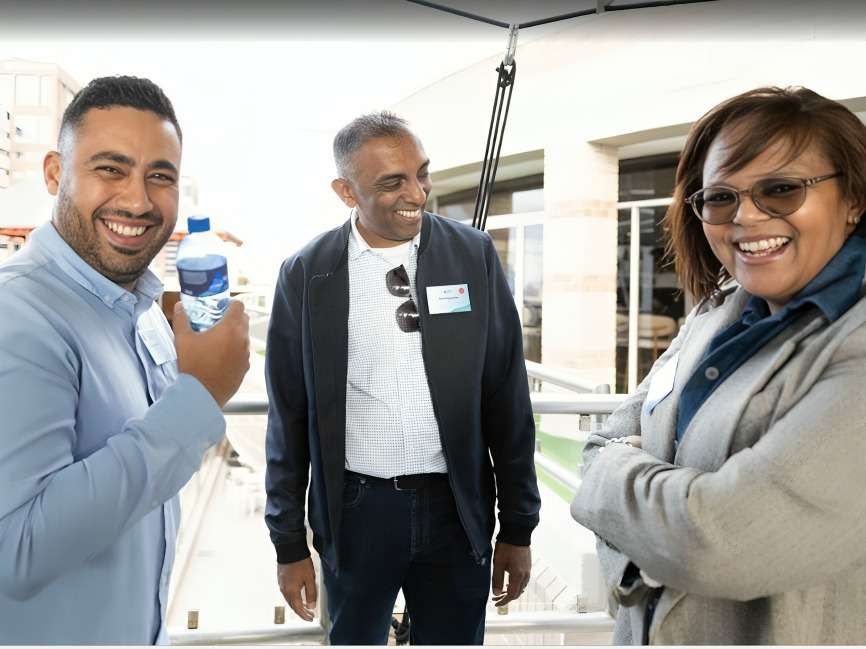
Top HR executives gathered in Cape Town for the second CHRO Summit of 2026, to trade insights on what it means to lead in the age of digital acceleration.
HR leaders in the Mother City stepped into 180 Lounger, trading end-of-day fatigue for panoramic roof-top views and unfiltered conversations about all things AI.
Themed Digital Dexterity, the evening kicked off with interactive group discussions on AI as a double-edged sword, rethinking the digital workforce strategy, the effect of AI on leadership and who really owns AI in an organisation.
The breakaway sessions created a lively start to the evening, with attendees fully engaged in their various discussions, sharing common themes, fears and learning experiences – including the very real challenge that AI can be “confidently incorrect” according to one attendee.
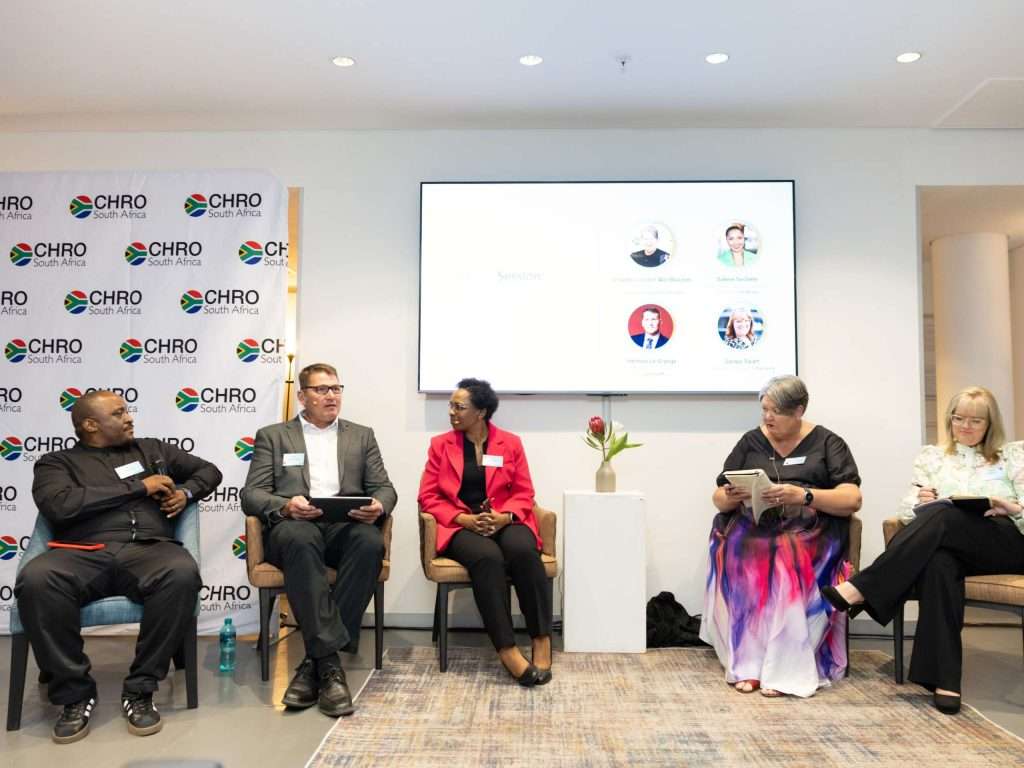
This was followed by a debrief on the breakaways with industry giants Herman Le Grange, director: global solutions at Lyra Health; Chantel van der Westhuizen, managing executive at Regenesys Corporate Education; Dalene Sechele, human capital and corporate affairs executive at Old Mutual and Jacqui Swart, EB marketing manager at Discovery.
Feedback included sentiments of fear, anxiety, accountability and warnings against an over-reliance on AI tools.
AI strategy key
“The anxiety factor is unanimous amongst all of us. There is certainly a gap within how we execute on not only our AI strategy, but how does that – in some instances – create a disconnect between the wellness strategy and most importantly the HR strategy,” said Herman.
“There are a large number of individuals within our organisations who feel they are not 100 percent sure where they are moving towards and they almost feel that they’re part of an identity gap because the AI strategy and the HR strategy and the wellness strategy in some instances are disconnected.”
Herman reiterated the need for a very specific AI strategy that is rolled out through specific training models. “What can it do for you and how it can do it for you, but more importantly what you should be using it for? Does it elevate the workforce or does it brain drain the workforce from an over-reliance perspective?”
Chantel said that the industry and business that one is in does play a role, and accountability is also key. “Many organisations actually do not lack an AI strategy – they lack a strategy on accountability,” she added. She also emphasised that learning is an ongoing factor. “It’s important for all of us in this room to create a curious workforce where people want to learn... I call it learning the flow of life because you can sit on your couch and Google something or ChatGPT or watch something on Netflix and you've learnt something. If we get more of that curiosity, I think we’ll start seeing a lot of traction amongst the youth.”
Dalene also added that one cannot get away from the subject of AI ethics. “It’s about being clear around AI policies and how we drive and enforce that... we can’t get away from the subject of AI ethics, which I think is a critical thing. It's been incumbent on us to think about how we build the skills and the capability to get that contextual insight into the workforce that's coming through the ranks,” she said.
Creating a safe space
“We must really think about what are those superhuman skills that we need to build – it’s our critical thinking skills. It’s judgement. It's proper decision-making – to remove this over reliance on AI to do the thinking, because it doesn’t really think.”
Jacqui cautioned against rushing to adopt AI without having a clear view, as well as taking clients into account. “The speed at which people are running out to adopt AI without the guardrails being in place – those particular concerns around ethics, protection of data, particularly client data – what has been put out there that could potentially be damaging,” she said. “There certainly is a divergence and dichotomy happening, which means that some roles will need to change, but I don’t think there’s a clear view of what that looks like at the moment.”
She added that it is also about helping people understand how to use the technology to innovate and elevate themselves to be able to shift day-to-day to operate more strategically. “Sandbox environments have been created – a safe space where you can go and play and learn, but in your day-to-day you’re still doing what you’re doing. It’s not only the people we’re protecting, it’s our clients, it’s our cutting-edge lead that we might have in the market itself.”
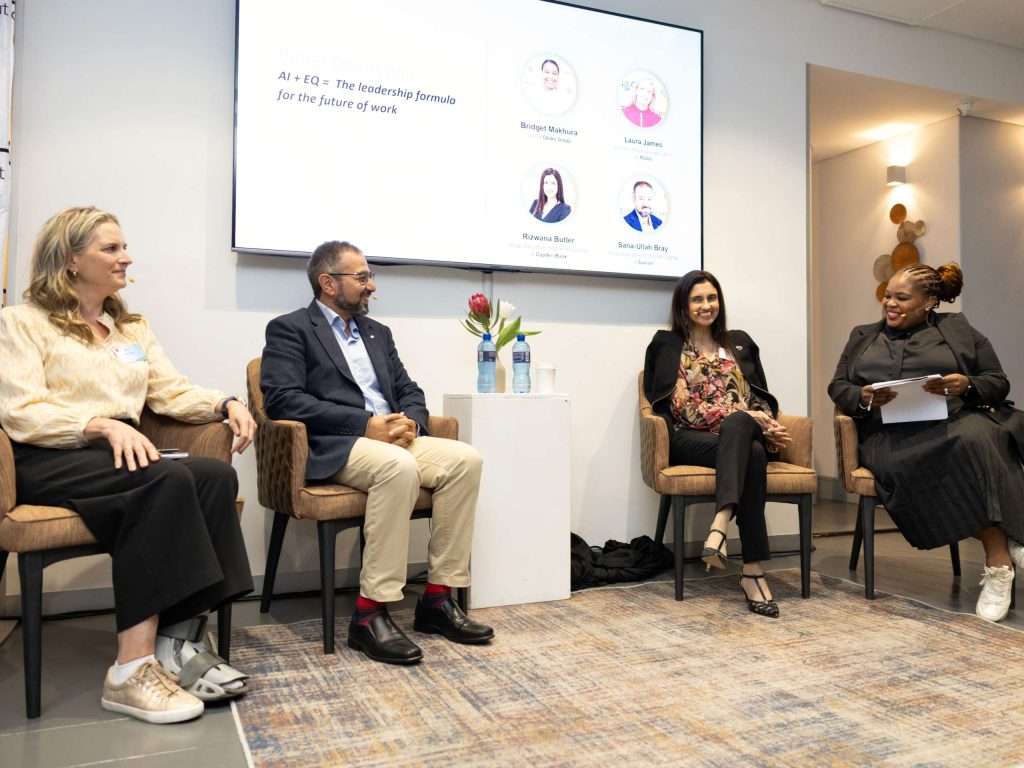
Following some networking and scrumptious canapes, a panel discussion titled AI + EQ = The leadership formula for the future of work took place featuring HR leaders Laura James, director: people & organisation at Mulilo; Sana-Ullah Bray, group executive for human capital at Sanlam and Rizwana Butler, group executive: human resources at Capitec Bank.
“We’re not just dealing with people who have knowledge, we’re dealing with people who need to know how to use their judgment, how to learn, and paradoxically that learning is more difficult because it’s AI-supported. And on top of that they have to learn really good management skills. They’re not necessarily managing people, they’re managing agents, or what’s called, and I hate this terminology, but this is what it is – swarms of agents in the future,” said Laura, kicking off the discussion.
Data is critical
She also touched on the skills needed to manage AI agents. “Project management is going to be an incredible skill that everybody who’s managing AI agents will need, and that’s not dissimilar from managing projects and managing people. Multi-disciplinary skills are much more important, and in order to work in a multi-disciplinary environment, you must be able to communicate with lots of different people and different technologies. The people who are going to struggle the most are probably going to be the techies who don’t want to engage outside of the machines.”
Sana-Ullah pointed to data as the foundation of AI. “Almost all of us have this buzzword of AI, but the second word that comes out is data. Everything is around data. The biggest obstacle that we face is: if we don’t have the right data, we can’t do the right work. You can sit there till the cows come home analysing a whole lot of information, but if you’re very deliberate and you’ve got three really high-profile deliverables that you want to ensure have a good return on investment, you’re going to focus your data research accordingly.”
He also took attendees through Santam’s reasoning on centralising AI strategy and appointing a chief AI officer. “What ended up happening is that when this AI buzz started coming about, everybody started doing their own thing. We then said what this will unravel is extremely high cost – everybody’s now utilising their own service providers, doing their own strategy, solving their own product development. So the idea is: let’s centralise our thinking on AI. Number one, we manage costs. Number two, we manage exactly what our deliverables are,” he said.
“At the end of the day we are dealing with people, and that boils down to culture. An organisation is always bigger than the person. We need to make sure that our staff is enabled to be able to do what they need to do. They must be able to trust us that we are looking after their interests.”
Being human
For Rizwana, the starting point comes down to values-based leadership.
“No longer are we able to prepare role-model answers for a leader to answer every question. So the only thing you can do is instil a set of values in your leaders and really make sure that when they take decisions and when they're looking to interact with their people, it's always done on the basis of real values. Values-based leadership is super important. It also empowers your leaders to be able to take decisions without having to constantly check: am I doing the right thing?” she said.
“Amidst everything, we are in the business of humanness. Clients are human beings – they’re not a number sitting somewhere. And so we always say we’re in the business of humanness. It’s not about saying 18,000 employees – that’s just yet another employee leaving or joining our business. This is really about understanding what is the human connection we need to have with that individual to make sure they continue to stay engaged,” she added.
She also cautioned against implementing technology faster than people can follow: “I heard a very interesting quote the other day which basically says: never implement technology faster than you can take your people with it. You can’t control the pace of technology. The only thing you can control is the pace at which you upskill and empower your people to actually keep pace with technology. And I think that’s where our focus has to be,” she shared. “AI can help you get the right tone of voice. It can get you to say things in a sharper and more enhanced way, but the actual content itself cannot be replicated out of AI.”
The evening wrapped up with some delectable sweet treats, and more fruitful discussions on an ongoing theme that is certainly here to stay.
The CHRO Digital Dexterity Summit was made possible by Principal partners Discovery, Lyra, Old Mutual Corporate, Regenesys Corporate Education; and Executive partners Jem, Workday and Wyzetalk.