
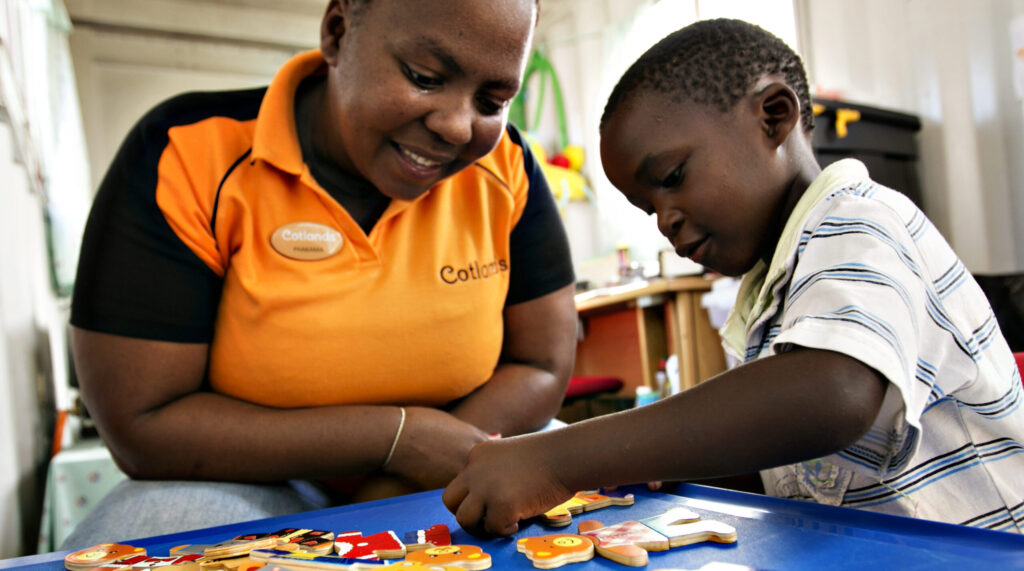
Cotlands is spearheading online ECD training aimed at providing an Early Childhood Practitioner qualification.
Imagine that right this second a baby is born: a baby with infinite potential.
This baby’s development pathway, its ability to achieve that potential, is pre-determined by factors such as the mother’s health during pregnancy, good parenting, loving care, protection and stimulation. It needs water, shelter and sanitation.
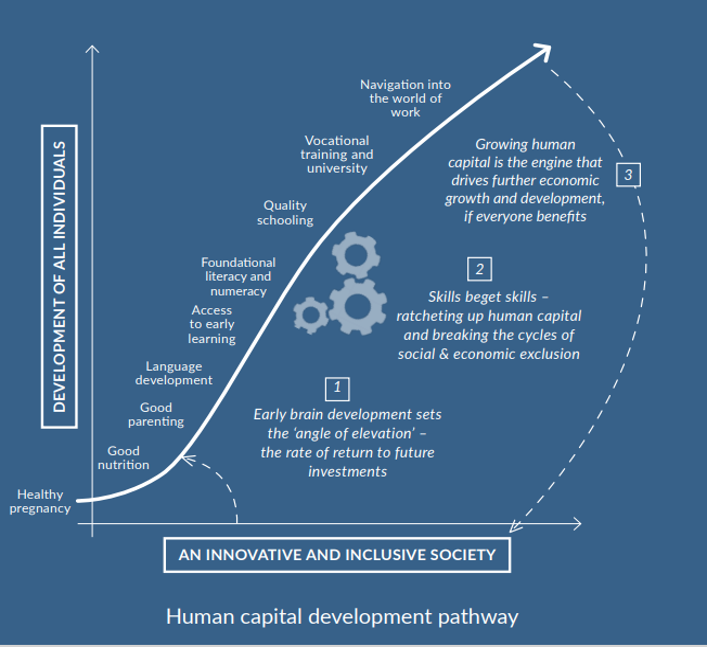
But it also needs access to early learning to strengthen language development. Acquiring foundational literacy and numeracy skills is imperative during the early years. And the everyday experiences of this baby during the first nine years of its life will have an irreversible impact on the world’s available human capital, which eventually makes up the workforce and contributes to the economy.
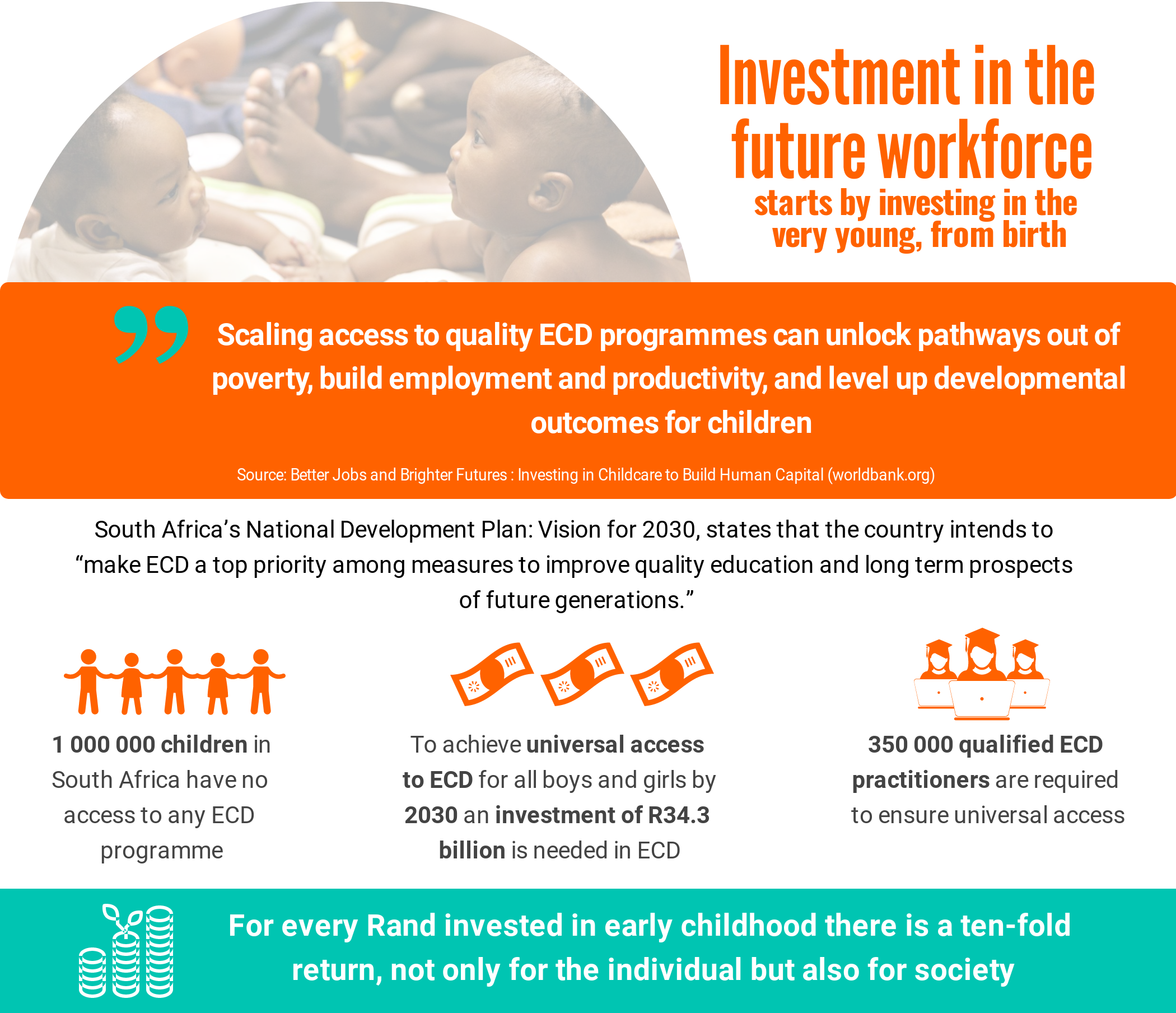
In South Africa, only half of three- to four-year-olds participate in an early learning programme, and of those, only half attend programmes of sufficient quality. This means that more than a million children have no access to an adequate early childhood development (ECD) programme.
Globally, scientists, academics and those specialising in the early years, refer to the first nine years of a child’s life as the early childhood development (ECD) phase. Economist and Nobel prize winner James Heckman has called ECD “the most powerful investment in human capital that a country can make”.
The World Bank’s report, “The Better Jobs and Brighter Futures: Investing in Childcare to Build Human Capital” released in March 2021, confirms that scaling access to quality ECD programmes can unlock pathways out of poverty, build employment and productivity, and level up developmental outcomes for children.
And the United Nations Sustainable Development Goal 4 (quality education) target 4.2 states that by 2030, all girls and boys should have access to quality ECD, care and pre-primary education, so that they are ready for primary education.
Africa has clearly articulated its ECD goals in the African Union 2063 Agenda, which aims to “expand universal access to quality early childhood, primary and secondary education”. And closer to home, South Africa’s political will in relation to ECD is expressed in the country’s National Development Plan: Vision 2030, which states that the country intends to “make ECD a top priority among measures to improve quality education and long term prospects of future generations”.
From policy to practice
The South African ECD sector is regulated and supported by Chapter 5 and 6 of the Children’s Act of 2005, the National Integrated Early Childhood Development Policy of 2015 and the National Curriculum Framework, which provides practical steps to implement the 2030 vision of universal access to ECD.
However, this ambitious goal is hampered by a contraction in programme attendance due to Covid-19, inadequate financial investment, a low number of qualified ECD teachers, and a lack of skills required to integrate the 4th Industrial Revolution into play-based, quality ECD programmes.
Wave 3 of the National Income Dynamics Study – Coronavirus Rapid Mobile Survey, covering the final quarter of 2020, confirms that attendance at ECD programmes has not recovered to pre-lockdown levels. In fact, Statistics SA says Covid-19 has resulted in a contraction of the number of children up to four years old attending ECD programmes, from 43.9 percent to 31 percent – a trend confirmed by the experience of the Cotlands early learning playgroup and toy library programmes.
Recovery of the ECD sector to ensure universal access will require a considerable financial investment by government. Sadly, this is not forthcoming. The Budget announced in February 2021 shows no increase in the ECD conditional grant budget between 2022 and 2023. In real terms, this means that an additional 50 000 children will receive a subsidy to attend an ECD programme, barely making a dent in the more than one million children who need it.
In addition, the education budget totals R279 billion for 2023/2024, however only R3.3 billion has been allocated to ECD subsidies. Investment in ECD is a dismal R500 on every child five years and younger while R22,000 is spent on every child between the ages of 6 and 17 years.
If universal access is to be achieved by 2030, the DG Murray Trust estimates an investment of R7 billion is required between 2022 and 2024, with another R11 billion by 2025 and a further R16.3 billion by 2030. Over and above this serious financial commitment, the human resource gap also needs to be closed.
Putting the right people in place
ECD programmes are provided by ECD practitioners and educators – adults committed to igniting children’s potential through play-based learning. Attracting talent to the sector, ensuring gainful employment that adheres to the Basic Conditions of Employment and clear career paths for all working in the ECD sector, will lay the foundations needed to achieve universal access.
It is estimated that 10,000 early learning playgroup facilitators and 90,000 trained childminders are required. Another 110,000 centre-based practitioners and 140,000 assistants will be required. Half of the current ECD practitioner workforce is under-qualified and needs to be upskilled to at least an Early Childhood Practitioner Level 4, and once the second year of compulsory pre-school education is established, practitioners will need a degree in early childhood care and education.
For all of these reasons, CotlandsIgnite™ is spearheading online ECD training aimed at closing the workforce skills gap by providing the QCTO accredited Early Childhood Practitioner Level 4 qualification. It’s a qualification that trains ECD practitioners who can develop a breadth of skills that will prepare children to be employed in a world moving towards the 5th Industrial Revolution.
Building a future through play
In a typical day at an ECD programme, children will have the opportunity to play with blocks. As Phumzile plays with the blocks she is joined by Alfred and Nico, who ask her what she is doing. She responds that she wants to build a place where she can park the toy cars. The two boys join in and after a few attempts they manage to build a structure that allows them to park their toy cars.
Not only did they learn important mathematical concepts, they also learned about structures and had to employ all of the critical workplace skills – all while they played together.
ECD programmes infused with opportunities to learn through play are most likely to develop critical workplace skills such as collaboration, communication, creativity, critical/analytical thinking, curiosity/inquisitiveness and decision-making, reasoning skills, listening, problem-solving, self-awareness, self-regulation, social/interpersonal, teamwork as well as technology/computer skills.
Working together to put words into action
By 2030, all girls and boys who live in South Africa must have access to quality ECD, care and pre-primary education, so that they are ready for primary education. Achieving this goal is of national importance to ensure social cohesion and economic prosperity.
It can only be achieved if all South Africans invest in getting one million more children into ECD programmes provided by a workforce of approximately 350,000 qualified practitioners, made possible by a R34 billion investment by government and the private sector.
Early brain development determines the rate of return to future investment. For every rand invested in early childhood there is a 10-fold return, not only for the individual but also for society. Skills beget skills, and it breaks the cycles of social and economic exclusion that cause intergenerational poverty.
Investment in the future workforce of South Africa starts by investing in the very young, from birth.
If you would like to find out more about CotlandsIgnite™ or one of other programmes, please complete your details here (link: https://www.cotlands.org/