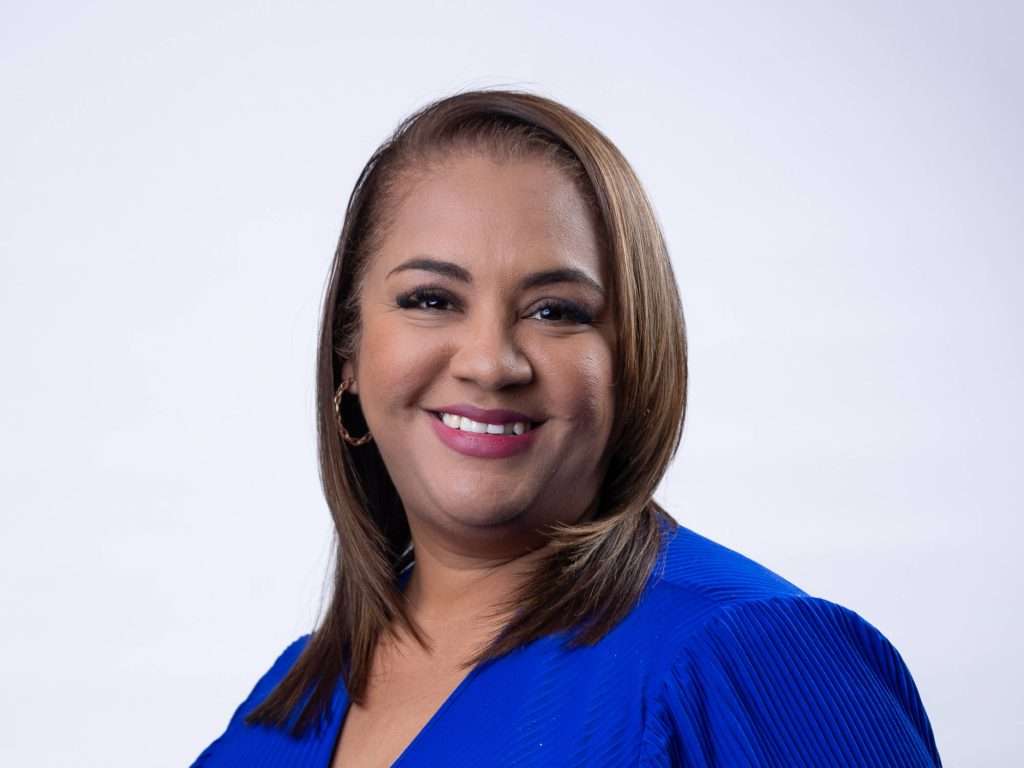
Architecture was Bianca Anthon’s first attempt at building better communities. More than two decades into HR, the HR director at Illovo Sugar South Africa is still driven by that same idea, only now she’s building organisations rather than buildings.
In an exclusive interview with CHRO South Africa, Bianca shares how the unexpected career turn led her from building buildings to building cultures, and how two decades of experience have taught her that the best organisations, much like the best buildings, need strong foundations.
Q: Can you take us back to the start of your HR journey? What drew you to this field?
Interestingly, my journey into HR was not a straight line. When I left school, I initially studied architecture. At the time, I was drawn to the idea of contributing to society by helping to create homes and communities, particularly for people who had been disadvantaged by poverty and inequality.
But somewhere along the way, I realised that what fascinated me most wasn't the buildings. It was the people who lived and worked in them.
I became increasingly curious about what makes people tick, why we think differently, what motivates us, how people discover their strengths and importantly, what happens when people are given the environment and leadership they need to thrive. That eventually led me to HR.
More than two decades later, I still believe that at its best, HR sits at the intersection of people, performance and purpose.
I've also come to understand that HR is much more than helping people. We have a responsibility to help create organisations that are healthy, high-performing and sustainable – organisations where people can build meaningful careers, businesses can create value, and communities can prosper.
Perhaps that's why the architecture story still feels relevant to me. I may not have ended up building physical structures, but I have spent my career trying to build environments in which people can flourish. And increasingly, I think about that in terms of legacy: What are we building through our leadership that will still matter after we have left the room?
Q: How did your previous roles prepare you for your current position at Illovo Sugar?
One of the greatest gifts of my career has been its diversity. I've worked across mining, manufacturing, FMCG, insurance, retail, consulting and agriculture. Each environment taught me something different about people, business, leadership and culture.
I've worked in highly complex industrial relations environments, through transformation and organisational change and through periods of significant uncertainty. I've also experienced the other side of the equation – working with exceptional leaders and organisations where values, strategy, culture and people practices genuinely came together. Both experiences shaped me.
I learned early that culture is not a soft issue. Culture is how strategy gets experienced by people. It influences whether people speak up, whether they take accountability, whether they innovate, whether they stay and ultimately, whether the organisation performs.
I also learned that HR leaders have to be able to hold two truths at the same time. We have to care deeply about the human being behind the employee number because every employee has a family, responsibilities, hopes and a future. But we also have to understand the commercial realities of the business. A business that cannot perform cannot sustain jobs, create opportunities or contribute to the communities around it. For me, great HR sits in that space between the two.
That is one of the reasons Illovo is such a meaningful organisation to work for. Our business is deeply connected to people and communities, particularly in rural areas, while operating in a highly competitive and changing commercial environment.
I see my role less as owning the people's agenda and more as being a steward of it i.e. helping leaders create the conditions in which people, performance and the organisation's long-term purpose can thrive together.
Q: What challenges have you faced along the way, and how did you overcome them?
Like many leaders, my growth has been shaped as much by adversity as by opportunity, and this has humbled me. Early in my career, I was involved in transformation work in the mining sector, where Employment Equity and broader transformation conversations were often complex and deeply emotive. Those experiences taught me that leadership sometimes requires you to hold difficult conversations while still holding on to people's dignity.
I've also navigated organisational restructures, retrenchments, industrial relations challenges and periods of deep uncertainty. The pandemic was a particularly important leadership lesson because it reminded all of us that behind every business metric was a human being whose life had been significantly disrupted.
And then there have been the challenges outside of work – losing my husband and subsequently my dad in a short space of time changed me profoundly. It gave me a different perspective on life, on people and on leadership. It reminded me that we rarely know what someone is carrying when they walk through the workplace door. I think that has made me a more compassionate leader (but not a softer one). More grateful, more intentional and purposeful.
Adversity taught me that compassion and accountability can coexist. You can care deeply about people while still having difficult conversations, making tough decisions and holding high standards.
I've also had to learn, particularly as a woman in senior leadership, to find and use my voice. Earlier in my career, I sometimes believed that being a good leader meant having all the answers or making everyone comfortable. I know better now. Leadership is not about having all the answers. It is about having the courage to ask the right questions, to stand for what matters, to listen, to learn and sometimes to make the difficult call.
I don't believe we ever completely overcome adversity. We integrate it into who we become. For me, it has deepened my empathy, strengthened my resilience and given me a much clearer sense of what kind of leader I want to be and, ultimately, what kind of legacy I want to leave.
Q: Are there skills or roles that are particularly hard to attract or retain in your sector and how do you approach that?
Like many technical industries, the sugar sector faces increasing competition for specialised skills. Some of our most critical capabilities take years of practical experience to develop, from technical specialists and artisans through to operational and leadership roles.
At the same time, we are competing in a global talent market where people have more choices about where and how they work. Our response therefore has to go beyond remuneration. People need to feel that they are building something and not simply filling a position.
We focus on creating an environment where people can do meaningful work, develop their capabilities, see a future for themselves and feel connected to a purpose larger than their individual role. That means intentional succession planning, disciplined talent reviews, structured development, international exposure and a strong 70:20:10 learning philosophy. It also means giving leaders accountability for developing the people around them.
One area I feel particularly strongly about is readiness. Succession isn't simply about identifying who could potentially fill a role one day. It is about understanding what the organisation will need in the future and deliberately building that capability today. We also use stay conversations and targeted retention plans to understand what matters to our critical talent.
Ultimately, I don't think talent retention is an HR programme. People don't stay because HR has a good retention strategy. They stay because they experience good leadership, meaningful work, growth, belonging and a future they want to be part of. That makes talent attraction and retention a leadership responsibility, not simply an HR responsibility.
Q: Are there HR initiatives that you've implemented at Illovo that you are proud of?
I'm most proud of the work that creates capability and systems that can outlast any individual leader.
Over the past few years, we've focused strongly on organisational effectiveness, organisational design, succession, leadership capability and creating greater discipline around talent management.
Our succession work has been particularly important to me. I've always believed that one of the most significant responsibilities of a leader is to leave behind an organisation that is stronger than the one they inherited.
That means not simply identifying successors, but thinking differently about readiness, deliberately building capability and creating opportunities for people to stretch into their potential.
Our culture transformation journey has also been a significant area of focus. Culture can easily become a set of words on a wall. Our ambition has been to translate it into observable behaviours, leadership practices and everyday experiences so that culture becomes something people experience and “live” rather than something we simply talk about.
I'm also proud of the work our HR team has done around employee benefits, talent pipelines and our front-line manager development programmes. Front-line leaders are particularly important because they often have the greatest day-to-day influence on people's experience of work.
But I am careful about using the word "I" too much. The best HR work is never the work of one person. It is collective. I work with amazing, talented people across Illovo and Associated British Foods (ABF – our holding company). My role is to create clarity, challenge thinking, build capability and bring people together around what we are trying to achieve.
For me, the real measure of success is not how many initiatives we launch. It is whether leaders become better leaders, whether people have greater opportunity, whether the organisation becomes more capable and whether the business is stronger for the future.
Q: When not driving HR strategy, what do you do to unwind?
Outside of work, I am very much a family-and-friends person. The main organiser of social activities. The gatherer. I enjoy good conversations, weekends by the sea, travelling, exploring new places with my wonderful new husband, Craig, and simply being around my children and the people I love.
I also enjoy speaking, coaching and mentoring. I'm particularly energised by helping someone see a possibility in themselves that they may not yet be able to see. I think that comes from something quite fundamental about how I see people: I believe most people have far more potential than their circumstances sometimes allow them to see.
Something people may be surprised to learn is that I originally studied architecture. In hindsight, it makes perfect sense. Architecture is about creating spaces in which people can live, connect and flourish. HR, in many ways, is about doing something similar – creating the conditions in which people and organisations can flourish.
So perhaps I didn't really change direction. I simply changed what I was building.