
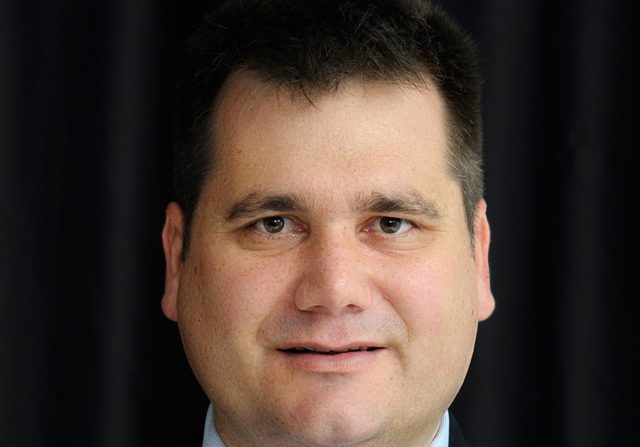
EY's Chad Schaefer says a consulting mindset would go a long way in helping solve complex challenges.
After qualifying as a chartered accountant, EY Partner Chad Schaefer realised he wanted to take a different direction and luckily, because he was in a large “big-four” professional services organisation, he was able to switch to consulting. Coming from an accounting and consulting background has given him a different perspective - one he thinks HR leaders should have in the way they approach their role. He believes that the problem with some of the HR executives or HR components for a lot of organisations today is that they don't actually start with a consultant's mindset. They are trying to solve some of the most complex HR problems without knowing how to consult.
Chad says:
He believes that changing this mindset can go a long way towards helping HR professionals become more effective and that, he says, can be addressed by getting people to focus on four Ps: Plan, Platform, People and Purpose of the organisation.
[chro-cta slug=mondel-z-international-s-cebile-xulu-at-hr-indaba-2020-on-14-15-october-2020]
Says Chad: “The first 'P', for plan, sets direction, it is the strategy, which is co-created by leadership and shared throughout the organisation. The Plan is supported and enabled by appropriate operational platforms, for example, information technology, systems and processes. The Platform relates not only to the operations of the business but the way in which people communicate with each other, so it can really drive the culture of the business as well. The platform must link to the plan of the organisation. The third 'P’ is around people, because, even with the right platform, no organisation can executive its plan without having the right people on board to do what needs to be done. The fourth 'P' is around purpose. That is about being introspective as an organisation and saying, 'Why are we doing this plan? Does this platform allow us to achieve our objectives? And are these people aligned with the purpose of the organisation?'.”
So, essentially the plan, the platform, the people and the purpose all need to come together if an organisation is to be successful. Chad says that successful HR consultants and practitioners are those who actually understand that before they go and dive down into the detail around the people component.
South African HR leaders ahead of the curve
Chad says that HR in Africa is in a unique space given that our continent is characterised by a dichotomy in which there are pockets of excellence in some areas and challenges in others. South Africa, for example, can be looked at as a first world country when it comes to its financial markets but, with public services like health and education, it is arguably still very much a third world country. Chad says that, because of this, some of the HR issues that the country is dealing with are consistent with global trends, while others are unique to South Africa. Digitisation, for example, is a global issue, while aspects of workforce diversity are very particular to the local context.
"South Africa is making progress when it comes to dealing with people issues, and because we are dealing with a much wider variety of issues, as opposed to first-world countries, the leadership that emerges from here is well-rounded," he says.
Referring to the recently released Global Leadership Forecast 2018, Chad reiterates that leadership and talent management are among the top challenges facing executives around the globe. And, while South Africa may be ahead of the curve in terms of having more versatile HR leaders, there is still a limited pool for that talent.