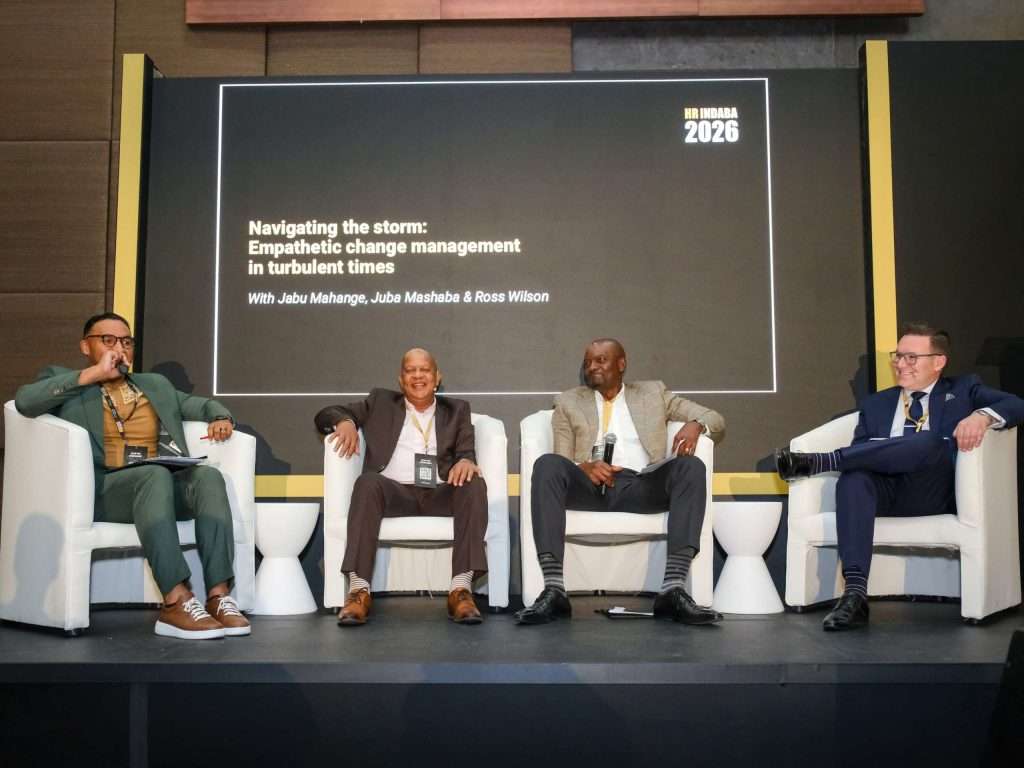
Empathetic change management was a key focus for three HR leaders who discussed how to navigate organisational and cultural transformation with a people-centred approach at the 2026 HR Indaba.
During the session, Navigating the storm: Empathetic change management in turbulent times, Juba Mashaba, CPO at Cell C; Jabu Mahange, group HR executive at Famous Brands and Ross Wilson, chief people officer for corporate and investment banking at Absa Bank shared insights on keeping people at the centre of change while navigating uncertainty and building high-performance cultures.
Juba kicked off the session with a discussion on leading a cultural transformation as the organisation navigated a turnaround and prepared to become a listed business. “Turning around a business that was virtually written off was not easy, but it was important to start with what we had. When businesses start failing, the assumption is that we don’t have the right people, but we have the right people. We just needed a new strategy and to rebuild our people’s confidence in the company. We did this by introducing policies like flexible work, unlimited leave and aligning our employees to our mission of being unstoppable from day one,” he said.
Juba emphasised the importance of communication and leadership visibility during cultural transformation. He noted that Cell C completed its listing process in a record-breaking seven months, compared with the typical 18-month timeframe.
“As HR leaders, it’s essential that we start designing policies from a place of trust and those that will benefit the majority, and not only consider possible abuses of the policies,” he said.
Empathy as the currency of change
Jabu highlighted the challenges of operating in a difficult economic climate while building a high-performance culture.
“We believe that empathy is the currency of change. In order to build a high-performance culture while keeping morale high, we ensure we are communicating often and effectively with our employees. We also encourage our middle managers to listen to their teams. I’ve also noticed that the higher people go in an organisation, the less they feel they have to listen to others, so we expect all our middle managers to have high EQ so that they can drive change effectively,” Jabu said.
He added that Famous Brands had drawn on Springboks coach Rassie Erasmus’s approach to building a high-performance team. This involved defining what a high-performance culture looks like, identifying the behaviours required to sustain it and promoting humility across the organisation.
At Absa Bank, Ross is leading a leadership change and he highlights the importance of empathy during these transitions. “If you don’t manage leadership change effectively, it can create uncertainty. We’ve focused on engaging employees about what the leadership change means and talking to their hearts and minds about what the change means for them personally. It’s also important to build trust by providing clarity and being honest when we’re not sure what the change will mean for them. This has helped us in mobilising our people through leadership changes,” he said.
Ross concluded the session by reminding HR executives of the importance of creating opportunities for their own teams to recharge. He said HR leaders needed to ensure their teams remained energised and equipped to support the wider organisation through periods of change.