
At the 2025 HR Indaba, senior HR professionals and legal experts called on leaders to move past symbolic gestures of inclusion and address the deep-rooted blind spots that undermine fairness in the workplace.
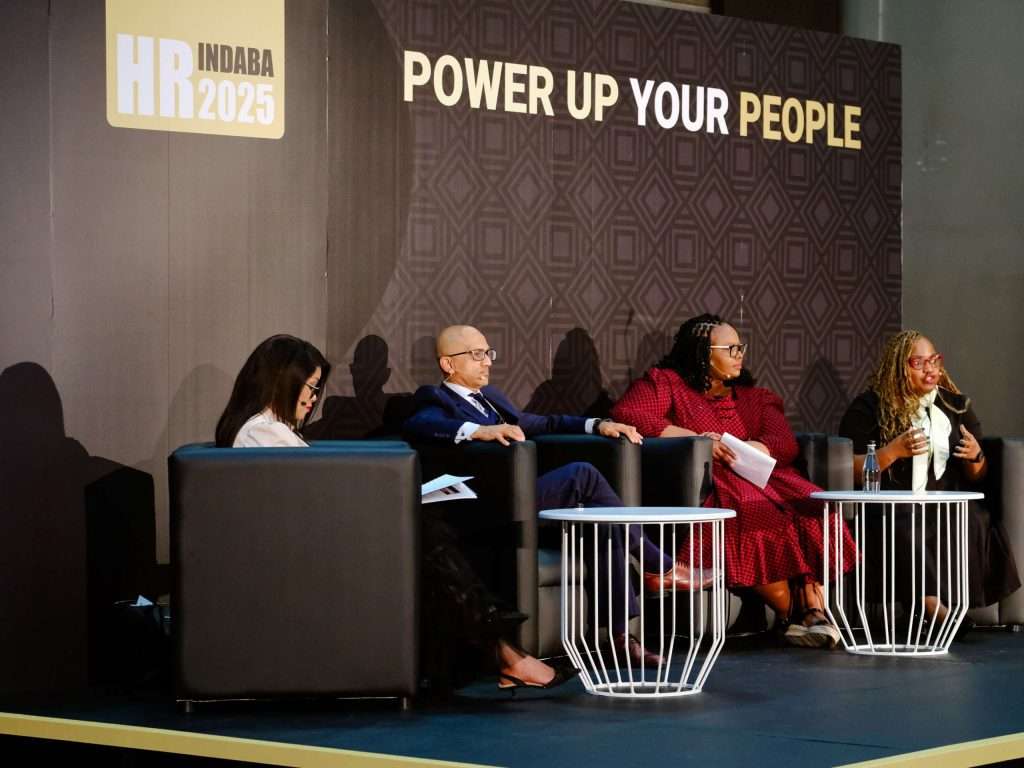
Over 3,000 delegates filled the Sandton Convention Centre for the 2025 HR Indaba, where leading human resources professionals unpacked the unseen biases that persist within organisations and shared strategies to build cultures of genuine inclusion.
In a panel discussion titled Bias and blindspots: Educating leaders on fairness and inclusion, Pamela Xaba, HR professional and founder of Nonkosi Creatives; Aadil Patel, director and practice head of employment law at CHD; and Dr Sane Ngidi, HR lead for Africa at the Gates Foundation, explored how leaders can move beyond compliance and drive authentic behavioural change.
Pamela emphasised that inclusion should not be treated as a single policy but as an organisational strategy embedded across governance, people practices, procurement and product design. “Inclusion must be more than symbolic,” she said. “It should be strategic, catering for governance, people and systems. At board and executive level, we must ask: who is excluding this decision and who is benefiting?”
She added that inclusion must be a lived experience, not a public relations exercise, adding that it pains her when inclusion only looks good in pictures and on LinkedIn. “Employees must experience it internally, from recruitment and performance management to career growth. It starts within, before we impress the external world,” she said.
Pamela also called for diversity in procurement, encouraging leaders to support women- and youth-led businesses, and to ensure products and services are designed with diverse communities in mind.
Aadil, a legal expert in employment law, addressed the growing prevalence of harassment in the workplace and the limitations of a purely compliance-driven approach. “We tell HR to comply with the Employment Equity Act, to have a policy and to train employees, but that’s not enough,” he said.
Moving beyond compliance
“When someone is harassed, it impacts their performance and confidence. How do you expect a young graduate to report misconduct when the perpetrator determines their career path?”
He urged organisations to empower employees to safely report grievances without fear of prejudice or stigma. He explained that induction programmes must train people on how to lodge complaints comfortably. Investigations must be anonymous and fair. “We need to move beyond compliance to protect employees’ dignity and trust.”
Sane echoed this sentiment, explaining that inclusion must be practical and rooted in local context. She said that at the Gates Foundation, inclusion is embedded in how they work.
“We always ask, who are we making the decision for, and are they in the room? As a global organisation operating in Africa, we must recognise each country’s unique culture and ensure our policies reflect that,” she said.
She also highlighted the importance of vulnerability and trust in leadership, saying, leaders must create safe spaces where employees can share without fear. “Inclusion requires us to suspend judgement and understand our own biases,” she said.
Concluding the discussion, Aadil reflected on the need for HR leaders to take ownership of inclusion before policies are even written. “We must move beyond terminology and act. Empower people to accept diversity genuinely, otherwise, policies remain words on paper,” he said.