
The role of human resources is changing faster than most leaders can keep up with. At the 2025 HR Indaba, Sage regional vice president for medium business Gerhard Hartman argued that the question is no longer whether to adopt technology but how to use it to drive value.
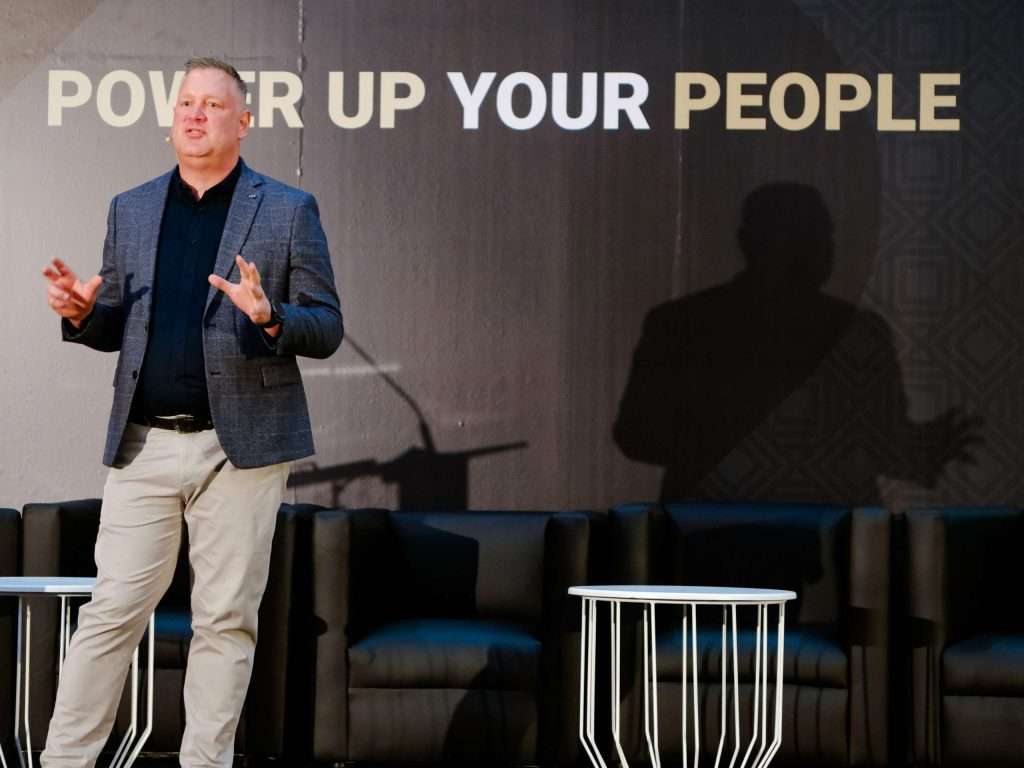
Sage regional vice president for medium business Gerhard Hartman led a 2025 HR Indaba session titled Data-driven decision making in HR, where he positioned the function as a long-term driver of growth in organisations.
“You need to look after employee benefits and wellbeing, and you need to have the data for strategic workforce planning. You have a buddy in this journey and that buddy is the technology you put into your organisation,” he began.
According to Gerhard, the HR profession has changed more in the past five years than in the two decades before. He cited research by Sage, which showed that the pandemic, hybrid work, the entry of Gen Z and the rise of artificial intelligence had all shifted expectations in HR. In the report, 91 percent of HR professionals and 96 percent of business leaders told Sage that the HR landscape has changed dramatically. In Gerhard’s view, each challenge brings an opportunity for HR to evolve from administrative support to strategic leadership.
“You are becoming a strategic leader in your organisation, not just the person who manages the people function.
Technology is transforming your future. There are going to be two camps. You’re either going to adopt technology, learn from it and take your team on the journey, or you’re going to be left behind and see your competitors thrive in front of you,” he said.
He pointed out that nearly all HR leaders are carrying heavier workloads, with 95 percent taking on expanded roles and 91 percent report longer hours. In his experience, technology can help HR move away from repetitive tasks and reclaim time for strategic planning.
“Eighty percent of HR teams believe AI will change their roles. It frees up your time to focus more on the people aspect, not the admin burden. If you have not started that journey, it is never too late,” he explained.
The shift in HR
A notable finding from Sage’s research was that 68 percent of HR processes are already automated. Many in the audience agreed that automation allows them to focus more on people than paperwork. Gerhard argued that the shift captures what the future of HR should look like.
“Automation gives you insights into your organisation and helps you make quicker, faster decisions. It means spending more time on the strategic work you need to do within your organisation instead of always running with the admin burden,” he said.
Gerhard challenged attendees to do a 90-day experiment, where each person identifies one process in their organisation that can be automated, no matter how simple. His point was that every small experiment builds confidence and the capacity for change.
“When you run an experiment, there are only two results, success or learning. You never fail from an experiment. Go back to your organisation and think about something very simplistic that you can automate,” he said.
Throughout his presentation, Gerhard returned to one message: technology is an enabler. He urged leaders to think long-term when investing in technology, saying organisations should take a 10-year view rather than chasing quick wins.
“Do not just look at the immediate future. Make sure that when you invest in it, it gives you longevity. I do not believe in AI taking people’s jobs. I believe people who use AI will take the jobs of those who do not. Get ahead of the curve and start small,” he said.
Gerhard emphasised on data as the new foundation of strategic HR. He urged attendees to collaborate with other leaders in finance and technology teams to streamline processes and share insights. The executive closed with a challenge to lead rather than follow, predicting that the next three – five years would test which HR teams are ready to embrace technology as a partner.
“Streamlining data for decision-making is the goal. It frees up your time to lead the people’s direction with the rest of the C-suite. That is how you attract and grow talent. Software is there to solve basic needs, but you can do so much more with it. It is up to you how you bring it into your organisation. Take your teams on that collaboration journey. Transformation will always have challenges, but you can navigate them. Be proactive, be strategic and be willing to lead the change,” he said.