


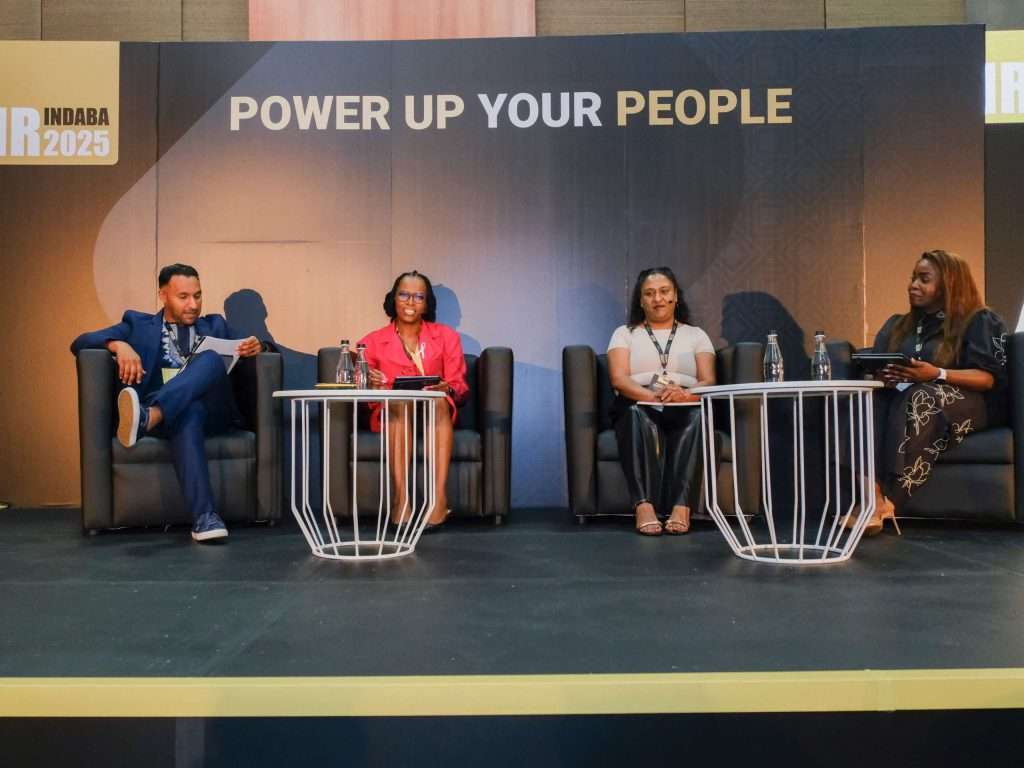
The 2025 HR Indaba saw HR leaders tackle neurodiversity, an often-neglected part of inclusion in the workplace. Speaking at a session titled Wellness spectrum toolbox: Supporting neurodivergent employees, Mmabatho Tlale, chief human capital officer at ZEDA; Felicity Ramiah, staffing manager at Rand Refinery and Phetheni Nkuna, director of employment law at Cliffe Dekker Hofmeyr; unpacked how organisations can create environments where neurodivergent employees thrive.
Mmabatho opened the session by describing HR as the bridge between awareness and action. In her view, organisations must educate leaders on how to identify and support neurodivergent employees.
“HR plays a very fundamental role in shaping inclusive leadership and one of the strategic imperatives is raising awareness – and not just around neuro diversity, but also about the value of cognitive diversity. It brings in collaboration and innovation. Some of the practical things that we could do is to partner with SME subject matter experts around neurodiversity. We all know that neurodiversity is still a new term in South Africa,” she said.
She added that building an inclusive culture requires normalising differences instead of hiding them. As she noted, neurodivergent employees are already in most organisations, but many managers do not know how to support them.
“Run workshops where neurodivergent staff can share their experiences, and invite public figures to speak about their own journeys. Encourage employees to disclose their conditions privately if they wish. Once an employee has disclosed, HR can engage employee assistance programmes and psychologists to advise on how best to support and manage neurodiversity in the workplace,” she said.
Approaching the subject from a legal perspective, Phetheni Nkuna, director of employment law at Cliffe Dekker Hofmeyr, referred to the Employment Equity Act, which sets clear expectations for employers. Her concern was that too many organisations act only when employees disclose conditions or when performance problems arise.
“Legislative compliance is not the ultimate goal. Organisations need to aim for much more than that. We have some of the most inclusive pieces of legislation, but the most common failure is the lack of proactive reasonable accommodation. Many employers wait for employees to disclose their condition rather than proactively creating an inclusive working environment. It would be very helpful to be proactive as an employer,” she said.
Making change now
Phetheni explained that simple adjustments could make a real difference. For example, written agendas could help employees with ADHD focus, while quiet spaces, clear instructions and flexible lighting could help people with sensory issues work more comfortably. She added that psychometric assessments should not be used to screen out talent, but to understand how people think and contribute.
“You need to ask yourself, how do we cater for the non-linear individual, someone who does not think as fast as I do, someone who shows up as a blue when I am a red. We often wait until there is poor performance or incapacity, but that is often too late. Somebody could have actually suffered harm because they were in an organisation that was not inclusive,” she explained.
Felicity spoke from experience about building a wellness framework as the staffing manager at Rand Refinery, which includes neurodiversity as part of mental health. The programme, which began as an eight-pillar plan, has since grown into a tool for tracking and improving employee experience.
She revealed that reasonable accommodation is written into Rand Refinery’s policies to ensure inclusion is not dependent on individual discretion. Managers are trained to integrate these conversations into everyday team discussions, while employees also receive access to counselling through a professional provider.
“This year, we are moving on to those leading indicators that we are getting from our employees based on the information we have. One of our wellness pillars is mental wellness and what is more interesting is that there is a roll-up in terms of our employee wellness, our departmental employee survey, our culture surveys. The organisation has triangulated all of the feedback and is deliberately planning initiatives that will assist our employees,” she said.
In closing, Phetheni cautioned against waiting for perfect circumstances before making change, saying HR must hold itself accountable for transforming organisational culture.
“Many years ago, the argument about employment equity and that we did not have the right candidates was widely spoken about. If we had continued with that debate today, we would not have changed. I think the same thing applies with neurodiverse employees,” she said.














