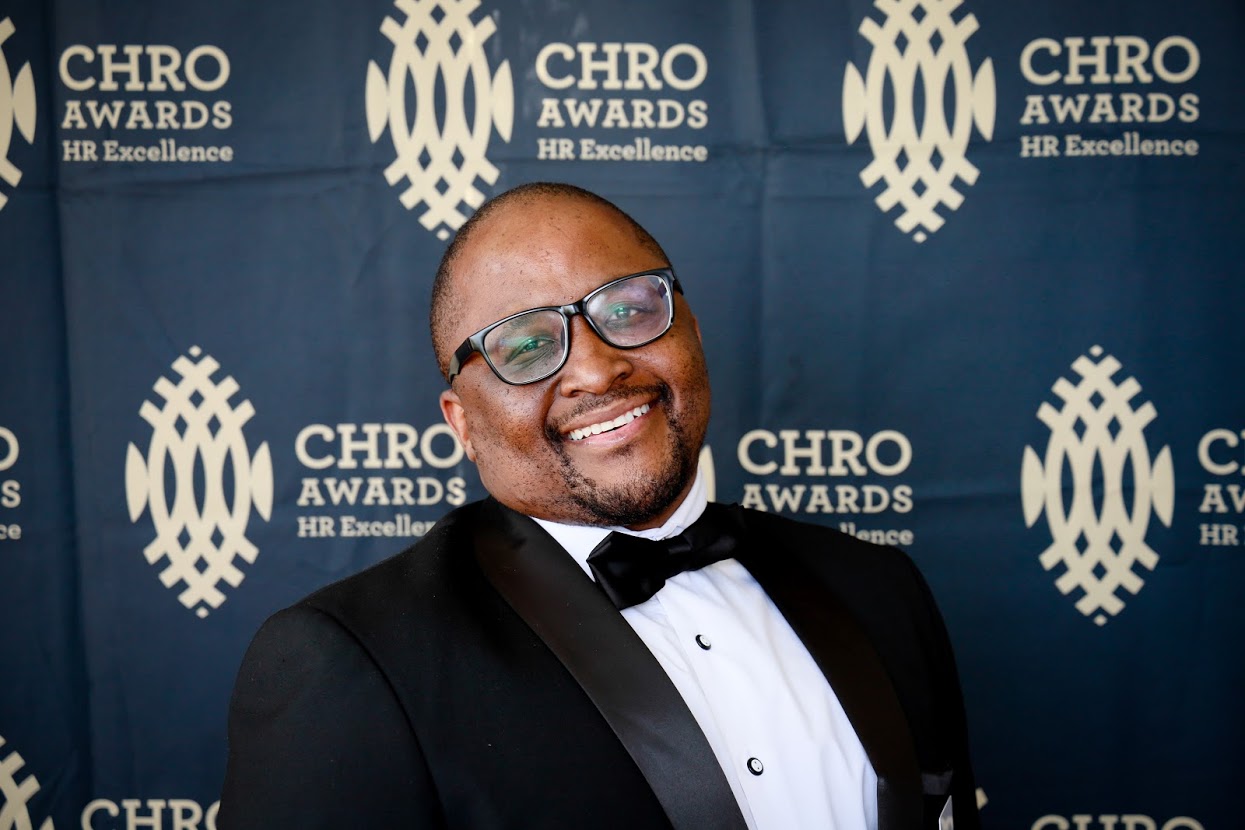

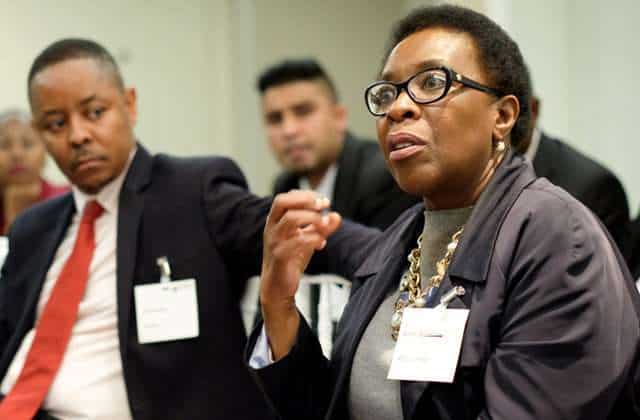
Khosi says her consulting background has held her in good stead as an HR executive.
Khosi Matshitse, Group Executive Human Capital at the AECI Group, comes from management consulting background. She has worked for Deloitte and also worked for the company now known as Capgemini Consulting, where she worked in Leadership Development and Alignment as well as in Performance Management. It was there that she first began working on HR strategies and she learned how to communicate and mobilise organisations around Change and Change Management. CHRO SA met with Khosi to get her views on how the profession has evolved as her career progressed.
How has your management consulting background assisted you in your HR career?
My advantage of coming through management consulting is that I have had the opportunity of seeing business as a whole. Through the roles that I had when I was consulting, I have been able to also understand the interaction between those aspects of business and HR and bring the two together so, in as much as I’m not a finance specialist or an IT specialist, I have a deep understanding of those functions in so far as how they impact and influence HR and how HR impacts and influences them. So, it's been good for me in that regard.
Do you believe that corporate South Africa is sufficiently transformed, at least racially?
In terms of racial diversity, no one can argue that South Africa has not gotten there. Simply by virtue of the numbers, there has been a lot of progress. But I think we are still quite far behind in making those people feel included. That’s the conversation we need to have. It's not a rational thing, it's an emotional thing. We need to understand that, if a child grows up being conditioned to include certain kinds of people but exclude others, it becomes difficult when they are adults to start getting to that place where they have to begin including the people whose profiles that they had before been conditioned to exclude. And, while many organisations do give their employees diversity training, it’s very difficult to change people’s hearts, which is essentially what needs to happen. The question is, how do executive teams talk about changing the hearts of managers when their own hearts are not in the right place? That is why there is often an elephant in the boardrooms that never gets spoken about and years go by.
[chro-cta slug=mondel-z-international-s-cebile-xulu-at-hr-indaba-2020-on-14-15-october-2020]
What do you think are the most exciting trends in HR technology and what is AECI doing in that space?
Look there's some really good technology enabling happening there. However, part of my more recent experience has been that unless a company jumped on the HR tech revolution in the late 90's into the 2000's, it will still be playing catch up. Many of the companies that jumped on that bandwagon back then are so much more mature now, having already implemented the latest developments and making the necessary adjustments to find technology solutions that work best for them that they are finding it so much easier to manage people. Some companies simply haven't even started that journey.
In terms of what we’ve been doing at AECI, we have a lot of highly skilled professionals really smart people. We’re a chemistry company and so we tend to recruit mainly people with those kinds of backgrounds as opposed to people that are more technologically inclined. The one obstacle is that the organisation, for whatever reason, just hasn't started on that journey.
What do you feel are the obstacles to companies like yourselves adopting HR technologies?
There are bits and pieces of different innovations but it’s not yet a case of having up-to-date systems that help us to manage the HR function. Also, we've got many long-serving people who, for lack of a better word, don't know what's available out there. That's a debate we keep on having in my community; to say, ‘guys, this is the way the industry is heading in terms of technology and this is how it's going to make life easier for us as management and our employees.’ The responses we get to those kinds of conversations are usually questions about the value that such technology will bring into the company and how many rands the company will save. But I think, sometimes, it isn't always about saving rands. Sometimes you have to spend the money to see your return, and that's where we are at the moment.