


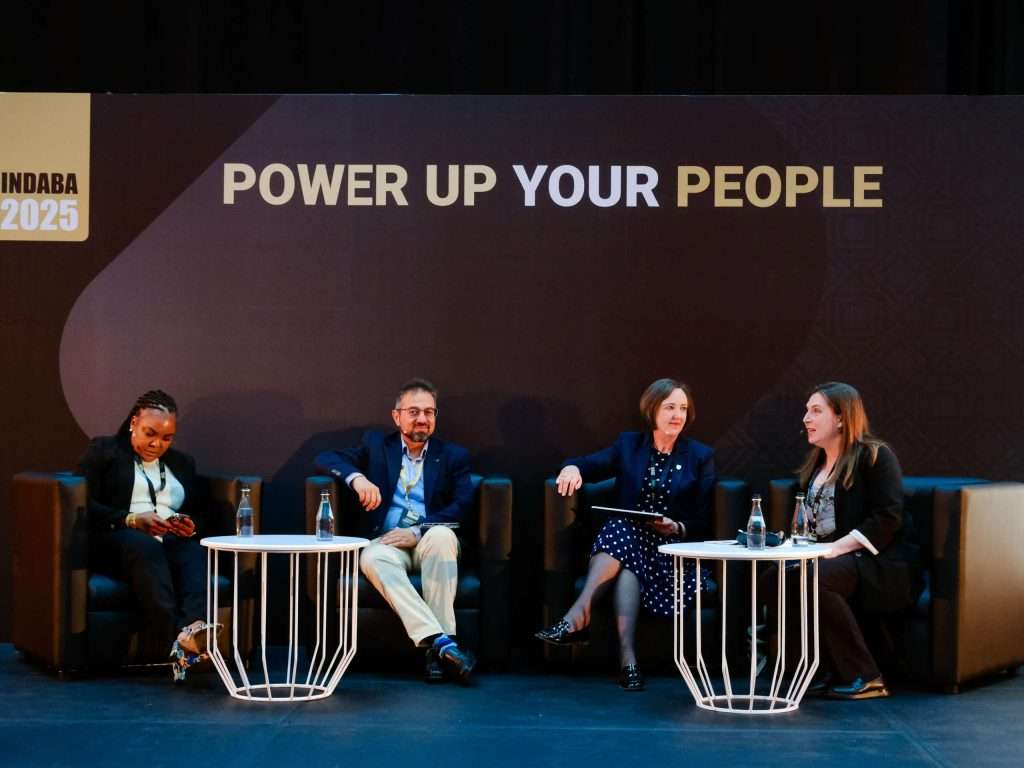
The Sandton Convention Centre housed over 3,000 attendees for the 2025 HR Indaba, where senior HR executives from Standard Bank, SABC and Sanlam unpacked how people leaders have moved to steering business strategy and shaping organisational success.
During a panel discussion titled From a seat at the table to steering the ship, leading HR executives reflected on how the role of human resources has evolved from a support function to a strategic powerhouse.
The discussion featured Sharon Taylor, chief people and culture officer at Standard Bank Group; Rachel Masuku, group people executive at the SABC; and Sana-Ullah Bray, group executive for human capital at Sanlam. Each shared insights into what it means to lead people strategy at the highest levels of business.
Sharon emphasised that people strategy cannot thrive without executive buy-in and explained that the best people strategies don’t survive poor leadership.
“You can have the best HR team developing strategies and frameworks, but without support from your board, CEO and senior leadership, you fall at the first hurdle,” she said.
She noted that HR’s influence is rooted in the organisation’s leadership culture. “I’m still struck by how many of my peers don’t have a seat at the table, let alone a voice in the business,” she remarked. “At Standard Bank, I’m privileged to work with a board that takes the people’s agenda seriously and gives us a strong mandate. But it doesn’t stop there – you have to engage leaders at every level to ensure they stay focused on their role in driving the people’s strategy.”
For Rachel, the transformation of the SABC offered a powerful example of how HR leaders can drive organisational change. “The first thing that attracted me to the SABC was the change in leadership,” she said.
Driving organisational change
She explained that when the new female CEO came in, her mandate from the board was to stabilise the organisation. It was going through a period of turbulence and she was inspired by the opportunity to help drive that change.
She highlighted that HR’s evolution has made it a central force in decision-making.
“HR has evolved so much that we are no longer just influencers, we help steer the ship. If decisions are being made and you’re not in the room with the decision-makers, you need to reflect on why. In every role I’ve occupied, I’ve made sure to have that close partnership with the CEO. If your CEO isn’t checking in with you before making major decisions, that’s a sign to rethink your approach.”
Rachel also touched on the SABC’s ongoing financial recovery, noting that HR’s role in navigating organisational restructuring and culture change has been essential. She said that she and her team are implementing a new financial model to stabilise the organisation.
“Even though we’re a state-owned entity, the grant we receive from the government is minimal, so we have to be commercially savvy while protecting our people,” she said.
Sana-Ullah brought a global perspective to the conversation, describing how Sanlam’s 140,000-strong workforce spans multiple generations with differing expectations. He said he and his team have baby boomers through to Gen Zs, each with their own ways of working.
“Some prefer the desk, others the café, but ultimately, what matters is that the work gets done. Our goal is to be the most admired financial services brand on the African continent, and that’s driven by culture.”
He argued that culture has become a strategic imperative for investors and shareholders. “At our recent capital markets day, the one question that kept coming up was: what’s your culture?” he said. “Return on people is just as important as return on investment. When people feel valued, trusted and can show up authentically, the business performs better.”
Reflecting on Sanlam’s recent corporate transactions, Sana-Ullah explained that people integration is at the heart of business success. “People make the transactions work,” he said. “It’s about trust, authenticity and showing up as yourself. If we do that consistently, we can take our organisations to greater strategic heights.”














