
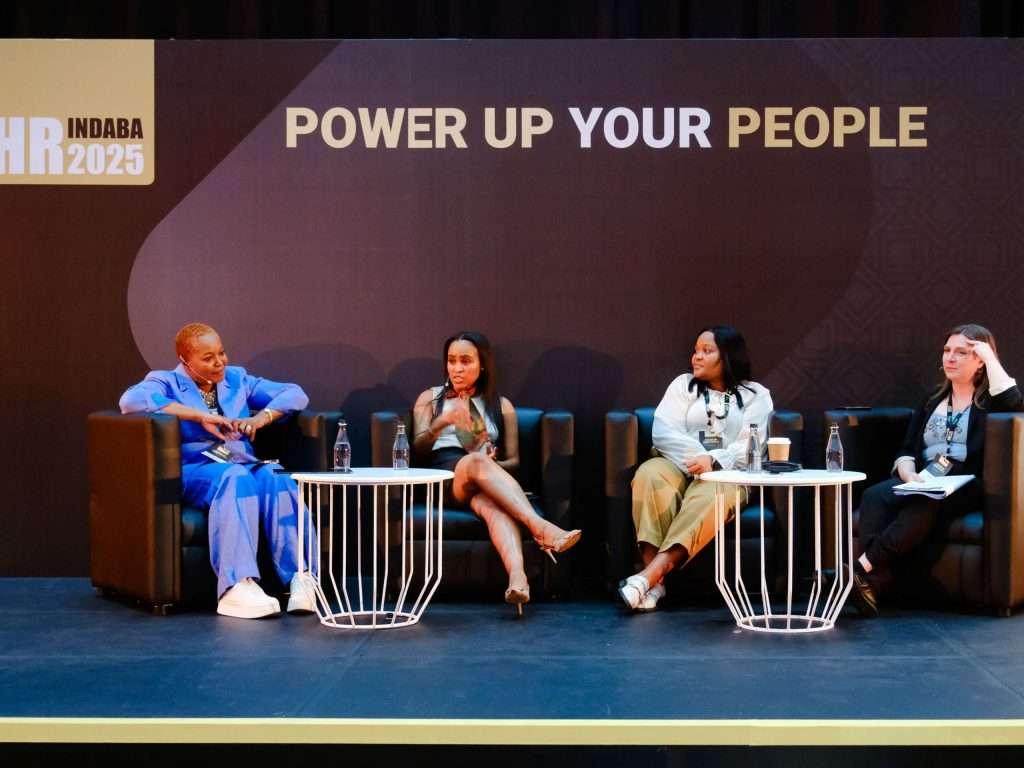
During a panel discussion at the recent 2025 HR Indaba titled Transform or Avoid? Dealing with Toxic Workplace Cultures, Khabonina Ramoupi, group CPO at AECI, Reabetswe Motshegare, HR director at Scatec Sub-Saharan Africa and Boniwe Dunster, HR and industrial relations executive at Lanseria International Airport, reflected on what toxic cultures look like, how to spot the early warning signs and what role HR must play in addressing them.
Opening the conversation, Khabonina reminded the audience that toxic cultures are rarely created overnight.
“Cultures don’t become toxic immediately, it happens over time. You see it in the way people don’t talk anymore. They whisper. They’re scared,” she said.
According to Khabonina, early signs often appear in indirect ways such as silence, absenteeism, increased grievances or behavioural patterns that spread across teams.
“You’ll see leaders emerge, where a senior’s toxic behaviour is repeated by others. When the leader is not there, there’s someone, who behaves the same way, because they’re modelling mini me and they are untouchable. That’s a sign something’s wrong,” she added.
Khabonina also shared how a lack of trust shows up in unexpected places.
“We launched an employee survey and the first question people asked was if it was safe and if we would know who said what? That hesitation says a lot about how psychologically unsafe the environment had become,” she said.
Unchecked behaviours
Adding her perspective, Reabetswe was clear that culture is created and can become toxic through repeated behaviours that are left unchecked.
“No building is toxic, it’s the people in it. Toxic people consistently harm others through manipulation, control or constant negativity. And many of us have seen it and stayed quiet, which means we’ve become part of it,” Reabetswe noted.
She shared an experience from earlier in her career that shifted her own leadership approach.
“Someone on my team told me I was difficult to work with. At first, I just thought they need to adjust. But when I heard the same feedback again a few years later, in a different environment, I realised I needed help,” Reabetswe reflected.
Instead of dismissing the feedback, she asked for support from the organisation’s employee assistance programme.
“I wasn’t going there to prove anyone wrong. I wanted to understand why people were experiencing me that way. As leaders, we need to be open to hearing the difficult stuff.”
Reabetswe noted that she also drew a firm line between performance pressure and toxic conduct.
Losing credibility
“If someone pushes back on me and I immediately shut them down, that’s a problem. If we cant have disagreements in a safe way, we’ve got issues. You can lead for high performance without being toxic,” she observed.
Boniwe turned the spotlight inward, acknowledging that HR professionals are sometimes seen as complicit in toxic environments.
“People don’t always feel that HR is their ally. If someone reports a toxic manager, and our first instinct is to go to that manager, we’re already losing credibility,” she indicated.
Boniwe highlighted the risk of having policies that exist only on paper, pointing out that while many organisations claim to have zero tolerance for bullying or harassment, few ensure that executive teams actually understand those policies or refer to them in performance discussions. She stressed that culture should be shaped not just by what is delivered, but by how it is delivered.
“If someone constantly humiliates others in meetings or swears at their team, that’s not strong leadership, that’s toxicity. But we’re often scared to call it out, especially when it’s someone senior,” she noted.
HR’s own role, she said, must be re-examined.
“We protect ourselves. We stay silent to keep our jobs safe or to avoid conflict. But that silence allows toxic behaviour to continue,” Boniwe observed.
Returning to the idea of how to intervene, Khabonina stressed that change doesn’t come through blame.
Supporting leaders
“You have to help people see their blind spots. Not by attacking them, but by asking the right questions, like when it started or what led to it. That way, they can reflect for themselves,” Khabonina noted.
She explained how AECI uses coaching to support leaders showing signs of toxic behaviour emphasising that culture is systemic, not individual.
“We have internal coaches. We pair someone with a coach who can act as a mirror – not to fix them, but to help them understand their impact. If you go in guns blazing, they’ll shut down,” Khabonina added. “You can’t isolate one toxic person and think the problem’s solved. Culture is what you allow, ignore or reward across the organisation.”
For Reabetswe, intervention also means being willing to walk away when needed.
“If you’ve tried everything and it’s still toxic, then maybe that environment just isn’t for you. But also, an organisation that values you will create space for your voice. Don’t stay somewhere that kills your spirit,” she said.
Boniwe agreed, noting that HR’s silence often sends a message louder than words.
“If we sit in the boardroom and watch leaders mistreat people, and we say nothing, we’re part of the problem. We have to be brave enough to call it out, even when it’s uncomfortable,” she said.
Throughout the session, the panellists shared tangible signals of toxicity and tools for building psychological safety which are:
- People are afraid to speak openly
- Repeated sick leave or absenteeism
- Patterns in EAP data
- Copycat toxic behaviour within teams
- Employees questioning the confidentiality of HR channels
While the tools are:
- Coaching instead of confrontation
- Embedding behavioural expectations in performance reviews
- Enforcing policies consistently at all levels
- Training leaders to receive feedback without defensiveness
- HR taking accountability for protecting safe culture
In closing, Khabonina summed it up by saying that culture is defined by what executives allow and if toxicity is allowed, it becomes the culture. Reabetswe challenged attendees, urging HR to be brave, take accountability and actively build the cultures they claim to value. Echoing this final call, Boniwe added that HR cannot afford to remain silent – not if they want to be credible and truly care about people.