
More than 150,000 South African workers are now owners of the companies they work for.
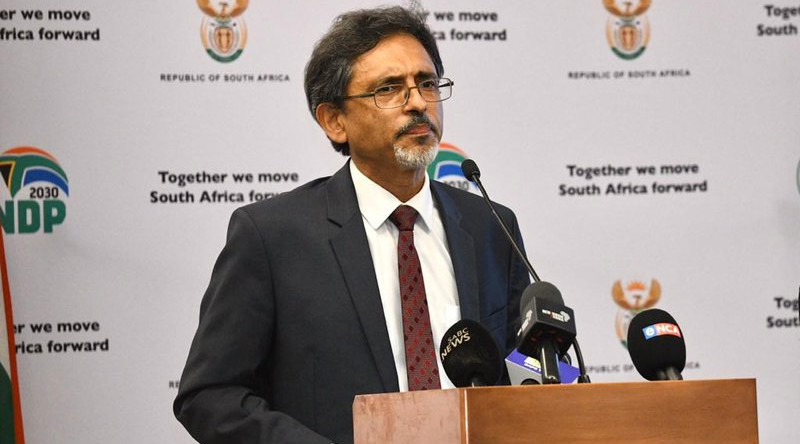
More than 150,000 SA workers have benefited from more than R100 billion in wealth transferred through employee share ownership schemes (ESOPs), minister of trade, industry and competition Ebrahim Patel announced during a press briefing before Worker’s Day.
He said employee ownership contributes to scores under the BBBEE codes of good practice and that the next step in this process would be worker representation on company boards, adding that it was too early to say whether this would be made compulsory under the Companies Act. Already, Coca-Cola has agreed to have two worker representatives on its board of directors in South Africa.
Patel said an increasing number of JSE-listed companies have leveraged worker ownership to drive transformation in their companies, mentioning Sasol, Impala Platinum, Cashbuild, Vodacom and Sanlam.
Through this work, he said, they are preparing the grounds for deeper inclusion and strategic alignment between shareholders, management and workers. But ownership is not enough, he pointed out: “The new-generation shareholding arrangement provides for worker representatives on the boards of their companies.”
Patel said that government, business and organised labour are working on a set of amendments to the Companies Act that will open up the opportunity for greater levels of worker representation on the boards of large companies. “Broad-based transformation of the economy is of critical importance to re-ignite and unlock the potential of South Africa’s economy,” he said.
“An important element of broad-based transformation includes bringing workers into the ownership and representative structures of companies across the economy. It is about bringing key wealth-creators in, not only as wage earners but also as owners of capital, and in that way developing an inclusive South African model, shifting from an adversarial approach on the shop-floor,” he concluded.