
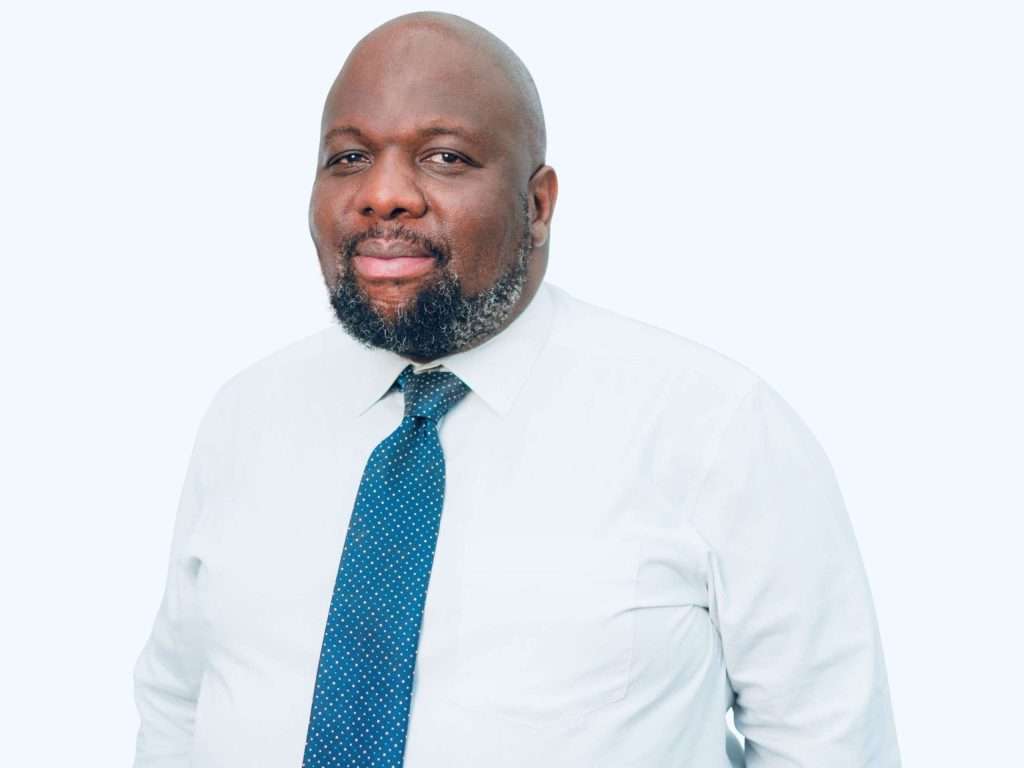
Sifiso Gasa once prepared himself to be a teacher, then a lawyer, before ultimately finding his calling in the space between both: working with people. Today, as CHRO at Röhlig-Grindrod Logistics South Africa, he leads the people agenda for a business of around 600 employees, but his journey to the executive table started in the unglamorous trenches of HR.
Born in Kwazulu-Natal, Sifiso arrived in Johannesburg in 1998 to pursue his studies at Technikon Witwatersrand, now the University of Johannesburg. Looking back, the signs of where he would eventually end up were already there.
“During high school, I participated in a lot of people-related activities and debates. I was elected in various platforms where I had to lead. If you lead, you have to engage and get buy-in from people. Even though we were all students, at the end of the day it was all about reaching consensus and getting buy-in. That's what sparked the interest,” he explains.
“Although my initial goal was to be a teacher because I just had an inclination that I would want to work with people, that plan changed after conversations with family members. One uncle persuaded me to reconsider teaching, while another encouraged me to abandon the idea of studying law for various reasons, which at the time resonated with me.”
Regardless of the career advice received, Sifiso still looked for the next field that centred around people, a decision that turned out to be a natural fit.
“I was pointed to industrial relations. The university however said I cannot just do industrial relations because it’s a specialist field, so I had to do human resources and industrial relations altogether.”
A steep learning curve
His first HR opportunity came through a security company in Alexandra after word spread that there was an HR graduate looking for work.
The business was small, employing around 50 people, but it gave him valuable exposure to the realities of the profession. Three years later, he moved into a much larger organisation, expecting that somebody would finally show him the ropes.
“When I joined the company as a junior HR manager, I thought if they said junior HR manager there would be a manager, a senior manager that I could learn from. It was just me. I was reporting to the owner and the expectation was that I should know everything.”
The learning curve was steep. He was responsible for supporting around 1,000 security officers and dealing with issues that many HR practitioners only encounter years into their careers.
“If we’re talking about CCMA, I did cases up to arbitration. I had to do a lot of reading to catch up and to be familiar. That really gave me a good foundation and that’s one that I still use today. Sometimes if you are thrown in the deep end, that’s your best opportunity to learn. When I left the organisation, I didn’t aim for management roles. I said I’m going to start at a junior role, get to know everything there is in HR and then work my way up.”
Full circle
One of the more unusual features of his career is how often former employers have invited him back. After leaving one organisation, he was later approached to return as HR director. Years later, something similar happened again.
Having joined Röhlig-Grindrod Logistics in 2010 as an HR officer, he left in 2013 for an opportunity at Group Five. But the relationship with the logistics business remained strong.
“I was happy at Röhlig-Grindrod. The move was merely for growth because I was an HR officer. Group Five offered me an HR manager role. Then later they called again and asked whether I would be interested because an opportunity had opened up.”
He returned as national HR manager, later became HR director and in 2024 stepped into the CHRO role.
“I think I’m very introspective. I like to be honest with myself. I like to do my own personal assessment and that includes my career. I will not take a role that I’m not comfortable with. I must at least know 80 percent of what the expectation or what that role entails.”
That habit of reflection has become even more important as his responsibilities have expanded.
Different challenges
“The biggest learning for me has been to be agile, flexible. Not everything is black and white. There’s a lot of grey areas. You need to assess the risk, you need to look at the interests of the organisation, but at the same time minimise the risks,” he explains.
“People come to me expecting advice on almost everything. I do a lot of coaching, including coaching around conflict between executives. I just want to understand the role of coaching for HR professionals because it is there. It’s something that we do as a by-the-way. It’s normally not a requirement, but I’ve seen the need.”
That interest has already sparked thoughts of a future PhD, despite the fact that he has only recently completed his MBA after years of studying.
For now, however, his focus remains firmly on the organisation and the leaders coming through it. One of the projects closest to his heart is a leadership programme developed specifically for the company’s needs rather than borrowed from elsewhere.
“I wasn’t in favour of, and I’m still not in favour of, generic programmes. Taking a Google example and bringing it here doesn’t necessarily work because our situations are not the same. We’ve got different challenges as an organisation, different challenges as an industry, and different challenges as a country.”
A clear picture
The same thinking applies to culture. Rather than relying on slogans, he wants people to have a shared understanding of what the organisation stands for.
“When we say family, we need to be clear that it does not mean tolerance for poor performance. When we talk about high performance, we need to define our posture towards those who do not align with the standards we have set. We want to validate this, make it clear and ensure that, if we are going to drive a high-performance culture, we are all aligned. We also have our academy here where we provide skills programmes for free. We want to see if we can also formalise that so that it's a standalone revenue-generating entity.”
Although he remains energised by the work, Sifiso’s calm and introspective nature has given him a clear picture of what the next chapter of his life might look like.
“I don’t see myself serving corporate 10 years from now. I would like to move into a consulting space, maybe in the academic space. My dreams continue to keep me glued to my vision.”