
The first CHRO summit of 2026 did more than kick off the CHRO event calendar; it was an eye-opener to the hidden realities of the workplace.
The Sandton Hotel became a breeding ground for conversations that mattered under the theme Tax on Talent. HR leaders gathered to uncover the pressures, the burnout and the silent disengagement that rarely show up on reports but cost organisations dearly.
After the first clink of glasses over networking drinks and canapés, HR executives moved into breakaway sessions in smaller rooms for honest reflections about what is really happening inside organisations.
Doing a debrief on breakaway room one, titled Culture under the radar, Karen Roux, managing partner at Regenesys, shared: “The biggest takeaway from the conversation wasn’t necessarily about culture itself, but about how organisations keep an eye on it. Culture isn’t something you can simply tell an organisation to make work”
One of the first questions posed was who owns culture. While the initial response pointed to leadership, HR was recognised as its custodian.
But the conversation quickly evolved as someone in the room shared a powerful observation referencing that while leadership may drive culture, people can effectively fire leaders because of culture.
“Someone said you can have people physically at work while their minds are still in the parking lot, waiting to go home, and spotting the signs when something is going wrong is where true insight begins,” said Karen.
All about partnership
Highlighting the conversation from breakaway room two, Lindiwe Sebesho, managing director at Remchannel, shared how they explored what it means to build environments where people truly thrive.
“One of the key themes was how we empower employees to self-identify when they’re struggling,” she explained. “Many organisations offer programmes, and ensuring they are actually utilised and encouraged goes back to culture.”
“Creating an environment where people can recognise when they’re burning out, struggling, or working on tasks that don’t feel meaningful, and feel safe enough to ask for support when they are not coping, is essential.”
Throughout the discussion, Lindiwe noted that the role of the line manager was consistent. “Ultimately, this is a partnership. It’s employees and managers coming together to ensure that performance is important but that it’s also sustainable.”
However, the weight of this partnership is often crushed by the sheer complexity of modern operations, a point driven home by Chanel Smailes, human capital executive at KAP. Chanel shared insights from breakaway room three, which tackled burnout head-on.
“That old philosophy of having fewer people and expecting more from them is simply not sustainable going forward. The world has changed. The world of business has changed. We’re operating in a new world, but we’re still applying old methodologies, old ways of doing things, old ways of thinking,” she said.
“A very important point that came out was that burnout starts in the boardroom. It’s not an HR function. It’s not just a leadership function. It has to start in the boardroom. One of the comments that stood out was that the more chaos there is, the more layers and complexity we add, and that just creates a whole new level of confusion. People no longer understand what they’re meant to achieve.”
She described a loss of connection across generations, leaders carrying more and more themselves instead of adapting how they connect.
Facing talent taxes
The transition from these intimate sessions to the keynote address was seamless, as Nonku Pitje, CEO at Discovery Corporate & Employee Benefits, took the stage for a conversation to bring the human back into human resources.
“We can’t look at people as resources in the workplace. In one space they’re rainmakers; in another, they’re raising children, instilling values and trying to be present at home. When you think about talent, you have to think about the human being first before anything else.”
Nonku didn’t shy away from the darker taxes on talent, the unspoken fear of AI, the tension of five-generational hybrid work, and the rising crisis of indebtedness fueled by online gambling.
“Today, HR has a unique role it’s never had before. The HR fraternity is firmly at the boardroom table. The traditional teacher HR role doesn’t really exist anymore. That was the bread and butter, but where we are today is a far more complex landscape. It’s very easy to put people in boxes, draw lines, and create labels, but the reality is far more complex.”
She encouraged a focus on having benefits that come alive seamlessly, in a replicable way, with real impact, so that people feel supported and their longevity is positively affected.
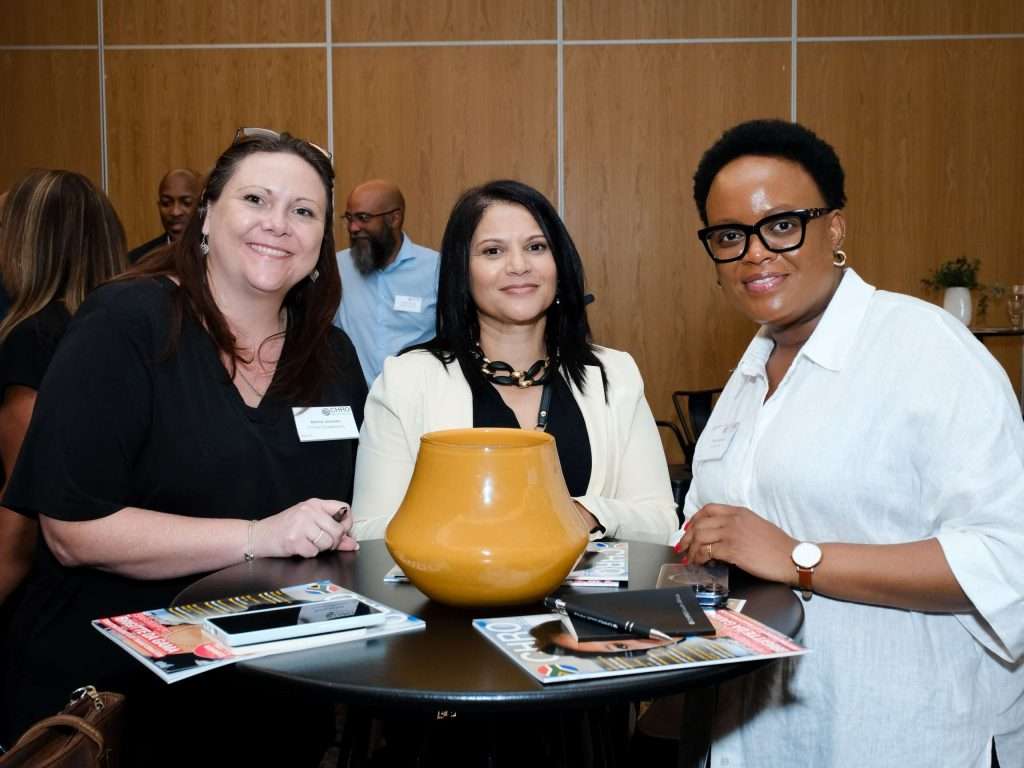
As the sun dipped and glasses clinked, HR leaders gathered over drinks and canapés, reconnecting with peers who understand the weight of the people agenda.
Beyond the numbers
Following a brief interlude of networking that allowed these heavy insights to settle, the focus turned to the tools HR leaders use to measure the tax, and why they often fail.
Dr Peter Champion, the group HR executive at Cashbuild, brought a grounding perspective from the shop floor. He warned that in a country with high unemployment, surveys are often skewed by fear.
“People tend to tell you what they think you want to hear because they’re scared of victimisation, even if the survey is anonymous,” he said.
“Language is also a barrier. We design these surveys using corporate language, but the person on the factory floor may not fully understand what’s being asked. Even if people are asked whether the factory follows the governance framework and they say yes, they may not actually know what that means, so we’re not always picking up what’s real.”
Charlotte Mokoena, former executive vice president for HR and Corporate Affairs at Sasol, echoed this sentiment, noting that even high net promoter scores (NPS) can be misleading.
“There are certain things tied to people’s behaviour that don’t always show up in surveys but they absolutely show up in how people act. One of those is culture. How people truly feel at work doesn’t always come through in survey data,” stated Charlotte.
“Another is personal dynamics and personal challenges individuals may be facing. Those often remain hidden in surveys. We’ve found that when you speak to people three months after they’ve exited, that’s when you hear the whole truth. You can have your highest engagement score ever, and still lose your best people the next month. Surveys don’t always tell you the truth, behaviour does.”
Nodding at this statement, Inette Swart, VP of people at AB InBev Africa, concluded that while data points like absenteeism and internal movement offer clues, they aren't the whole story.
“Some things definitely show up in surveys, particularly how people feel they are being treated. If you look at internal movement rates, trends start to emerge in certain areas. Absenteeism data, for example, can tell you a story – there’s always a reason behind those numbers, but we can’t base conclusions on a single data point.”
“It’s our responsibility to go deeper into the facts and understand what drives behaviour and then determine how best to support our people.”
The CHRO Tax on Talent Summit was held in partnership with Jem HR, LRMG, Old Mutual South Africa Corporate, Oracle, Regenesys Education, and Workday.
Click here to see visuals from the evening and get a glimpse of the engaging conversations and memorable moments from the summit.