
HR leaders are always seeking ways to streamline processes, boost efficiency, and enhance employee experiences, but outdated onboarding and training methods often create backlogs that slow down both new hires and HR teams.
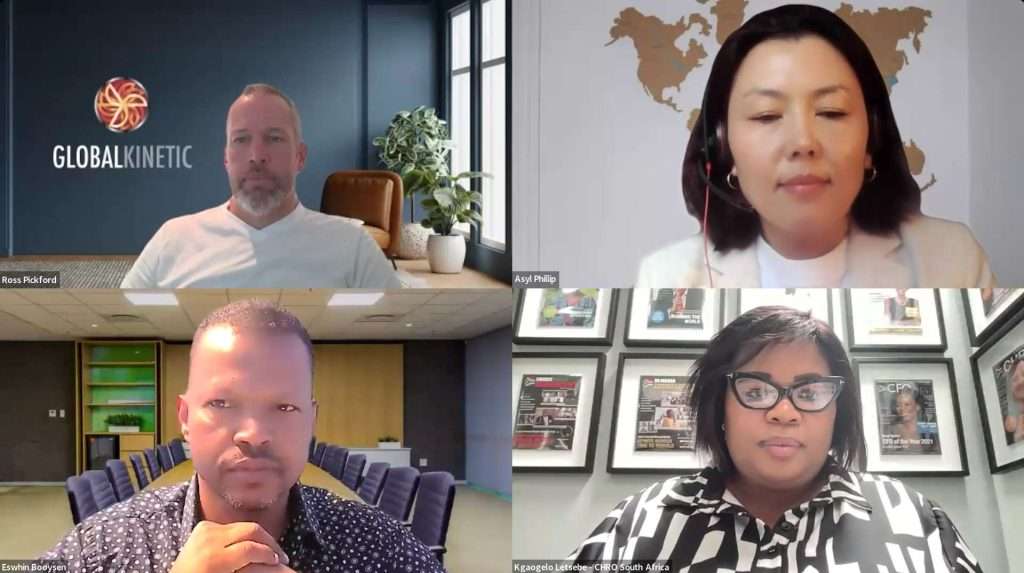
This was the focus in the webinar From Paperwork to Productivity: Smarter Onboarding and Training Hacks for HR, hosted by CHRO South Africa in partnership with CleverLMS, as industry experts discussed innovative strategies to modernise these essential HR functions.
Opening the webinar, Asyl Philip, enterprise account executive at CleverLMS, painted a vivid picture of HR's transformation: “The role has evolved from a primarily administrative function to a strategic business partner, playing a pivotal role in driving sustainable growth. However, many HR professionals still grapple with an astounding amount of administrative burden, whether it’s endless paperwork, outdated processes, or redundant repetitive tasks.”
“On the one hand, we expect HRs to handle all of this operational overload, leading to inefficiencies and frustration. On the other hand, we expect HRs to be these strategic people in cultural institutions. So, there’s definitely a discrepancy here. Thus, we need a solution to help HRs to break free from the administrative burden. The goal is to go high-tech and low-effort.”
She explained that technology, particularly Clever Learning Management Systems (LMS), is key to bridging this gap.
Asyl went on to explain the core functions of an LMS in detail: “Essentially, you can think of it as your training command centre. There are three main functions: structuring and standardising your learning materials so that you're consistently delivering the same message across different groups of people, locations, etc.”
“Second, building your centralised learning hub, a consolidated place to store information and data, including internal, external, online, and offline training. And finally, tracking employee progress and performance and streamlining those into ready-to-use reports.”
Automating HR
Ultimately, she highlights the benefits of utilising it for efficiency.
“If you set up a one-time process, you get a linear result, and then you have to repeat it over and over again every time you have a similar situation.”
But with automation, she explains, you set up a process once to reap the benefits repeatedly, like investing in a dishwasher instead of hand-washing dishes every time.
“So the main goal with automation is to set up a process once to invest the time and effort so that it can be used repeatedly and that you can reap the benefits over and over again.”
Asyl detailed how CleverLMS helps automate training and onboarding, from user profile creation and HR system integration to digital sign-off sheets and gamification. She stressed the importance of onboarding, stating, “Onboarding is such a fundamental, such an important, essential component of a talent lifecycle, and as a matter of fact, it’s the first step to building that learning culture in the organisation.”
“You don’t want them to get disillusioned that this job is either too hard for them or too easy and they don’t see any career prospects. You want them to get the most out of it so that at the end of your onboarding they come out wanting even more, wanting to grow with the company.”
The panel then delved into practical, tried-and-true onboarding and training hacks. “So with onboarding, when you automate this process it becomes a seamless, welcoming journey for the new hire, but almost an effortless one for the HR teams.”
She explained the importance of onboarding automation and the idea of better done than perfect, saying, “Perfection is an impediment to progress. Companies that have done pilot projects or beta testing have seen much more engagement and much more knowledge retention or adoption when they’ve done it this way, the imperfect way.”
She illustrated this with a story about a client who created effective training with simple tools and a focus on gathering feedback for improvement.
For Ross Pickford, head of people at Global Kinetic, the journey towards a paperless HR function began well before the Covid-19 lockdowns, but remote work accelerated the shift.
“Since moving remote, we had to embrace it entirely. So all contracts, any legal documents, and NDAs — all had to be signed electronically, which was great — and then the system that we had implemented in about 2018 has sort of an LMS capacity. It’s not a pure LMS system, and we use another external one for security training as well. This allows HR to manage pre-boarding and onboarding digitally.”
“When someone starts, we can get them to sign those contracts and documents before they start. Depending on the role, we can start letting them have access to certain training and culture modules so they can learn a bit more about the company, what they’re going to be doing, and the team they’re going to be working in.”
One of the biggest challenges he notes in going paperless is ensuring employees complete digital training.
A better approach, he suggests, is breaking content into smaller, interactive pieces:
“If you can break it into those sorts of microlearning pieces and you can deliver it in an interesting way that engages you, that really helps.”
“As a company, we’ve managed to largely go paperless in the sense that we don’t have to sign forms and have a filing cabinet anymore of paper; we have digital stores, and most of them are now in one repository. We still have a few repositories we’re trying to link, and there’s another challenge when you start somewhere but not entirely in one area: making sure you have a single home for these things.”
Balancing digital and human interaction
While digital tools have the ability to streamline HR processes, he notes the importance of retaining human interaction.
“The digital and physical face-to-face human interaction still needs to happen as well. I think in our world, we have found that you can put everything online. You can make everything digital — watch this video, complete this survey, take this little quiz — but if you lose that ‘let’s sit down together and talk’, you miss something crucial.”
He further explains why direct conversations remain valuable: “You can do little quizzes and tests, but often, if you just have someone say, ‘Right, so you’ve seen this, you’ve absorbed this content, you’ve gone through this process, you understand this thing — now let’s have a chat’, it actually keeps that human interaction in place.”
According to Eswhin Booysen, CHRO at In2food, the shift to a paperless environment was not just about eliminating paperwork, but about creating a system that truly benefits employees.
“We basically built our systems and our digital processes around understanding our colleagues’ inherent needs. What is it that colleagues are actually after when they want to interact with the company, interact with their own data, and what interfaces make sense to replace with digital versions? And what is actually worthwhile to keep as a paper contact or a physical interaction?”
Eshwin mentioned some of the approaches they’ve taken. “A simple process that we looked at was the digital payslip. Before we moved to digitise payslips in some areas of our business, it took up to two days for our HR colleagues to fold physical payslips.”
Rather than investing in additional printers, he said they transitioned employees to a digital platform, integrating technology that they were already comfortable using.
“The most used application by most colleagues is WhatsApp. Instead of designing a very clever app, we used the platforms that colleagues are already using and can consume.”
“Many processes have a lot of governance hurdles, becoming 17-page documents with complex language that is difficult for colleagues to interpret and consume. Our focus is on redefining business processes to make them simplified, streamlined, and adaptable to new scenarios.”
Small steps toward big change
He also added, however, that digital transformation is an ongoing journey.
“I often say digitalisation is not just a once-off ‘Okay, we are now digitally transformed and happy with where we are’. It’s a continuous process of adapting, understanding, and learning where our colleagues are, what their needs are, and how we can improve.”
Asyl further noted initiatives often fail not because people inherently resist change, but because they do not understand the ‘why’ behind it.
“With any new initiative, it’s all about communication. It’s all about the message that gets sent out and how you position it. If leadership isn’t fully invested and if the change comes from a top-down approach, it may feel disruptive and cause friction or rejection.”
“At the heart of every initiative, there has to be a ‘why’. When people understand the reason, they will be more accepting, more welcoming, and more ready. It becomes a proper change management process rather than just a disruption.”
Ross highlighted that when employees see personal benefits in change initiatives, adoption becomes significantly easier.
“The most successful change management strategy we’ve seen is investing in internal training and development,” he explained. “We provide our employees with opportunities to upskill themselves, whether through Microsoft, Oracle, or Google Cloud certifications. These certifications are theirs to keep, even if they leave the company. When employees take ownership of their learning and career growth, they naturally align with the company’s vision.”
“Whatever we do as businesses, it needs to be in consultation with our people because the people on the ground that are doing this stuff are doing it for the success of ourselves. So if you're wanting to give them digital pay slips and you want to give them online, this is in a format that they can consume regardless of their role.”
As the webinar wrapped up, Eshwin encouraged businesses to take small, strategic steps towards transformation rather than waiting for a perfect plan.
“Assess where you are as a business. Not every organisation has the same needs, but there’s always a solution. Start with one element, pilot it, learn from it, and build from there. Be open to learning and then developing it from there for your organisation.”
Concluding the discussion, Asyl reinforced the idea and benefit of automation.
“The whole point of automation and streamlining processes is to help our teams become more people-orientated. It’s about freeing up time so we can focus on those one-on-one interactions instead of getting stuck in redundant tasks.”
“At the end of the day, it’s about putting people first — we want to be more human-orientated, more connected, and that’s exactly why automation is necessary — to take care of the tasks that don’t require that human touch, so we can focus on the ones that do.”