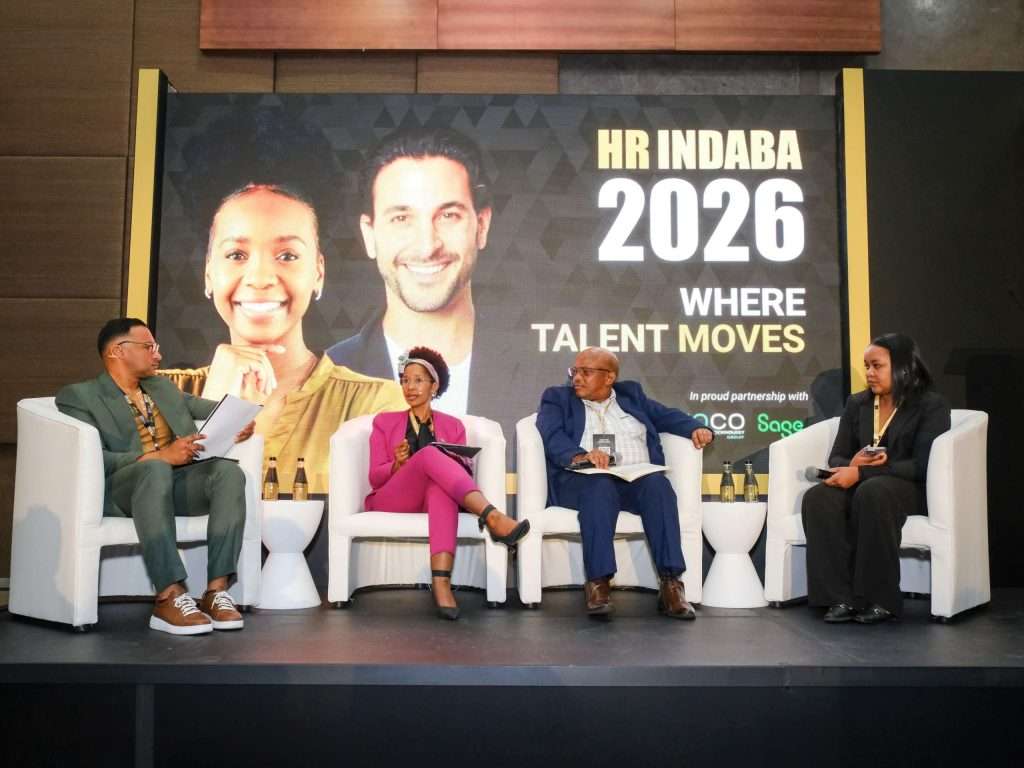
With thousands of attendees at the 2026 HR Indaba, top HR execs tackled the critical conversation about strategies for correcting undesirable manager traits early in organisations.
During a session titled People don’t leave companies: Strategies for early correction of undesirable manager traits top HR executives, Amukelani Maphophe, people and culture director at bp Southern Africa, Daniel Olifant, CHRO at SANBS and Vatiswa Nthoesane, CPO of AGSA kicked off the discussion by acknowledging that the issue of attrition is more often than not a cultural one rather than one of natural attrition.
“Natural attrition may happen but often most people leave organisations because of their lived experiences with their managers. By the time an exit interview is conducted, a lot of harm has been done, so managers should be proactive and not wait for an occasion to engage with their employees. As a manager, you should take note when an employee goes quiet, that’s usually the first sign of something going wrong,” Vatiswa said, explaining some early strategies for correcting undesirable traits in leaders.
She further highlighted the importance of HR execs encouraging their teams to cultivate a safe space for their teams and ensure that their people are heard.
The playbook for early correction
Fellow speaker, Daniel, offered a practical three step playbook to correct bad behaviour in managers. “In my experience, I’ve found that problematic managers usually don’t think they’re the problem because they’re so results-driven and efficient. This often creates a high-pressure environment for their employees, so it’s essential to correct the behaviour as soon as possible,” he explained.
He offered three steps to correcting undesirable traits, including conducting an evidence-based conversation. “Approach the manager with a clear example of an interaction or incident where you’ve seen the manager’s behaviour negatively impact the team and ask them to explain their intention with their actions. This often leads to a more productive conversation,” Daniel noted.
Daniel added the importance of placing the manager on a 90-day plan with clear and specific expectations and assigning a coach that will walk the journey with the manager while also outlining clear outcomes to be met at the end of the 90-day period.
Develop leaders from grad level
The conversation moved from correcting undesirable traits to accountability when managers fail to correct the behaviour, with Amukelani emphasising the importance of developing leaders early to avoid promoting those who are unprepared for leadership roles.
“Organisations must focus on developing leaders very early on, not just when it’s time to appoint a new manager. We should be starting from when a grad enters the company, especially because leadership is not just about managing people but also about being proactive and managing yourself and your own work,” Amukelani added.
The HR execs agreed that when considering promotions, leaders should avoid promoting technical experts simply because they deliver results on time. “A Gallup study found that 82 percent of companies appoint the wrong managers and that’s because technical experts are not always the best managers. Some may only take the role because it’s the only way to earn more money. Companies should create dual career growth paths that include managing people and occupying senior roles that allow technical experts who are not interested in managing people to still gain career and pay growth,” Daniel said.
Finally, the conversation concluded with Amukelani urging HR execs to consider including how people interact with the culture into how the company measures performance. “At the end of the day, true leadership is just a measure of how you treat others.”