
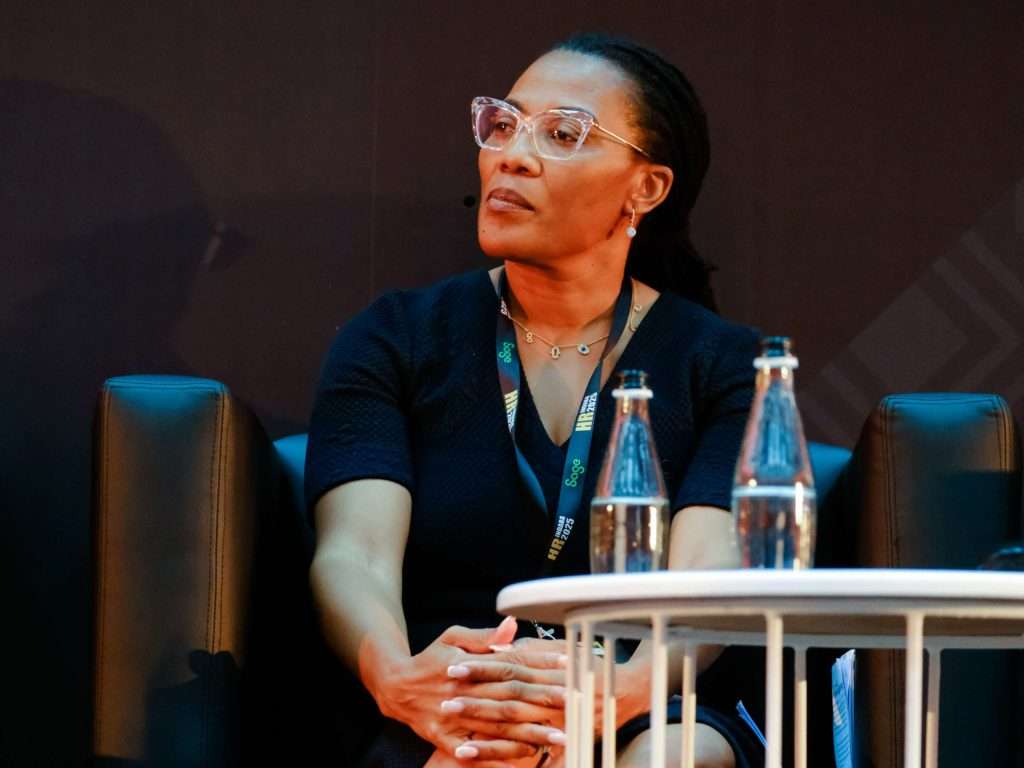
At the 2025 HR Indaba, the conversation around accountability took a sharp, introspective turn. In a packed Bill Gallagher Room, a panel of HR thought leaders, Dolores Mashishi founder and seasoned HR executive; and James Ramakau associate director: talent management at KPMG Africa tackled a hard truth: when employees fail, it often says more about leadership than about the individuals themselves.
Dolores opened the discussion on Leadership accountability: Are employee failures a mirror of leadership gaps, at the 2025 HR Indaba with fresh data from global research that underscores the depth of the problem.
“Seventy-three percent of leaders recognise accountability as the key driver of effective leadership,” she shared. “But only 31 percent are actually demonstrating it.”
The gap, Dolores explained, is not just statistical, it’s behavioural and stems from what she calls “leadership blind spots”.
“Leaders like the people whom they see physically. Like I said before, leadership and accountability are two sides of the same coin,” she added. "The people in the office are presumed to be more productive or more involved than those who work remotely. That bias of perception drives inequality and disengagement.”
Dolores also sounded the alarm on another troubling trend where leaders talk of empowerment but rule by control.
“You can’t say you empower your people, then not trust them. That disconnect is where a lot of accountability gaps begin,” she added.
Another level of leadership failure, according to Dolores, is the continued lack of alignment between HR strategy and business strategy. “HR leaders now have a seat at the table,” she commented. “But the question is: what do we say when we’re there? Are we interpreting people strategy into the language of risk, complexity, and business impact? Or are we simply ticking boxes?”
She argued that true accountability begins when HR leaders position themselves as strategic partners, not administrative executors.
“If you’re in the boardroom, be bold enough to connect your people’s agenda to the organisation’s performance outcomes,” she said.
Leadership’s greater share of accountability
James took the conversation further, stating that while accountability is shared, leaders must shoulder a greater share of it.
“Employees love to say leadership is to blame, and leaders love to say employees aren’t performing,” he said. “But accountability is a two-way street, and leaders take the larger share.”
James boiled it down to three leadership must-haves that build an accountable culture namely “clarity, feedback and future”.
“When people know what’s expected, how they’re doing, and where they’re headed, accountability becomes natural," James said. “But when communication breaks down, leaders lose the right to expect accountability from others.”
He also reminded the audience that HR’s job is not to serve business, but it’s to challenge it.
“Too many HR leaders subordinate themselves to business,” he cautioned. “True accountability is about holding the mirror up to executives and saying, ‘This isn’t working. This is actually how our people are feeling’. That requires courage.”
Accountability is teachable
Speaking from her experience in neuroscience and executive coaching, Dolores discussed that accountability is both a mindset and learned behaviour.
“It’s a skill that employs both the cognitive and emotional parts of the brain, as well as self-awareness, moral reasoning, and impulse control,” she said. “And like any habit, it can be formed through repetition and structure. Remember it only takes 21 days to form a habit.”
She cited the case of one organisation that built a simple but powerful practice.
“Every Friday, teams sat down to debrief on the week’s work, what had worked, what hadn’t, and what they would carry forward,” she noted. “People began to take personal ownership of their work within months. Because accountability had moved from being a policy to being a practice.”
James concluded the discussion by reminding leaders that accountability requires psychological safety.
“We cannot anticipate people to own their mistakes in cultures where a single mistake is career suicide, lower the stakes. Create room for learning. Accountability thrives in trust, not fear.”