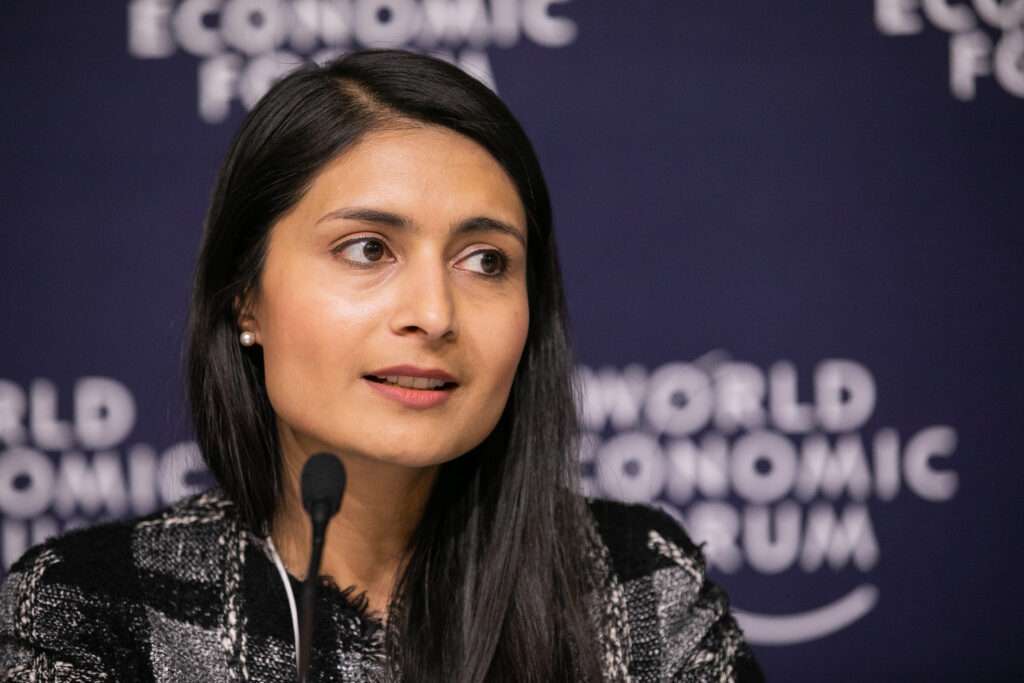
WEF’s Saadia Zahidi says leaders have an opportunity to build more gender-equal economies.
According to a report issued by the World Economic Forum (WEF), the Covid-19 pandemic has rolled back the years of progress on gender parity for pay, meaning that women will have to wait a generation longer to earn the same as men.
The report found that at the current pace, it will take 135 years before women get the same pay cheque for doing similar work to men.
Managing director and head of the Centre for the New Economy and Society at WEF, Saadia Zahidi said in the preface of the report that the hardest hit sectors by lockdowns and rapid digitalisation are those where women are more frequently employed.
“Pre-existing gender gaps have amplified the crisis asymmetrically between men and women, even as women have been at the frontlines of managing the crisis as essential workers.”
She says that combined with the additional pressures of providing care in the home, the crisis has halted progress toward gender parity in several economies and industries.
Saadia adds that gender-sensitive recovery strategies will be critical in making up ground lost during 2020 to prevent long-term scarring in the labour market.
The report further states that the gender gap in political empowerment remains the largest of the four gaps tracked and at the current rate of progress, it estimates that it will take 145.5 years to attain gender parity in politics.
While the gap in economic participation and opportunity remains the second-largest and has seen marginal improvement since 2020 and estimates it will take another 267.6 years to close.
Progress has been made in educational attainment and health and survival dimensions, with 37 countries already at parity.
The report says future gender gaps are likely to be driven by occupation segregation in emerging roles.
“Occupational differences are a key explanatory factor of wage inequality as the emerging roles with lower female representation see higher than average remuneration,” the report stated.
Saadia said leaders have an unprecedented opportunity to build more resilient and gender-equal economies by investing in inclusive workplaces, creating more equitable care systems, advancing women’s rise to leadership positions.
The WEF has called on business leaders and policy makers to embed gender parity into their plans for the economic recovery from the pandemic.