
Futurist Bronwyn Williams explored Gen Z’s workplace behaviours, unemployment challenges and the need for transformative employer relationships.
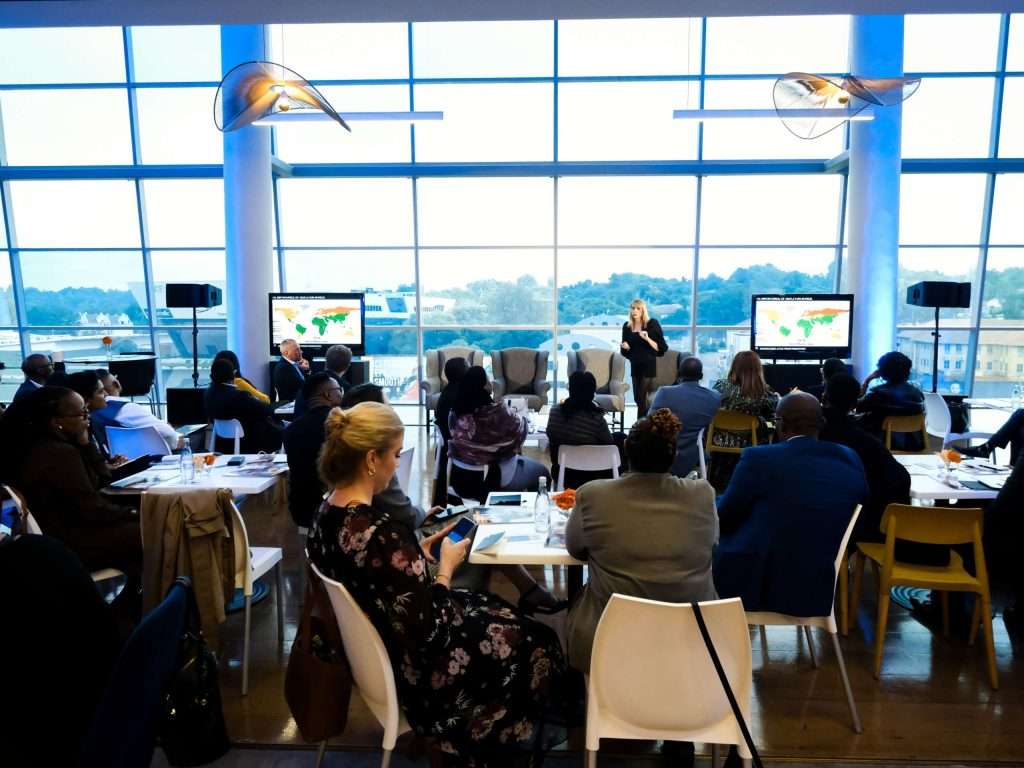
The CHRO Apex Talent Summit recently brought together South Africa’s top HR leaders for an exploration of shifts in the workplace. Amid the thought-provoking panel and lively discussions, futurist Bronwyn Williams’ keynote address, themed ‘From Postalgia to Purpose’, stood out as a highlight of insights into the world of Gen Zs, their unique perspectives, and the challenges and opportunities for HR professionals.
Drawing on research, Bronwyn set the stage by highlighting the shift in workplace dynamics post-Covid-19 lockdowns, stating that, “Anyone who’s working with people in the workplace has noticed that the group of people who come into our offices post the Covid lockdown days are quite different from the ones before.”
This generation, she said, has “seen behind the curtains” due to the internet and technologies like ChatGPT, and they are demanding transparency and authenticity from their employers.
The 30/30/30 report, a study of 30 young South Africans, provided a foundation for Bronwyn’s analysis. She identified three key behaviours exhibited by Gen Z: apathy, anarchy and activism.
Apathy, she explained, is characterised by a lack of motivation and a reluctance to give their all. “I’m just not working as hard,” is a common sentiment. Anarchy, as she describes it, represents active resistance against traditional systems and structures. “This is active resistance against the machine.”
Activism, according to her, involves a strong desire to challenge organisations. “This is the in-house employee activist who’s going to challenge you on your values, on your diversity, on your sustainability scorecard,” she said.
“If you are an executive or someone working in HR in Asia or in Europe, and you say you don’t want to work with young people, well, quite frankly, you don’t have to. But here, it’s a bit different; we have to work for the future,” she explained, speaking about the importance of young people to Africa’s future, particularly in the context of a potential demographic dividend.
However, she cautioned that high unemployment rates among young people, especially those with tertiary degrees, could turn this dividend into a source of instability. “Our young people are unemployed instead of employed; that demographic then becomes a dividend instead of being a gift and a growth, and becomes an instability instigator.
“We’ve got some statistics in South Africa that state that almost a million young people who are graduates with degrees are still on Covid relief.” She painted a picture of the unemployment crisis: ‘Two out of every three young people we spoke to were unemployed. This is pretty much in line with the real unemployment figures of our economy. Two out of every three of the unemployed also had a tertiary degree. Some of them have more than one degree or are still studying.”
As a result, Bronwyn stressed the urgency of addressing this disconnect between education and employment. “Clearly we have to do something on ROI and time on people who are studying, or we will end up with a huge expectation versus reality. If I am educated and I can’t find a job, I’m going to be much more resentful of the system around me, even more so than someone who didn’t have the opportunity for education.”
Bronwyn also addressed the broken ladder phenomenon”, where automation and technological advancements are eliminating many middle-management roles, creating a gap in career progression.
“We don’t talk about artificial intelligence, digitalisation or automation as a natural progression of humanity. We can’t really resist that because as the baby boomer generation retires, there may be a lack of experienced workers to fill critical roles that require human skills and knowledge. What’s going to happen when those turn into missing pieces in your organisational tunnel?” she said, advising CHROs to think creatively about how to fill these gaps and ensure that the workforce is prepared for the future.
She also called for a move beyond superficial diversity initiatives and performance metrics, advocating for genuine inclusion and care-based relationships. “Speak-up culture doesn’t mean having young people telling you what to do; that means having everyone feel heard. It’s by having people feel that what they’re saying is actually taken seriously, heard, and listened upon. It goes far beyond IT-developed sort of performance review templates and comes back to being a manager and really listening and mentoring your employees.”
To conclude her keynote address, Bronwyn advocated for a shift away from purely transactional relationships, urging HR leaders to embrace a more holistic approach. This, she said, “is critically going to get us to a point around building relationships with people that are not purely transactional based again on salary, but become performance types of relationships.”
"You have relationships based on keeping actual scorecards, which is the traditional way to do an employee-employer relationship. But other relationships are based on care. That’s like the relationship between you and us having children; maybe it’s for pets, or your child, but there’s not a sense of expectation or scorekeeping.”
Building these care-based relationships, Bronwyn acknowledged, requires effort and intentionality. "This is really difficult for organisations, as they must be trained to do this, but nonetheless, if you want to work with people who are facing these gaps and challenges and want the same objectives, that’s one of the things we have to start looking to do – creating more transformative and less purely transactional relationships."
“We have to focus on the people in the age of increasingly automated economics if we want to build those transformative, not purely transactional, relationships.”