
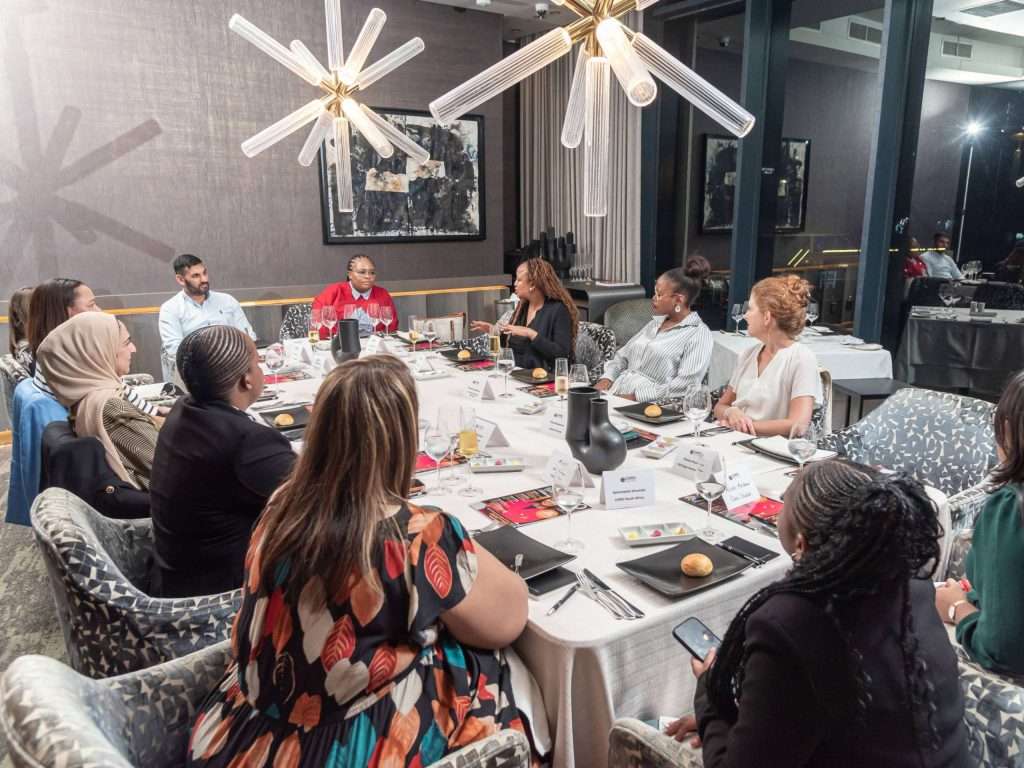
The air at Signature Restaurant in Umhlanga was filled with more than the aroma of an exquisitely prepared three-course intimate dinner. Around the table sat some of eThekwini’s leading HR minds, each carrying a different story, yet all united by the same challenge: how to support employees under mounting financial pressure.
As napkins were draped across laps, the evening’s theme of workforce strain in a high-cost environment paved the way to conversations on rising living costs and HR's role in responding to one of the greatest challenges facing today's organisations and employees.
Before that, however, attendees were asked an ice breaker question on what they considered to be their superpower to stir introspection and conversation, to pull them gently out of their shells.
Responses ranged from helping people believe in themselves to empowering others. One HR leader proudly described themselves as “Bob the Builder”, bringing people and ideas together, while another said their greatest superpower was staying calm under pressure. Collectively, the responses foreshadowed what would become the evening’s greatest takeaway, that HR’s true superpower lies in finding practical ways to support people through increasingly difficult times.
Making every rand count
With the ice broken, the main discussion of the evening began with highlighting the reality that many employees are reaching breaking point.
“I know that some of our people don’t earn the highest salaries, so I feel a lot of empathy,” one CHRO stated. “There’s a cost-of-living crisis beyond the petrol price. I realised it was affecting engagement because people were going into a downward spiral. My clinic sisters told me it was resulting in alcohol abuse, gambling and people getting into debt. They’re really concerned.”
The HR executive explained that her organisation began investigating the root causes and discovered many employees had become dependent on loan sharks, trapping them in cycles of debt.
“Due to that, I introduced earned wage access. Employees also receive affordable mobile contracts and airtime packages because pay-as-you-go data is incredibly expensive. We went to market for a new medical aid, which gave employees 45 percent more savings at 38 percent less cost.”
“I’m not able to let people work from home, but I can show care in terms of what we offer. We also ran roadshows explaining benefits because many employees were overinsured without realising it. Once they understood what they already had, they could reduce unnecessary policies and free up extra cash every month.”
The initiative sparked discussion around an important question. Once employees have greater access to money, are they using it to improve their financial wellbeing or simply finding new ways to spend?
“We try to educate people as much as possible,” one attendee responded. “We run money management sessions at least twice a year, financial wellness programmes and awareness campaigns because education is still the best solution. We partner with our wellness provider, monitor financial distress trends and intervene before situations become crises."
Yet despite these efforts, attendees agreed that education alone cannot solve desperation.
“We rely heavily on data,” an attendee explained. “We monitor counselling calls, financial wellness requests and mental health support, then build interventions around what the data tells us.”
Beyond the payslip
Yet some stories highlighted just how deeply financial strain has taken hold, as one HR executive shared how employees were taking their retirement savings because they believed they would not live long enough for long-term financial planning to matter.
Rather than dwelling on the problem, the HR leaders evolved the discussion into a collaborative workshop of ideas.
“I think broadly speaking we need to start entrepreneurs,” one attendee suggested. “People need multiple streams of income. We need to help them develop the skills to start small businesses that they can grow.”
HR executives nodded around the table and the idea quickly evolved into practical examples.
“We host regular Hustle Days, inviting employees and even family members to sell products from their side businesses within the workplace. If you’ve got a side hustle or someone in your family has one, bring it to work, and we create a market day,” shared one attendee.
This idea made the conversation expand into whether corporate South Africa is ready to embrace gig work.
Others described practical ways they are already creating additional earning opportunities.
Instead of outsourcing photography, music or creative work, one company deliberately uses employees with those talents for internal events. “If someone is a DJ, we use them. If they’re a photographer, we use them. We also host Christmas markets and encourage people to declare their side businesses.”
The attendees agreed that supporting entrepreneurship may become an increasingly important part of the employee value proposition as salary increases become harder to sustain.
Attention then turned towards another difficult important question. If organisations cannot significantly increase salaries, what else can they do? One CHRO argued that the first responsibility is ensuring employees are paid fairly, stating, “If you’re not paying people correctly in these very tough economic times, it’s time to reflect. Get the base correct.”
She then described a five-year process of rebuilding the organisation’s remuneration architecture from the ground up.
“Instead of making quick market adjustments, the business benchmarked every role, corrected structural inequities and standardised two separate pay systems into one cost-to-company model. It took a long time because it was expensive, but we established a foundation that every HR leader after me can build on.”
That new foundation unlocked greater flexibility without increasing organisational costs.
“Employees can now decide whether to receive their 13th cheque monthly or annually, choose how retirement contributions are structured based on their personal circumstances and even determine how certain insurance benefits are allocated,” she added.
Rethinking the reward equation
In between Signature’s mouthwatering mains, the discussion encouraged leaders to rethink benefits altogether. Rather than approaching insurers with predefined products, organisations are increasingly asking providers to redesign existing benefit pools around employee needs.
HR leaders around the table shared how they have introduced company SIM cards, subsidised data and airtime packages after discovering that mobile data had become one of employees’ largest monthly expenses.
“We did a survey of our people to understand what they were spending their money on,” one HR executive explained. “Data came up again and again. If we can remove that financial burden, even just by providing free data, it makes a real difference.”
Others have explored more affordable healthcare options through providers such as Zoe Health, while several organisations have reopened or strengthened onsite clinics staffed by occupational health nurses and visiting doctors.
“The nurse was amazing,” one attendee shared. “People didn’t have to leave work to see a doctor or collect medication. As HR, you could speak to the nurse and understand where your people were struggling so you could build initiatives around those needs.”
The conversation then shifted from reducing expenses to creating value in unexpected ways through random appreciation gifts, retention allowances, employee experience initiatives, christmas markets, or internal entrepreneurs. HR leaders agreed that none of them would dramatically change someone's payslip, but collectively they created moments that reminded employees they were valued.
“We randomly gave every employee gift vouchers,” one CHRO shared. “It didn’t cost much, but the response was incredible because nobody expected it.”
“We spin a wheel and someone walks away with an air fryer, a toaster or another household appliance. Those small things create excitement. They tell people we see them,” stated another HR executive.
“When our managers upgrade their work phones, they get to keep the old one,” one executive explained. “There’s no additional cost because the asset has already been depreciated, but for an employee it’s a significant benefit.”
Small gestures, lasting impact
Others spoke about introducing temporary retention allowances rather than permanent salary increases, while performance-linked incentive schemes rewarded organisational success across every level of the business.
“If the business makes money, everybody shares in that success,” one HR leader explained. “Our cleaners receive incentives too. The structure is different, but everyone benefits.”
“I think it’s easy to focus only on the financial side,” one executive reflected. “Stop asking what brings value to you. Start asking what employees appreciate. If we move away from thinking only about salary increases, we realise there are many more things we can do to create relief.”
The discussion naturally turned to leadership. HR leaders agreed that employee experience is ultimately shaped by line managers who create the micro-cultures employees encounter every day.
Several organisations shared how they deliberately process salaries before weekends or public holidays wherever possible, recognising that timing itself can become an employee benefit. The discussion became a reminder that sometimes the smallest operational decisions carry the greatest human impact.
As the evening concluded with delicious dessert, attendees reflected on far more than cost pressures.
Many admitted they had arrived believing they were already doing everything they could for their people, only to leave with pages of new ideas borrowed from peers around the table.
“Being an HR lead can be lonely,” admitted an attendee. “It’s refreshing to have a community where you can be vulnerable, be real about the challenges you’re facing and realise you’re not carrying them alone.”
“We don’t know it all, that’s why conversations like this matter,” added another attendee. “You can’t always have these discussions with your executive team because they don’t always understand the nuances of HR. Here, we learn from one another.”
Others spoke about leaving with practical ideas they could implement almost immediately.
“There are so many small things we can do. Using employees’ own businesses, creating more value from what we already have and simply thinking differently. I came expecting business ideas but I’m leaving with personal ones too,” concluded an HR executive in attendance.
Click here to see visuals from the evening and get a glimpse of the elegant setting, engaging conversations, and memorable moments from the dinner.
Those in attendance were:
Alison Andrew, talent development business partner, Pedros Chicken
Bianca Anthon, HR director, Illovo Sugar
Celeste Mdletshe, HR director Southern Africa, Unilever
Kgaogelo Letsebe, community manager, CHRO South Africa
Naeem Timol, group HR executive, Pedros Chicken
Natalina Singh, head of HR (COE), Defy Appliances
Nokukhanya Mkhize, HR lead, Kukhanya Energy Services
Rejoice Kachipande, HR director, SA Home Loans
Shehnaaz Kajee, head of HR, HBZ Bank
Sinqobile Khuluse, head of HR, Sandock Austral Shipyards
Sphumelele Khumalo, senior writer, CHRO South Africa
Vicky Koekemoer, CHRO, Ignition Group