

Leading HR executives got together to discuss some red hot topics currently dominating the people agenda within their organisations.
Top CHROs gathered in Sandton to share their views on pressing issues currently dominating the HR landscape – more than 200 HR executives answered a range of burning questions. These were the results:
How well does your leadership development framework serve your talent pipelines?
Many agreed that it is good, but there's room for improvement. Most answered that they still hire externally for critical roles, with fewer saying it is very good, with most roles filled from within.
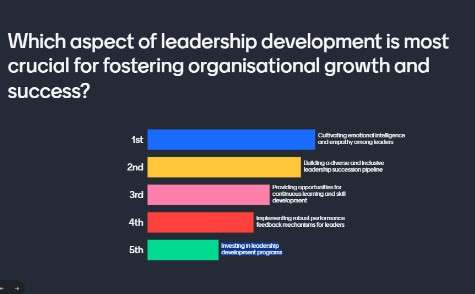
Which aspect of leadership development is most crucial for fostering organisational growth and success?
Cultivating emotional intelligence and empathy among leaders seemed a top priority for many in attendance, while for others providing opportunities for continuous learning and skill development was the third most popular choice. Investing in leadership development programmes was the least favourite.
“The empathy equation is fundamental to the role that we as leaders and individuals play when we shape organisations,” said Anja van Beek, an agile talent strategist, leadership expert and executive coach.
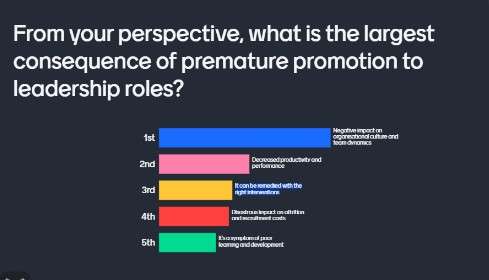
From your perspective, what is the largest consequence of premature promotion to leadership roles?
When quizzed on the issue of premature promotion, many said it has a negative impact on organisational culture and team dynamics, while others said that it can be remedied with the right interventions.
Dr Liziwe Masoga, CHRO at Mr Price, weighed in on the matter: “The problem many organisations face is that most people are promoted because of their IQ and, in the time taken to develop EQ, they can do a lot of damage. This can happen when they are resistant to feedback on how to improve the way they relate with stakeholders.”
Which statement best captures your views on the Employment Equity Amendment Bill?
On the hot topic of the EEA Bill, the majority of CHROs said they did not think consultation with business was sufficient.
Neridha Moodley, head of people and culture at SNG Grant Thornton, said, “Companies should comply with the EEA bill to aid the government in reducing unemployment in the country overall and again allowing fair and equitable access to all. The ability of the minister of employment and labour to set economic sector specific employment equity targets will promote transformation in sectors and regions where it has been lagging. However, it is key that the department enforces these amendments by ensuring that compliance audits are actioned, and strict corrective measures are put in place.”

What is the biggest indicator of an inclusive workplace culture?
Creating psychological safety through transparent conversations about the organisation’s DEI successes and failures was the front-runner response to this question.
“Every individual, business scenario and culture is different, thus no one-size-fits-all solution exists for successful DEI. Diverse teams bring a variety of viewpoints and problem-solving approaches, fostering more creative and practical solutions. This diversity of thought is a critical driver of innovation,” said Andee Uren, executive head of workforce planning, optimisation and engagement at Nedbank.
Most say addressing unconscious bias through awareness-building and mitigation strategies is what they do with less saying they offer bespoke mentorship and sponsorship strategies for diverse talent.
Donald Khumalo, human capital executive at FNB, said: “Our focus on diversity is equity, rather than equality. The difference between the two is quite distinct, and in a world where we haven’t all had equal access to opportunities, one needs to take an equitable approach to enable equal participation. This approach of creating an inclusive work culture has enabled our talent attraction, growth, and retention strategies to thrive.”