
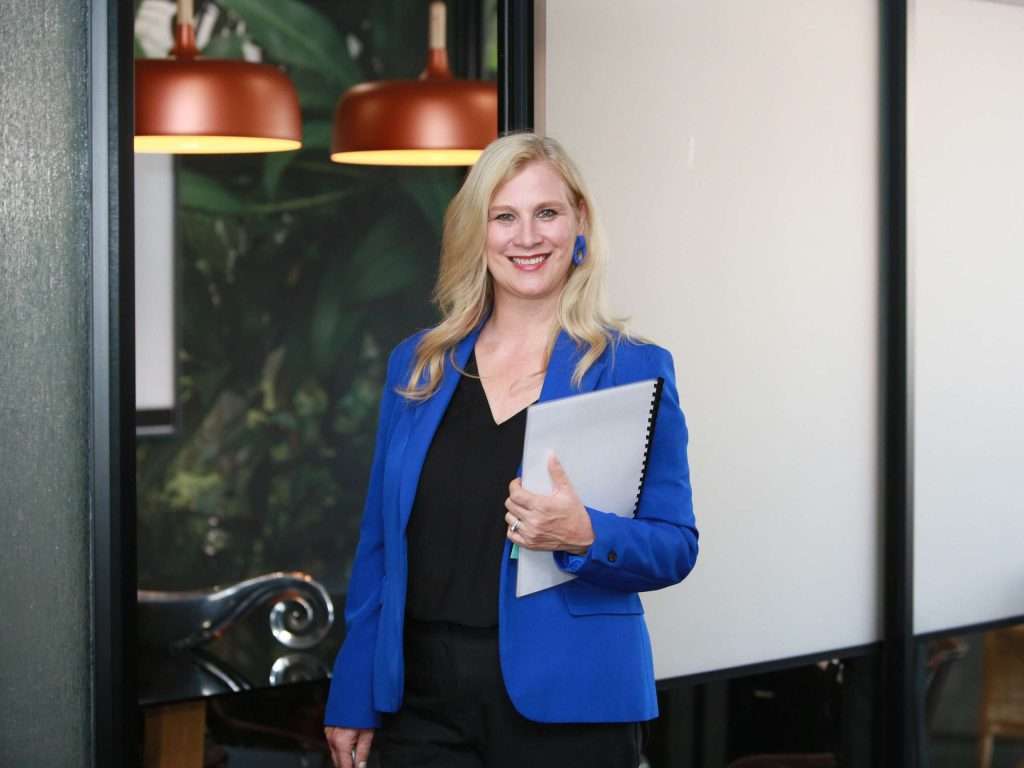
According to Anja van Beek, talent strategist, leadership & HR expert, and executive coach, the women balancing nappies, deadlines, schoolwork and dinner duties develop resilience, emotional intelligence and the ability to make sharp decisions under pressure.
Anja shares the importance of recognising working mothers as a new breed of leaders, ones who bring a powerful and often underestimated set of skills to the workplace and the boardroom.
Q: Why do you believe increasing the representation of moms in leadership roles is crucial for today’s organisations?
Representation matters, because it shapes culture, strategy and outcomes. Working mothers bring a lived reality of balancing competing priorities, which sharpens skills like resilience, emotional intelligence and decision-making under pressure. Gallup’s latest data shows that employees thrive in cultures where they feel supported and seen and mothers, who already create this at home, are naturally equipped to foster it at work.
Today's rapidly changing workplace requires a new era of thinking. We often underestimate how real-life experience can be applied in the working world. Transferable skills can be carried over from one role or experience to many other work-related scenarios.
If organisations are serious about innovation and engagement, they can’t afford to overlook a group that’s already proven their ability to manage complexity, adapt quickly and lead with empathy.
Q: What unique perspectives and skills do moms bring to the workplace and especially to boardrooms?
Motherhood is a crash course in leadership. Moms bring skills that businesses often list as critical but don’t always know how to grow. These include:
- Time optimisation: Prioritising what truly matters when every minute counts.
- Conflict resolution: Managing tensions with fairness and compassion.
- Emotional intelligence: Tuning into what people need, even when it’s unspoken.
- Resilience and adaptability: Recovering quickly when things don’t go as planned.
In boardrooms, these translate into inclusive decision-making, future-focused strategies and cultures of psychological safety. These are not soft skills. They are strategic assets that impact retention, performance and growth.
Q: From an HR and talent strategy standpoint, how can organisations better support working moms to advance into leadership positions?
First, by moving beyond token flexibility and creating real structural support. The 2025 State of Motherhood Survey shows that 66 percent of mothers considered leaving or reducing hours due to childcare stress. This is a systemic issue.
Here are three actions HR can take:
- Redesign roles and career paths so that caregiving doesn’t derail progression.
- Offer targeted support like coaching, mentorship and peer networks for working mothers.
- Address invisible bias by training leaders to see career gaps for what they often are: periods of growth, not setbacks.
When HR builds policies with equity in mind, mothers don’t just stay; they also lead.
Q: What can companies do to change the narrative around motherhood and leadership to ensure moms are seen as high-potential leaders?
We need to flip the script. Too often, motherhood is framed as a limitation when in reality, it cultivates exactly the qualities modern leadership demands.
Companies can:
- Celebrate the success stories of mothers in leadership, making them visible role models.
- Shift performance measures from “always available” to “impact and outcomes”.
- Challenge stereotypes that ambition fades after motherhood – research consistently shows the opposite.
The narrative must move from “moms are stretched” to “moms are strategic”.
Q: Why should organisations see working moms as an untapped source of talent?
Because they already are! The corporate world is experiencing a leadership gap and working mothers represent an underutilised pipeline of high-potential talent.
Consider this: women already make up a significant share of the workforce, but their leadership representation still lags. Ignoring this pool is like leaving half your potential leaders on the bench.
Mothers bring grit, creativity, and the ability to deliver under pressure. They’ve been doing the impossible daily – imagine what they could achieve with institutional and intentional support.
Success today looks different. For many mothers, it’s not about the corner office or the company car but about the impact, balance and the ability to integrate work and life meaningfully.
Organisations that recognise and support this definition of success will not only retain mothers but also build more diverse, resilient and human-centred leadership cultures and show to the future generations how work and life can be integrated.
Working mothers are not asking for special treatment. They’re asking for fair systems, visibility and the opportunity to contribute fully. Give them that, and you’ll tap into some of the most powerful leaders your organisation could ever have.