
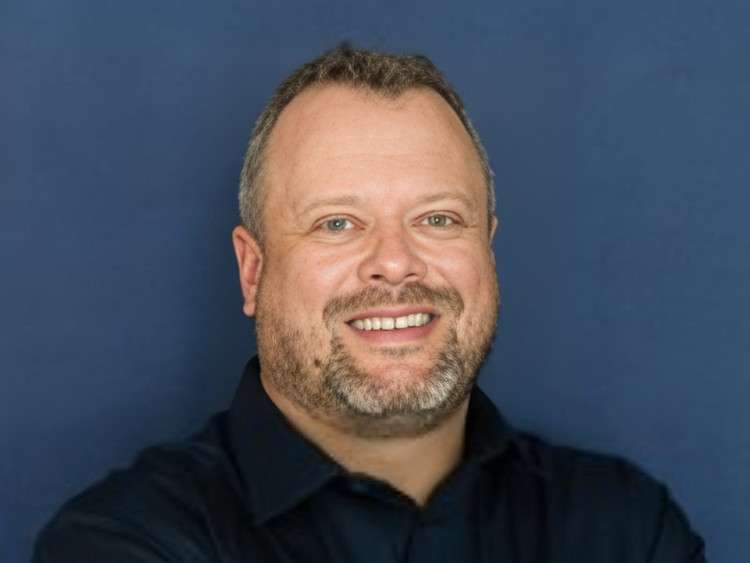
AI is transforming HR functions by taking over time-consuming, repetitive tasks, enabling HR teams to focus on more meaningful work. But, as Andre Cloete, chief IT Officer at 4Sight Holdings, points out, AI should never replace the human element.
Artificial intelligence (AI) is an incredible tool when it comes to the human resources function within an organisation and can streamline many functions that would otherwise take up hours of mind-numbing time.
Yet, says Andre Cloete, chief IT officer at 4Sight Holdings, this enabler is no replacement for people, and any implementation of a system that uses AI to deal with mundane tasks needs to be developed around the employees who will use it, so it assists with their jobs, and doesn’t interfere with what they need to do.
The first step towards this, says Andre, is to pull together a team that will be working on and with the system, which should include HR professionals within the company as well as a technology partner.
After this, he says, an AI purpose needs to be developed. “Here, the team needs to bash out exactly what they want this system to do. Those involved in this decision-making need to determine what successful AI will look like for the company from an HR perspective,” Andre says.
This could be anything from screening CVs through to personalised training, assisting performance against key performance indicators, recommending the relevant courses and learning modules based on skills gaps to staff, their role requirements, and career aspirations as well as analysing data to predict future hiring needs, he explains.
AI has huge potential, with about 20 percent of generative AI’s magic lying in talent acquisition, recruiting, and onboarding, says Andre. He adds, “Another 20 percent of generative AI’s mojo can enhance performance management and talent processes.”
Other aspects where AI can assist are in payroll processing and administering benefits, he notes.
Moreover, says Andre, AI can also engage with employees, answer queries, and “sprinkle efficiency dust all around”. He explains that 4Sight already offers a bot that does just that, in a personalised and friendly way.
“The question must be: where do you see AI fitting into your company based on its specific needs and business development strategies?” says Andre.
Once this has been determined, it needs to be put into practice on a small scale through a pilot project, he says. “You can’t see AI as a magic wand that you can unleash on the entire organisation in one go,” Andre says.
He explains that the introduction of AI needs to be systematically implemented and needs to take the business needs into account while also ensuring as little adverse impact as possible.
“This is where an implementation partner is key. A company needs to bring in a partner that will take the time to understand their needs and ensure that the solution is the right fit,” says Andre. “It’s vital to assist customers with best practices in typical high-risk implementations so that risk can be limited,” he adds.
When implementing the system, it’s important to ensure that people are not left behind, says Andre. “There needs to be effective communication and empathy during the process, and success factors should not just be metrics, but also the system’s impact on people. Metrics matter, but so do feelings,” he says.
Andre adds that, because AI learns, it’s important that each step is monitored to ensure that the machine does not take in the wrong information and, as a result, present incorrect data.
A key part of this process, he says, is to establish governance principles to keep AI in check. “HR deals with a lot of personal and sensitive information, and this needs to be properly secured. AI cannot become a system that allows access to all this data or creates a hole in the network that allows for leaks. AI needs to be kept on a tight leash,” he says.
“AI is an amazing enabler, but we must never forget that it is not a replacement for our human spark.”